So you’re wondering, is there more to Mallorca than beaches and resorts? Plenty more. We’ve spent three weeks driving, climbing, eating and getting properly lost across the island, and these are the ten places that stuck with us long after the tan faded. Iconic views, real local history, and the odd spot you’ll have almost to yourself if you time it right.
A small honesty note before we begin. A few of these you’ll find on every “things to do in Mallorca” list (looking at you, Valldemossa). We’ve kept them in because they’re genuinely worth your time, and because the way most travellers visit them tends to miss the better half of the experience. We’ll tell you what to do differently. The rest are spots that quietly outperform their reputation, and the kind of places locals are mildly relieved you haven’t already heard of.
Valldemossa
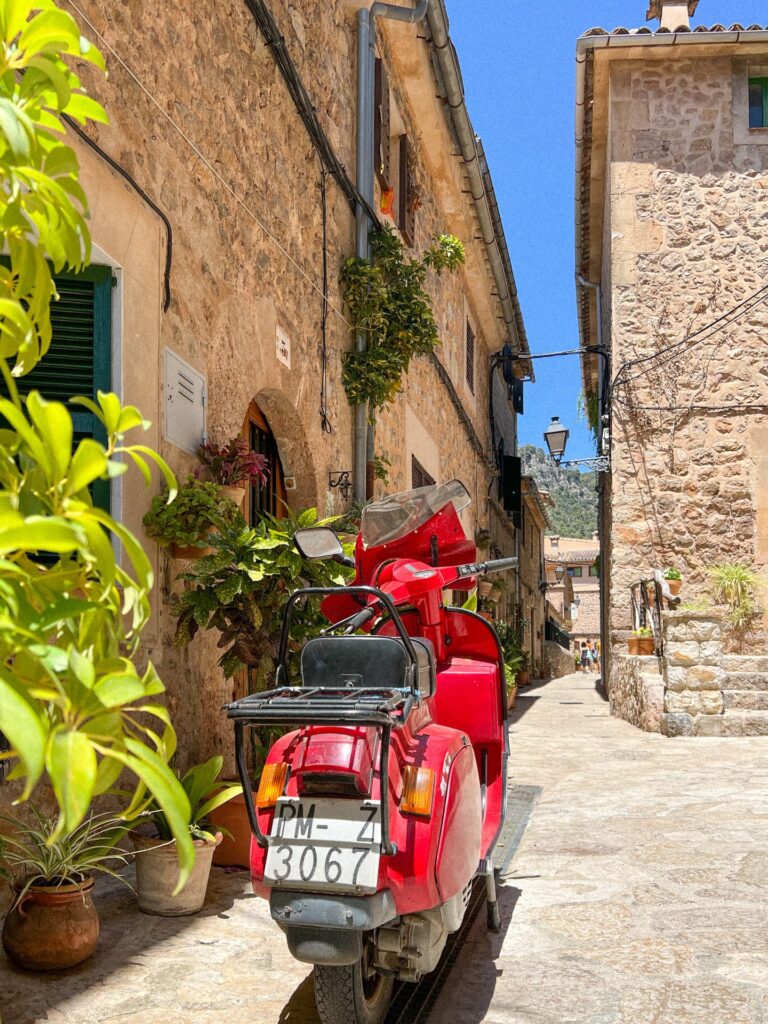
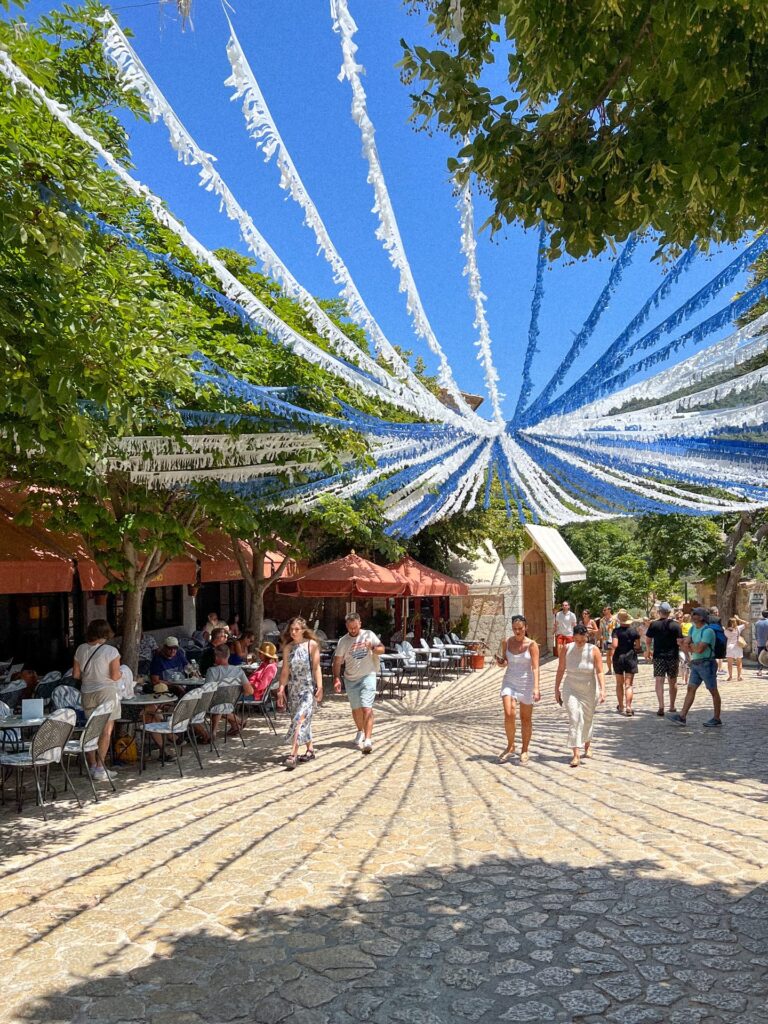
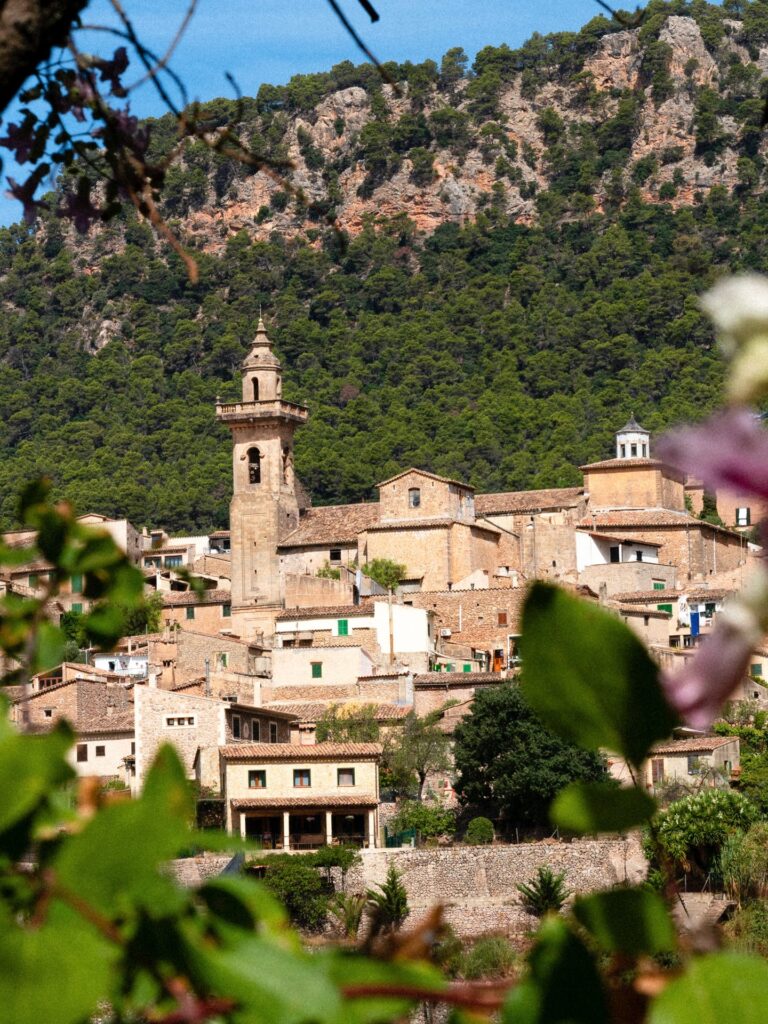
Yes, you’ve seen it on every Pinterest board. No, that doesn’t mean you should skip it. Valldemossa is a postcard-pretty mountain village in the Tramuntana, all cobbled lanes, honey-coloured stone houses, and bougainvillea spilling over every doorway. It’s most famous for the Real Cartuja (Royal Carthusian Monastery), where Polish composer Frédéric Chopin and French writer George Sand spent the rainy winter of 1838 to 1839. He composed parts of his Preludes here. She wrote a memoir about the locals that wasn’t entirely flattering. The rooms they stayed in are open to visitors, complete with one of his pianos.
Here’s where most visitors get it wrong. They roll in by tour coach between 11am and 4pm, queue outside the monastery, take three photos on Carrer de la Rectoria, and leave. You see the village at its busiest and least magical.
Go early, before 9.30am, or after 5pm when the day-trippers head back to the coast. Wander the lanes above the monastery, where almost no one bothers to walk. Stop at a café for a coca de patata, the soft potato pastry the local mountain bakeries are known for.
We made the classic mistake of squeezing too many stops into our first day on the island and gave Valldemossa about an hour. Don’t be us. Give it half a day.
Es Pontàs
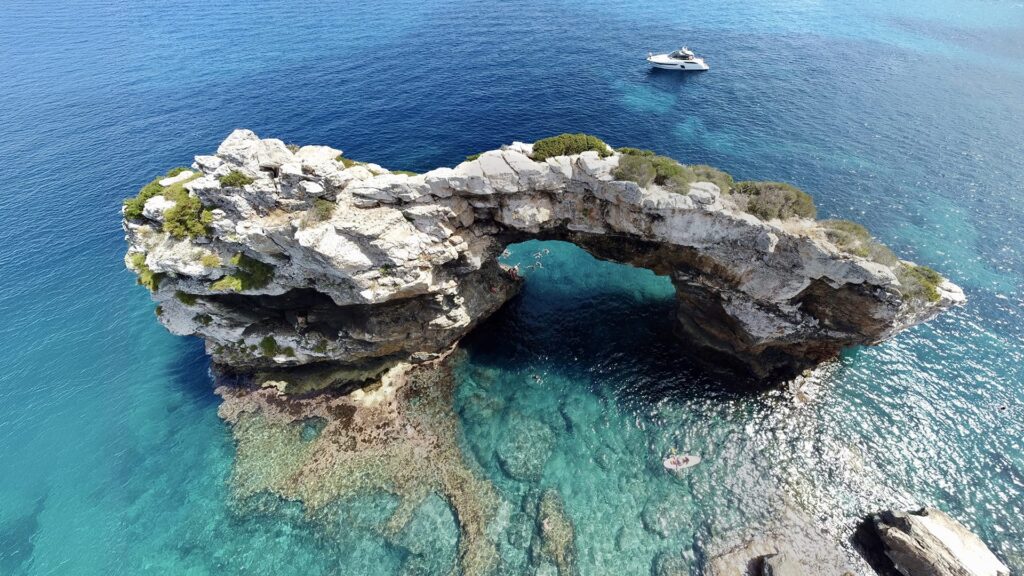
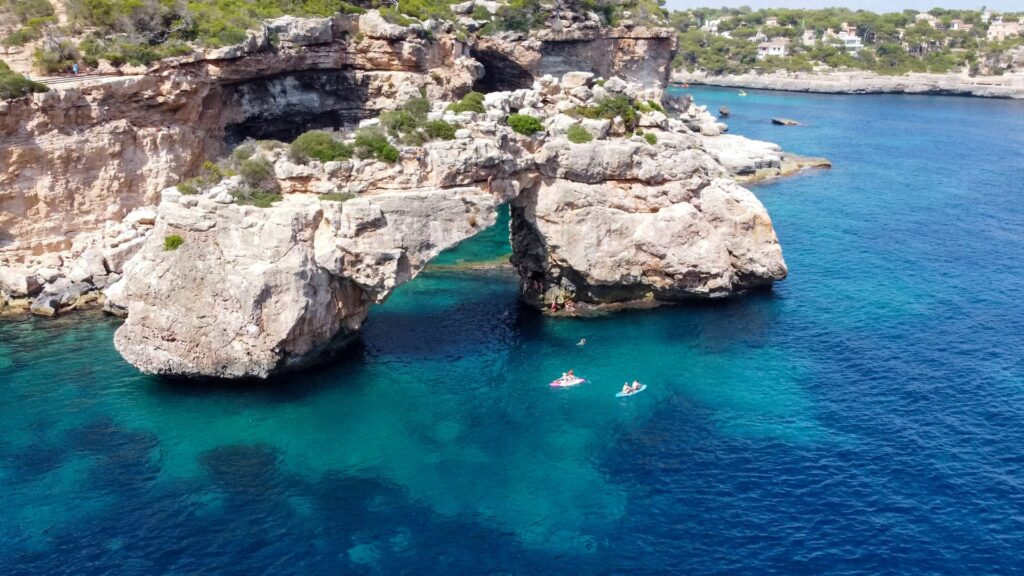
Between Cala Llombards and Cala Santanyí, the coast performs a little party trick. A massive natural rock arch leaps out of the sea, joining the cliff to a small islet like a stone bridge designed by nobody. This is Es Pontàs [es pon-TAHS], shaped over centuries of wind and water.
You can view it from the dramatic clifftop mirador above (signposted from the road), where photographers gather for sunrise. But the arch’s real fame in certain circles is climbing-related. American climber Chris Sharma free-climbed the underside of the arch over the open sea in 2006, in what’s still considered one of the boldest deep-water solo ascents in history. There’s a documentary on it called King Lines, if you fancy a slightly terrifying watch before your trip.
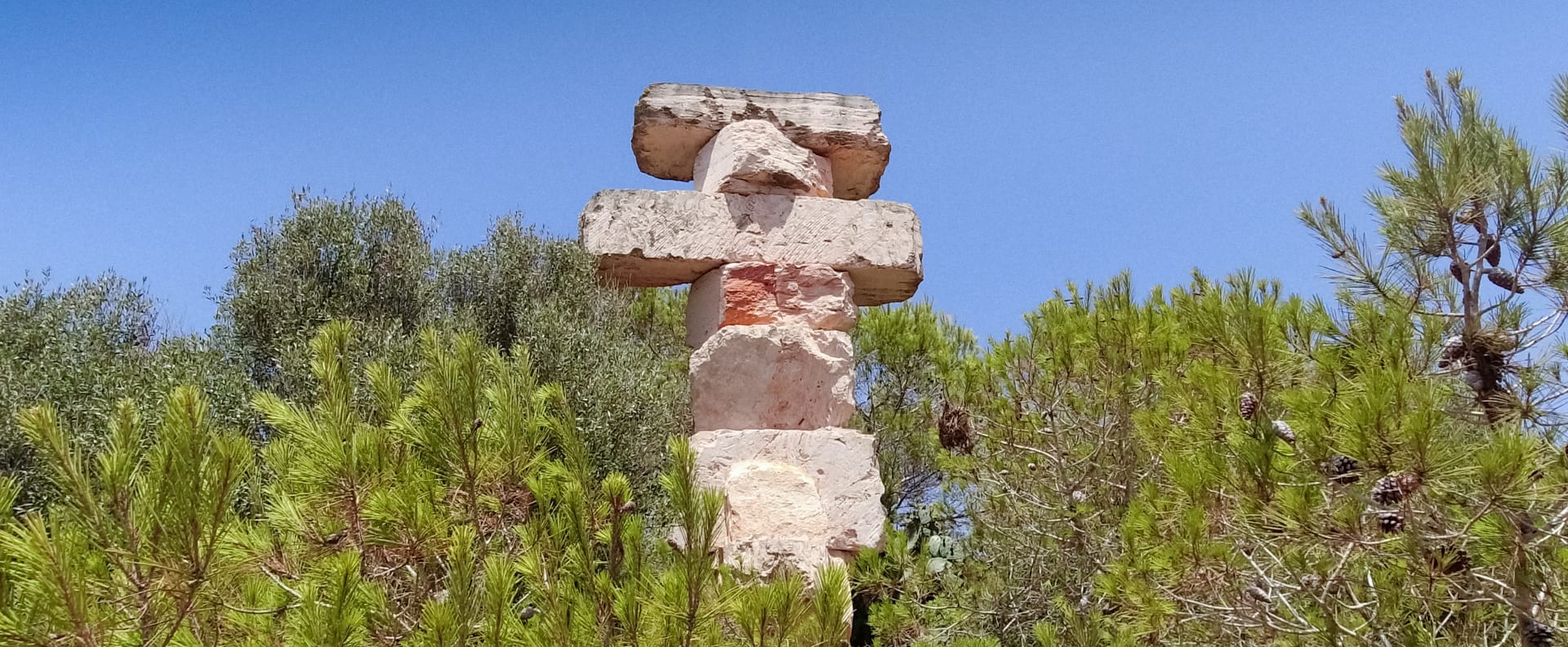
While you’re at the mirador, look for Equilibri Sud [eh-kee-LEE-bree sood], a stone sculpture by German artist Rolf Schaffner. It’s part of his “Meridians of Peace” series, five sculptures placed across Europe along a north-south axis as symbols of harmony. Easy to walk past. Lovely if you know what you’re looking at.
Banyalbufar and Torre del Verger
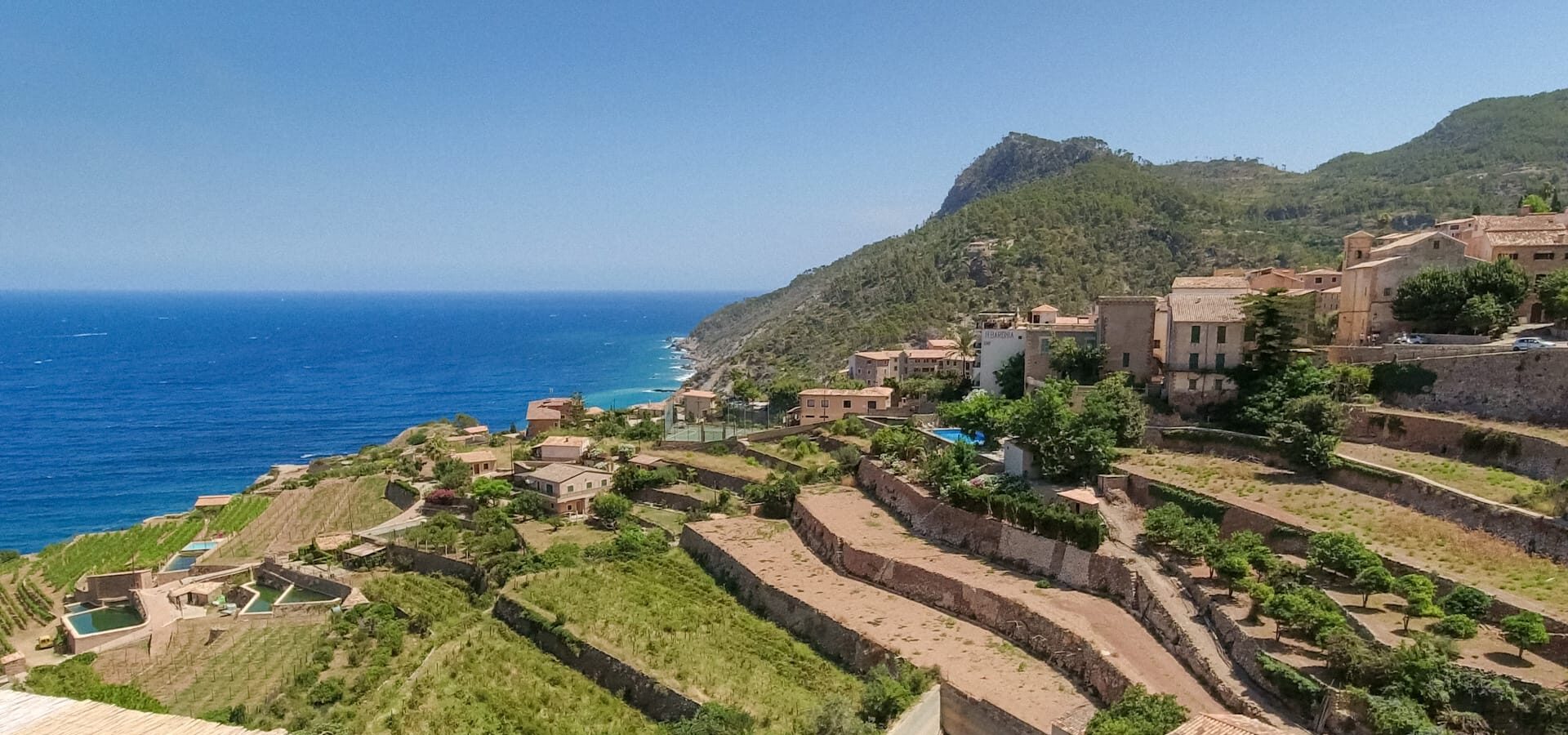
On the wild west coast, where the Tramuntana mountains drop straight into the sea, sits the village of Banyalbufar [bahn-yal-boo-FAR]. The name comes from Arabic and means roughly “vineyard by the sea,” which is exactly what you’re looking at when you arrive. Hundreds of dry-stone agricultural terraces tumble down the cliffs to the Mediterranean, built during the Moorish era over a thousand years ago and still farmed today.
What’s grown on those terraces is part of what makes Banyalbufar special. The village is one of the few places in Spain where Malvasia de Banyalbufar grapes are still cultivated, producing a sweet white wine you’ll struggle to find anywhere else on the island. A handful of small producers offer tastings if you ask around in the village.
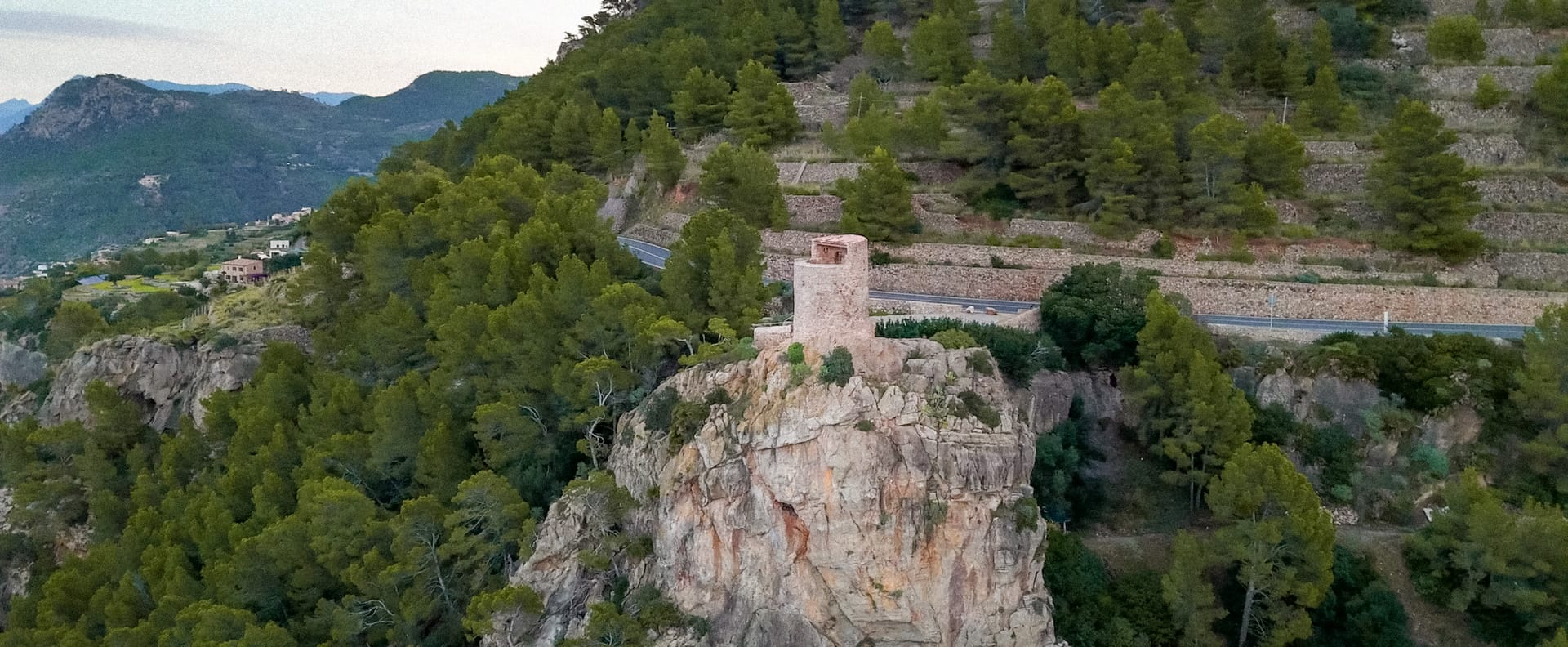
Just up the coast road, Torre del Verger is a 16th-century watchtower built to spot pirate raids. Park at the small lay-by, walk the short path, and you’ll find one of the best sunset spots on the island. Cliffs glowing gold, sea below, no entry fee, no queue.
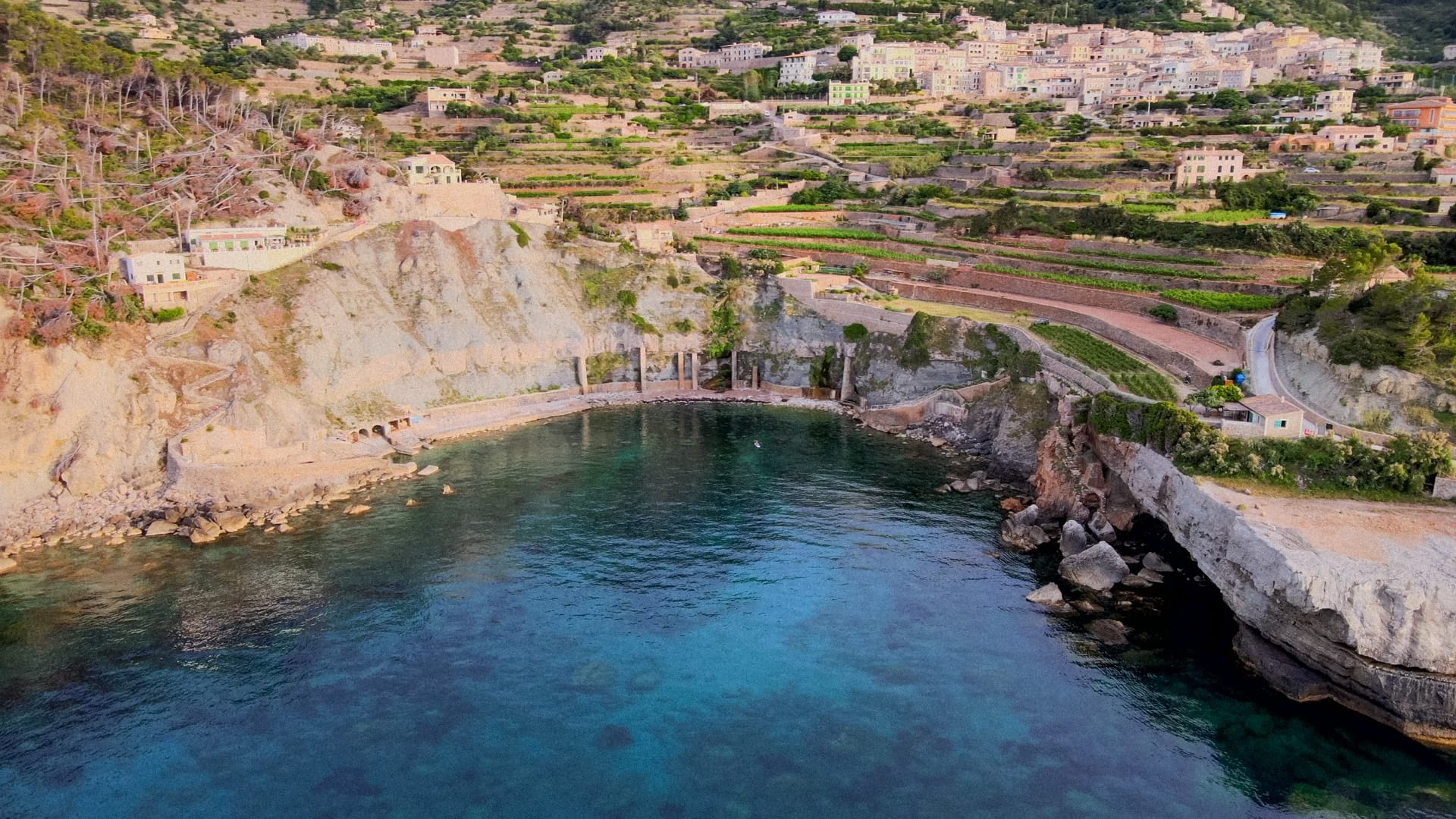
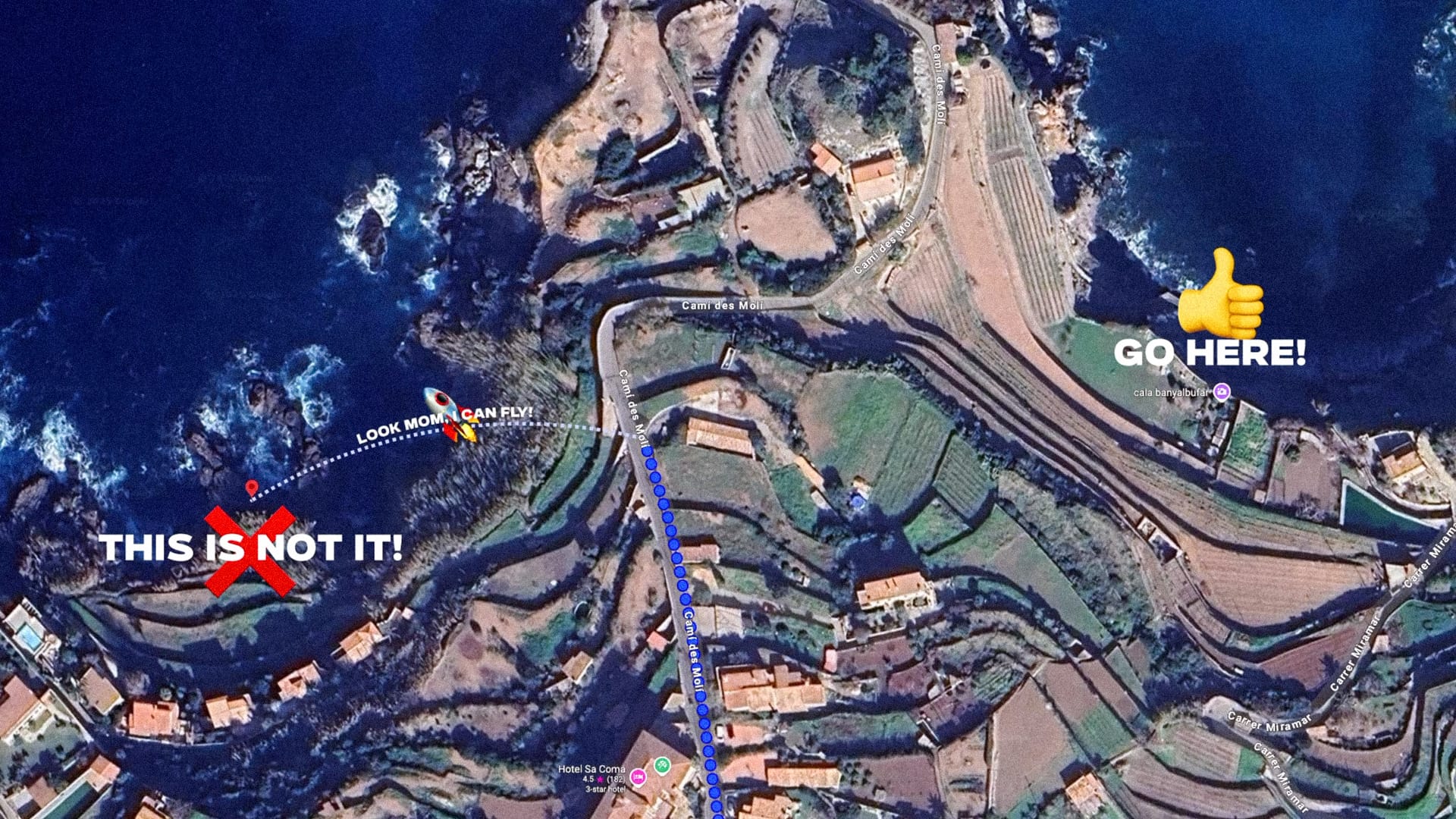
We set out one afternoon to find Cala Banyalbufar, the village’s beach, and Google Maps had a different plan for us entirely. We never quite got there. When you do find it, expect rocks and concrete slabs rather than soft sand. Bring decent shoes, leave the towel in the car, and treat it as a swim spot rather than a sunbathing afternoon. The stairs back up to the village are a workout.
Sa Calobra Road, Sa Corbata Knot and Penyal del Cavall Bernat
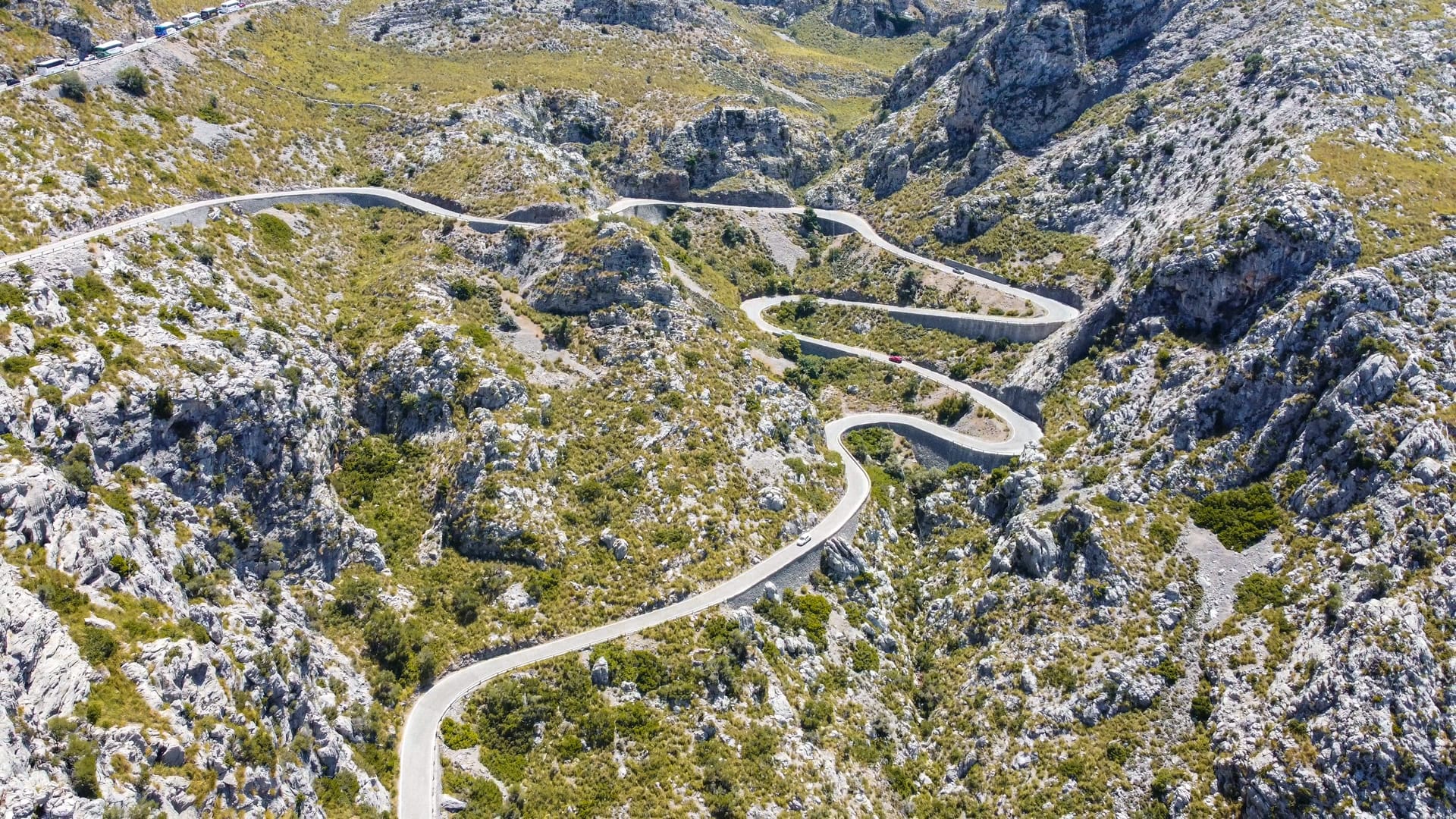
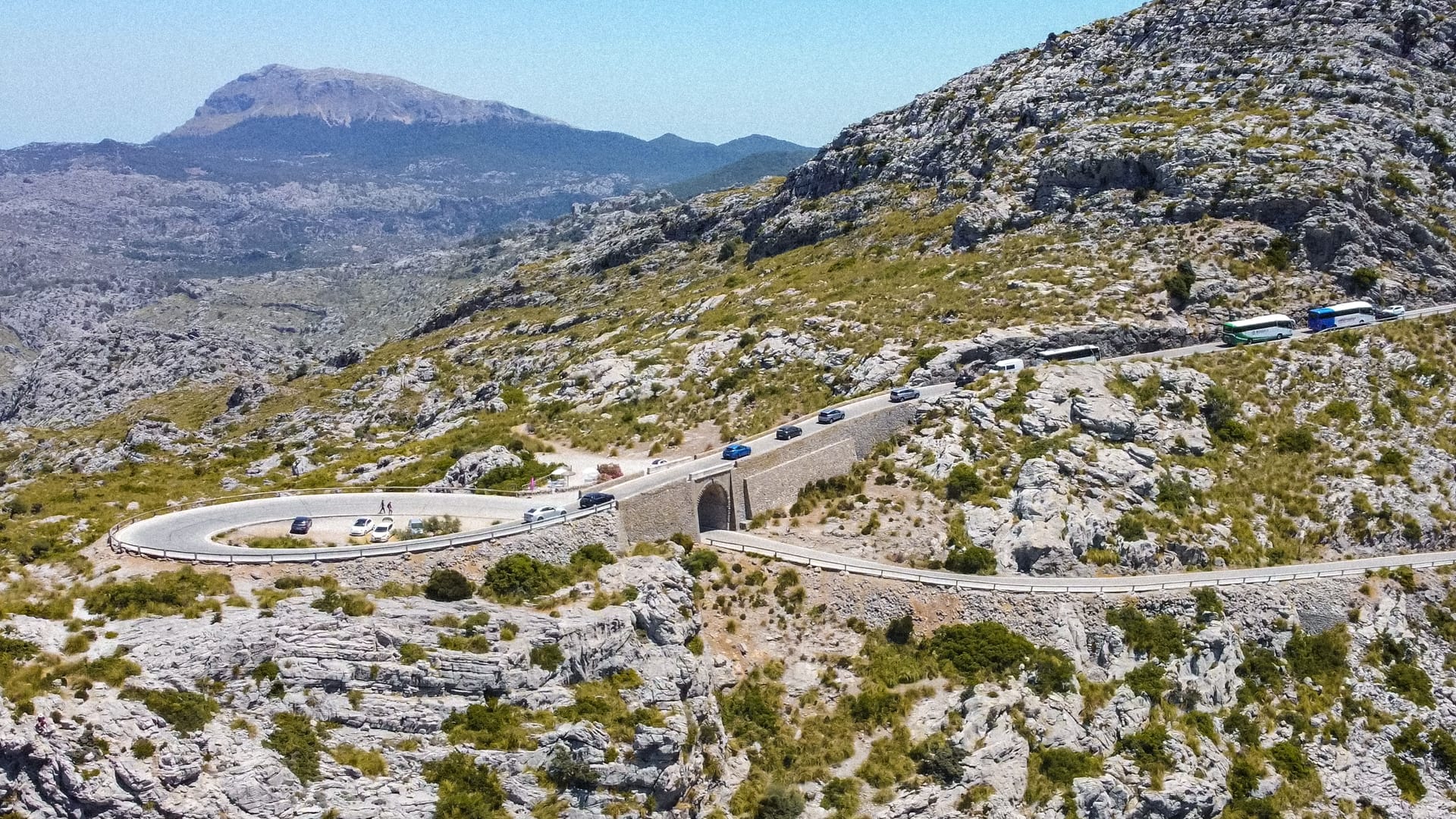
If you only drive one road in Mallorca, make it this one. The Sa Calobra [sah kah-LOH-brah] road descends from the Coll dels Reis viewpoint down to the coast through some of the most jaw-dropping mountain scenery in the Mediterranean. Around 12 kilometres of road, more than 50 hairpin bends, and the famous Sa Corbata [sah kor-BAH-tah] knot. A single 270-degree loop where the road crosses over itself in a complete twist. From above it looks like a tied ribbon, which is exactly what the name means in Catalan.
The road was built in the late 1920s and early 1930s, designed by engineer Antoni Parietti to follow the natural contours rather than blasting through them. It’s a small miracle of road-building, and the views around every corner make it feel longer than it is.
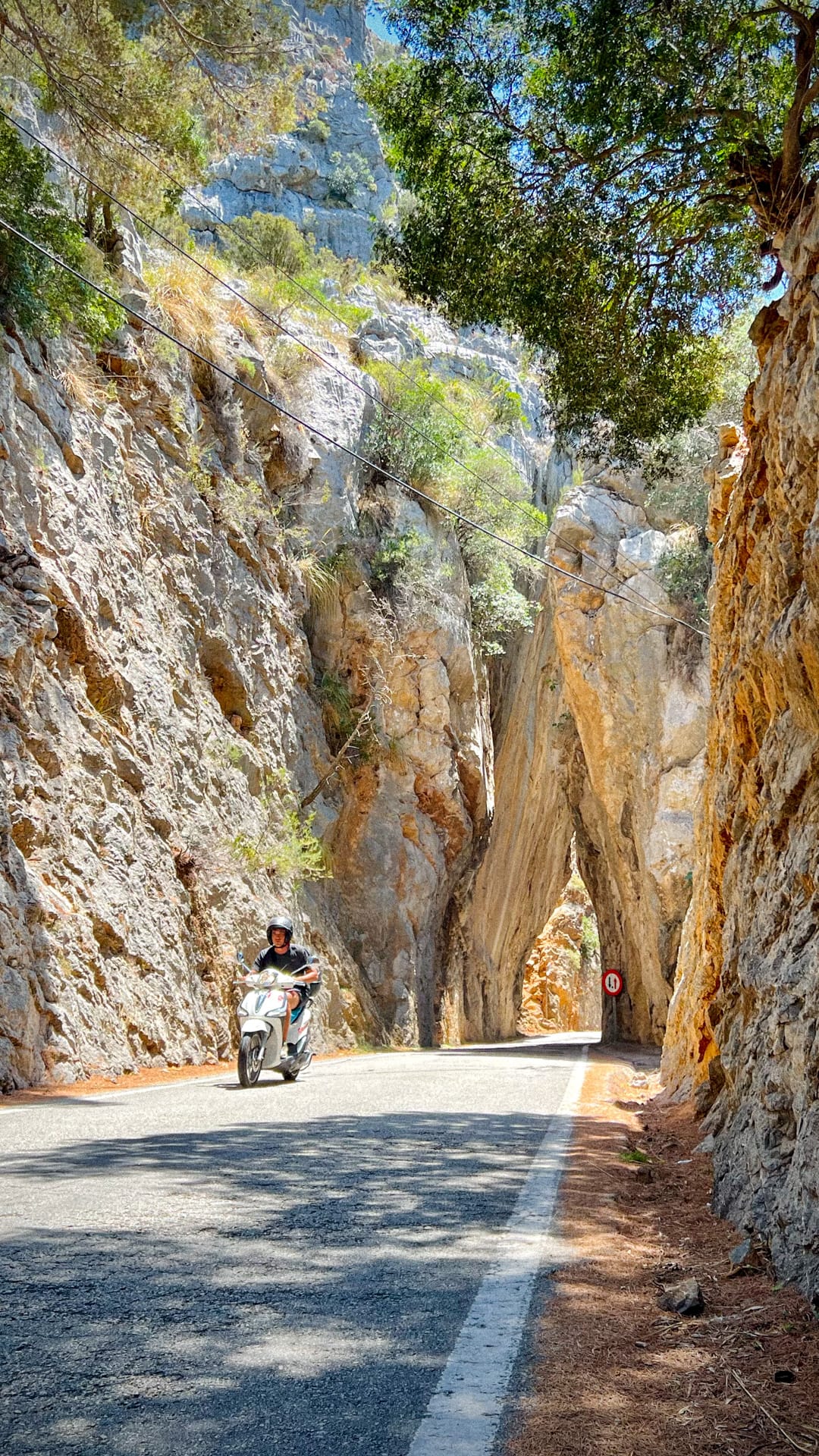
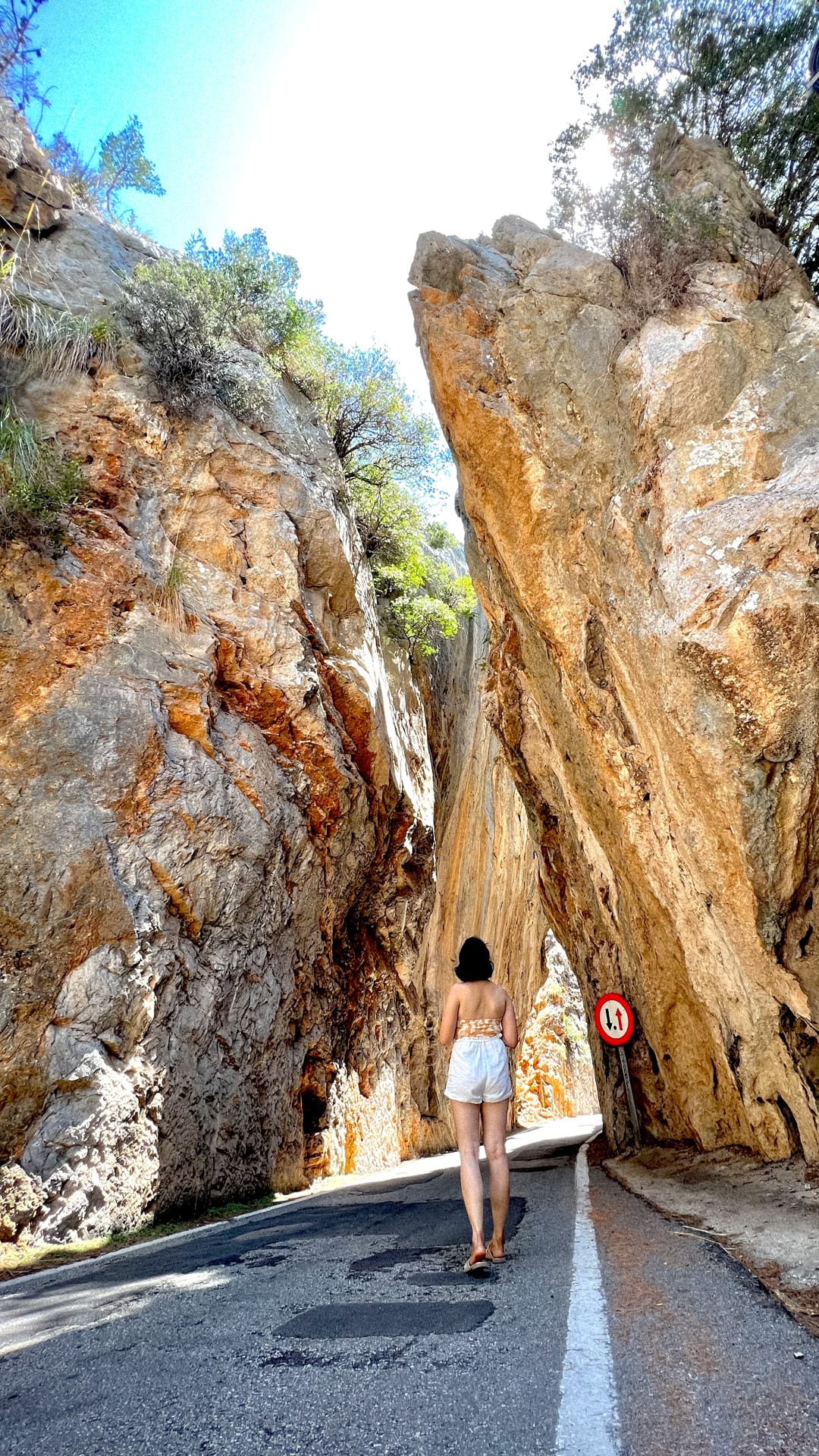
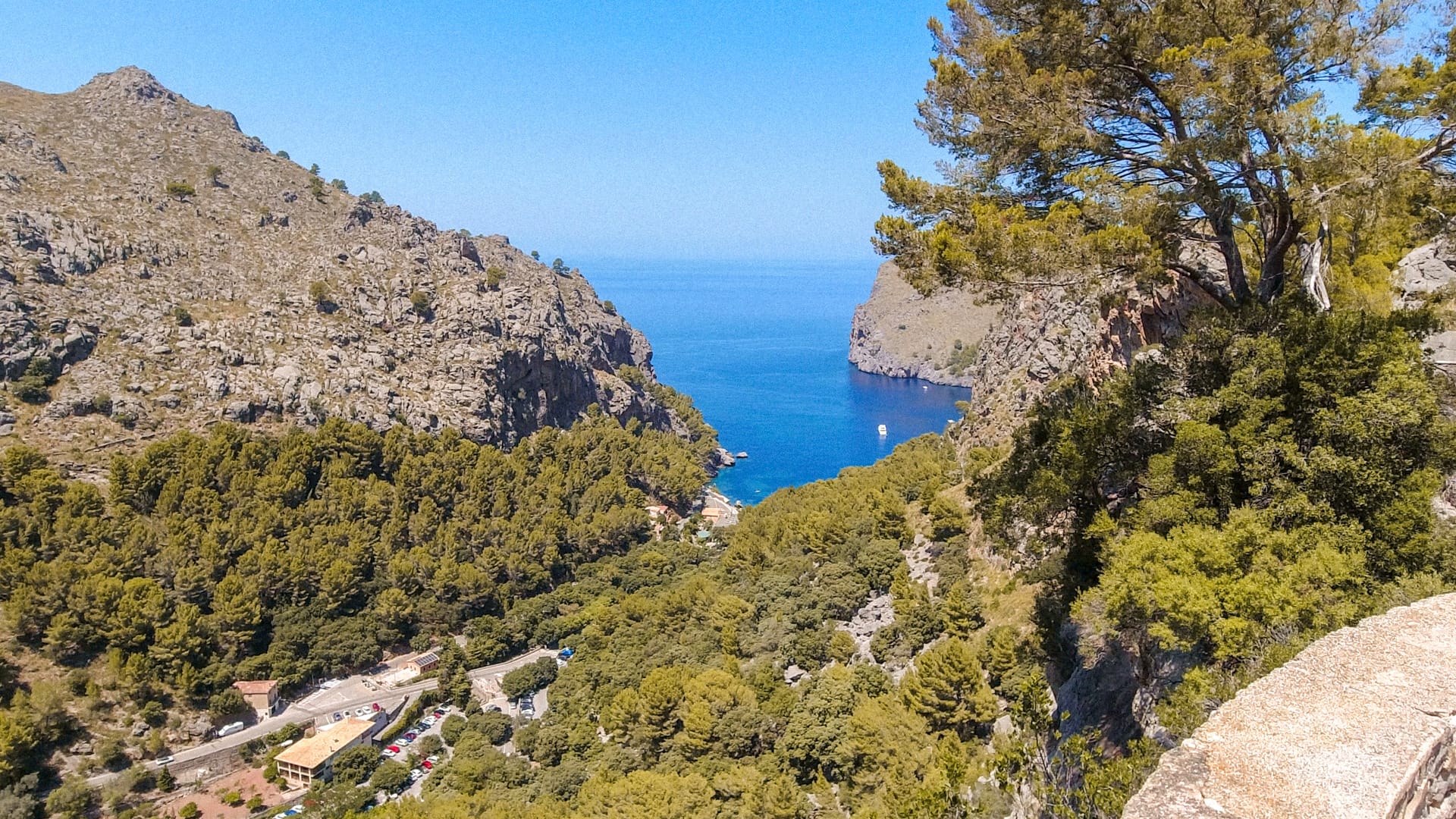
Stop at the lay-by for Penyal del Cavall Bernat, where dramatic limestone needles spike up from the ridge against the sky. It’s the most photographed view on the route for good reason.
A practical note. The road can be closed in winter after heavy rain, and in peak summer it gets choked with tour coaches. Aim for a weekday morning or shoulder season. The beach at the bottom and the spectacular Torrent de Pareis gorge get their own write-up in our top beaches in Mallorca guide.
Santanyí Market
Every Wednesday and Saturday morning, the pretty sandstone town of Santanyí [san-tah-NYEE] turns its central square and surrounding streets into a properly good market. The mix is what makes it work. Local farmers sell fruit, herbs, oils and Mediterranean produce alongside artisan jewellers, leather makers and clothing stalls, with a sprinkling of food trucks doing brisk trade in pa amb oli sandwiches and Mallorcan pastries.
It’s larger than you expect, spilling into multiple side streets, and you’ll spot far more locals shopping here than at the more touristy markets on the coast. The atmosphere is genuinely social. Vendors chat, neighbours catch up, nobody hurries you.
Trust us, the FOMO is real. With stalls in every alley you’ll convince yourself you’re missing something three streets over. The fix is to arrive before 10am, walk one full loop without buying, then circle back to whatever stuck. Bring a tote bag, a reusable water bottle, and small cash. Stay for an early lunch at one of the squares once the market starts winding down.
Looking for things to do on Mallorca?
Cala Figuera
We almost put this in our beaches guide, then realised that misses the point entirely. Cala Figuera [KAH-lah fee-GAIR-rah] isn’t really a beach. It’s a working fishing village built into a narrow Y-shaped inlet on the south-east coast, and it’s possibly the prettiest harbour on the island.
The village sits on two cliff-edge arms above the water, with traditional white llaüt [yah-OOT] fishing boats (the flat-bottomed wooden vessels of the Balearics) bobbing in the clearest blue water you’ve ever seen. Whitewashed houses drape with bougainvillea. Fishermen still mend their nets on the quayside in the early evening. There’s no big resort, no nightclub strip. Just a couple of waterfront restaurants serving whatever came in that morning.
Go in late afternoon, around 5 to 6pm, when the boats return and the light turns golden. Walk both arms of the inlet, find a seat on the harbour wall, and order grilled fish. This is one of those places you visit expecting a quick photo and end up staying three hours.
Cuevas del Drach
Just outside Porto Cristo on the east coast, the Cuevas del Drach [KWAY-vahs del DRAHK], or Caves of the Dragon, are one of those experiences that sound a bit naff in writing and turn out to be genuinely moving in person. The caves stretch nearly two and a half kilometres underground, lit theatrically to bring out the colours of stalactites and stalagmites that have grown drop by drop over millions of years.
The visit takes you through a series of chambers, each with its own atmosphere, ending at Lake Martel. Named after the French speleologist Édouard-Alfred Martel who first explored and mapped the caves in 1896, it’s one of the largest underground lakes in the world.
Then they turn the lights down. A small boat carrying classical musicians glides across the lake in near-darkness, playing live. The acoustics are extraordinary. It sounds gimmicky written down. It absolutely is not.
After the concert you take a short boat ride across the same lake and exit through the gardens. Book tickets online in advance, especially in summer. Tours run roughly hourly throughout the day.
Sineu
If you want to understand inland Mallorca, Sineu [see-NEH-oo] is where to start. This small town at the geographic centre of the island doesn’t look like much from the bypass, but it’s been quietly important since the 13th century. King Jaume II built a royal palace here in the early 1300s (now a convent of cloistered nuns), and the soaring Església de Santa Maria still dominates the central square.
The reason most travellers come, though, is the Wednesday market. It’s been running since the early 14th century, making it one of the oldest in Spain, and it’s the only one on the island that still includes a livestock section. Yes, actual livestock. Sheep, goats, chickens, the occasional pig, traded by farmers exactly as they have been for seven centuries. The food, produce and clothing stalls fill the surrounding streets and squares, and the whole town is essentially closed to anything but market traffic until lunchtime.
A quiet tip. If Sineu has whetted your appetite for the inland, drive a few minutes more to Petra, the small town where Junípero Serra was born. He’s the Mallorcan-born Franciscan friar who founded the California mission network in the 1700s, and his birthplace and a small museum are worth half an hour. Almost no other visitors make it out here.
The Two Santuaris de Sant Salvador (Felanitx and Artà)
Mallorca has two important sanctuaries with the same name, which causes endless confusion. Both are worth visiting, and they sit at opposite ends of the island, so think of this as two for the price of one.
Santuari de Sant Salvador, Felanitx
Perched on top of Puig de Sant Salvador (509 metres) above the town of Felanitx, this monastery was founded in 1348 in response to the Black Death. The current church dates from 1715, and the views from the terrace stretch across the south of the island as far as Cabrera on a clear day.
Two enormous monuments dominate the site. A 7-metre copper statue of Christ the King stands on a 37-metre stone column on one side. On the other, the 14-metre stone Picot Cross frames the view to the south. Both are striking, both are easily missed if you’re rushing.
Here’s the bit no one tells you. The sanctuary runs a small hospederia (a basic guesthouse), and you can spend the night up here in a simple room with one of the most spectacular sunset and sunrise views in Mallorca. Book direct and don’t expect a hotel. Expect a simple room, amazing views and silence after dark.
Santuari de Sant Salvador, Artà
Above the town of Artà on the east of the island, this sanctuary feels completely different. Built in the 14th century as a fortress to defend against pirate raids, it’s all thick stone walls and corner turrets. The neoclassical church inside dates from 1832.
The way up is part of the experience. A long stone staircase climbs from the town through cypress trees and Stations of the Cross, with views opening up at every turn. There’s a small café at the top for the obligatory water and breather. Free to enter. Best in late afternoon when the light hits the walls.
Yartan Boutique Hotel
While you’re in the Artà area, we genuinely loved the Yartan Boutique Hotel. Charming interiors, brilliant breakfast, and the kind of personal welcome that’s hard to find. Worth a look if you’re staying east.
Felanitx
Most people drive straight past Felanitx on the way to its sanctuary or the beaches further south. Slow down. The town itself rewards an hour or two.
The standout sight is the Església de Sant Miquel, an imposing parish church with a sweeping baroque staircase that dates from the 16th century. The staircase has its own dark story. It’s said to have collapsed during a religious gathering in the 19th century, with significant loss of life. A reminder, as you walk up the rebuilt steps, that history isn’t always comfortable.
Felanitx also has one of the island’s better festival calendars. The Festes de Santa Margalida in late July and the Festes de Sant Agustí in late August both bring traditional Mallorcan dances, the cossiers and dimonis (the costumed dancers and devils that animate every proper village fiesta), live music and proper local energy. If your visit overlaps, adjust your plans to be there.
Bonus: the season nobody mentions
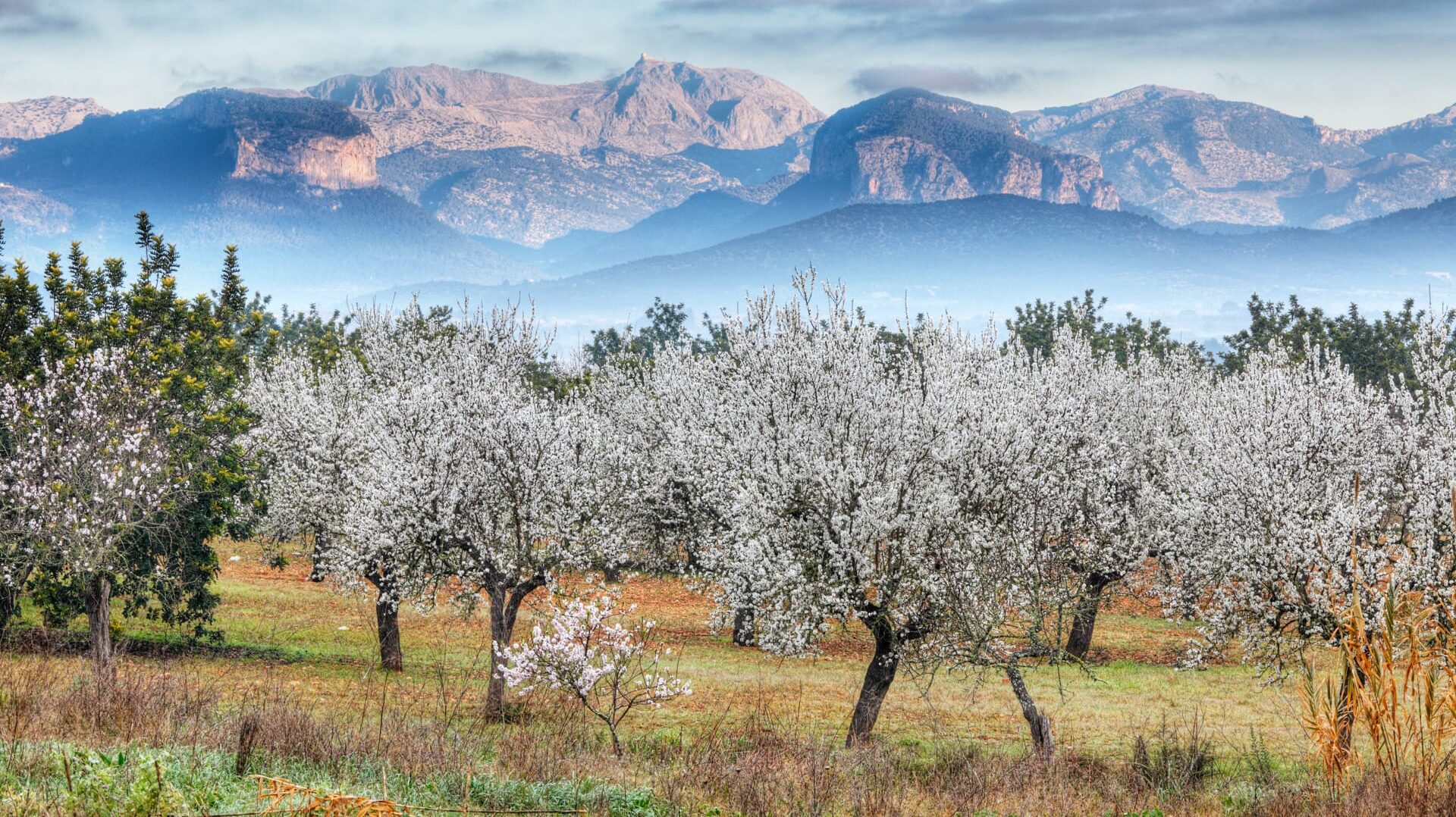
If you’re flexible on when you visit, consider late January to mid-February. The interior of the island, especially around Sineu, Petra and the Tramuntana foothills, transforms when the millions of almond trees come into blossom simultaneously. Pink and white flowers against bare branches, with the mountains as a backdrop. The island is uncrowded, accommodation is cheaper, and the walking weather is often perfect. It’s one of the most under-visited treats Mallorca has to offer.
Mallorca: where to next?
Hungry from all the exploring? Words like arròs brut, pa amb oli and ensaïmada about to enter your vocabulary? Head to our top food in Mallorca guide for everything you should be ordering.
Need somewhere to cool off after a day in the inland heat? Our top 10 beaches in Mallorca guide rounds up the coves and beaches we kept coming back to.
And if you want the bigger-name spots that pair beautifully with these hidden ones, our Mallorca beyond the beach: 10 essential stops is your next read.
Which gem is calling your name?
Visited in summer 2023, revised in spring 2026. Practical details can change, it’s always worth checking opening times and current status before your trip.