Ready to discover what makes Mallorca truly magical? Great, so are we. Fair warning though: you may well be booking flights before you finish!
From our three weeks on the island, we’ve handpicked 10 standout spots that blend history, culture, and that irresistible Mallorcan charm, including a fair few that’ll have you conquering a few hundred steps along the way. These are places we actually visited, and they sit naturally alongside the culinary adventures in our food guide and the off-the-beaten-path finds in our hidden gems guide without retreading the same ground. Whether you’re chasing sunsets or just a brilliant itinerary, let’s dive in
1. Palma de Mallorca: Your Urban Gateway to Island Vibes
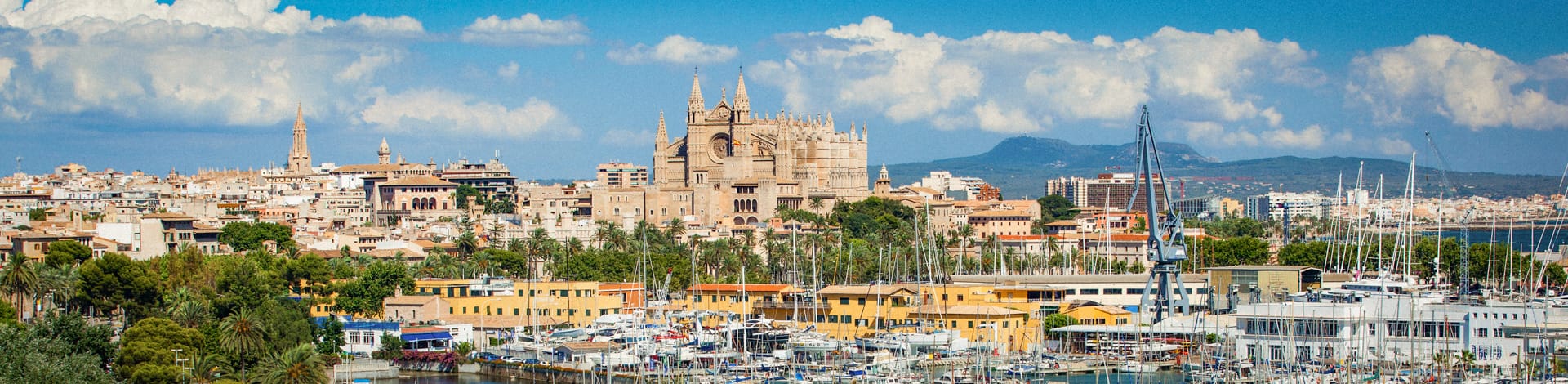
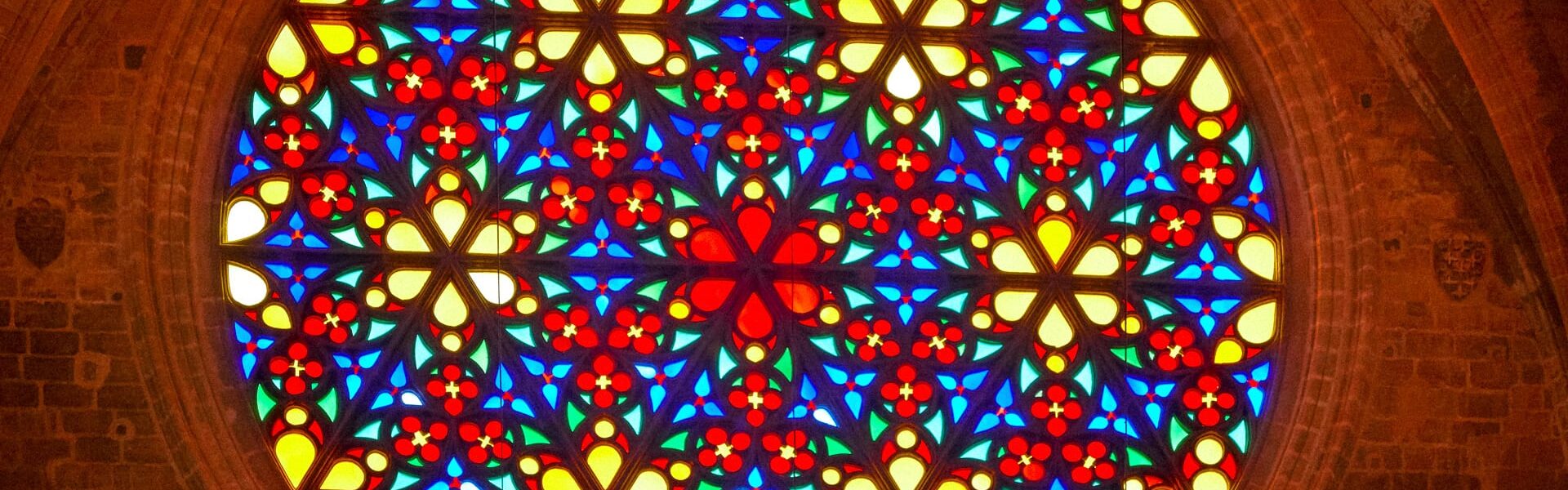
Start in Palma, the beating heart of Mallorca where Gothic grandeur meets laid-back streets. The old town alone earns a full day, anchored by the magnificent Catedral-Basílica de Santa María de Mallorca. Known locally as La Seu, its famous rose window is one of the largest Gothic rose windows in the world, measuring nearly 14 metres in diameter and composed of over 1,200 pieces of stained glass. Twice a year, on 2 February and 11 November, morning sunlight passes through the eastern rose window and projects its coloured reflection onto the opposite western wall, forming a figure-eight. It’s worth timing your visit around if you can manage it.
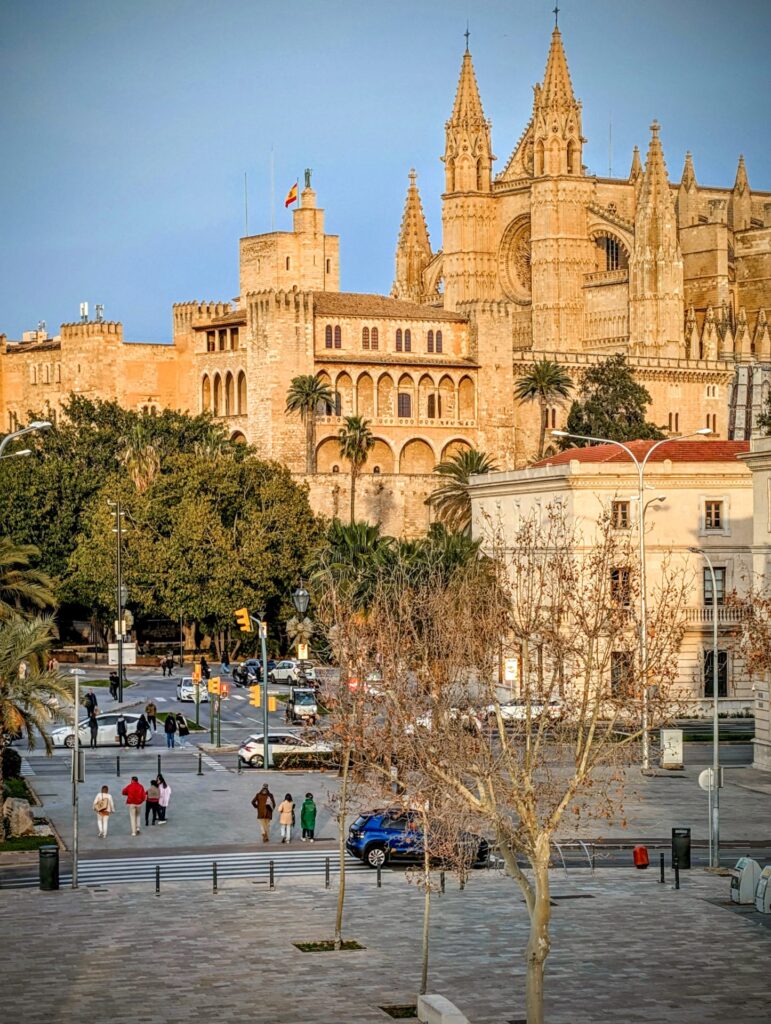
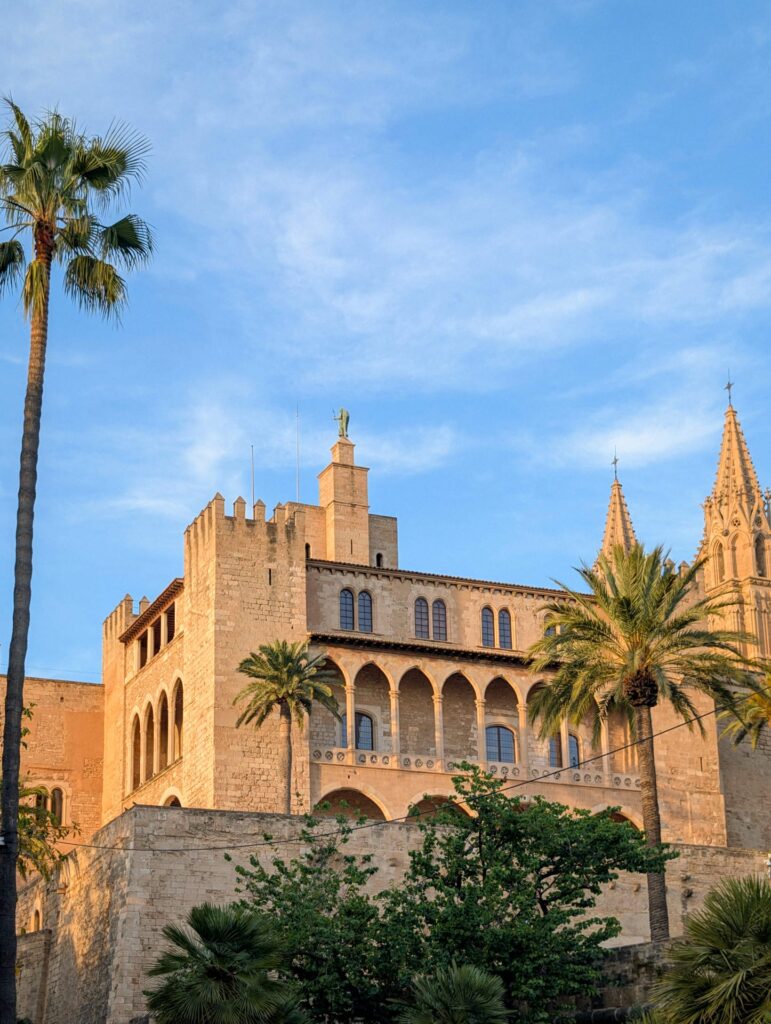
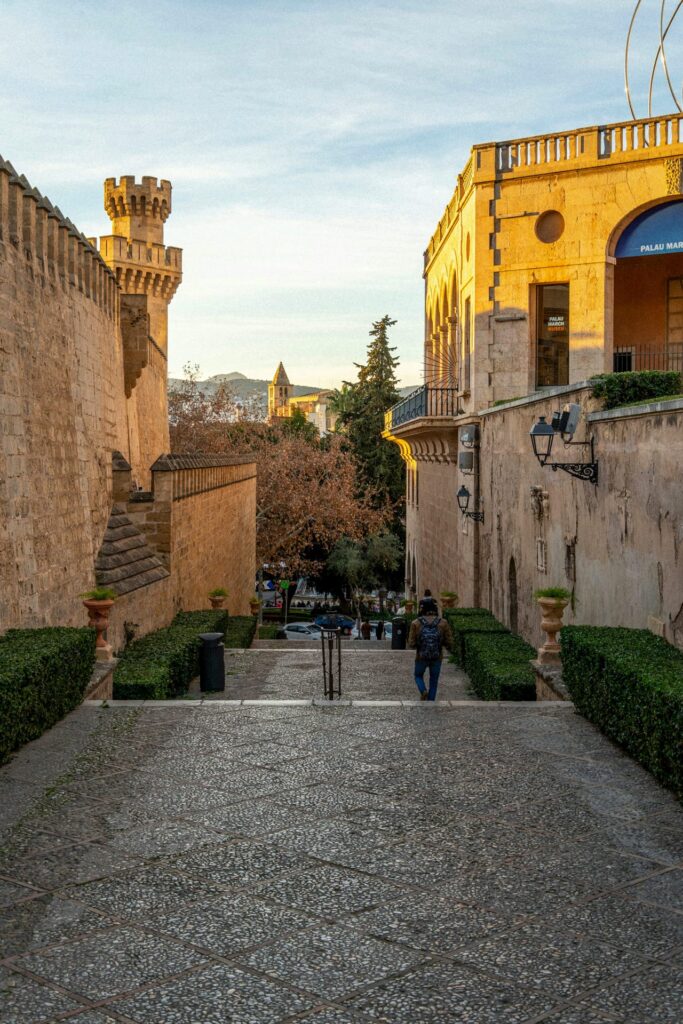
Pair La Seu with the Royal Palace of La Almudaina next door. This 14th-century fortress began as a Muslim Alcázar (the name comes from the Arabic “al-mudayna”, meaning small fortified city), before receiving a Gothic makeover under King James II of Majorca. The mix of Islamic arches and Gothic stonework tells centuries of island history in a single building. Stroll through the King’s Courtyard, duck into the 14th-century Chapel of Santa Anna, and take a breather in the S’Hort del Rei gardens below.
For the classic postcard view of both cathedral and palace together, head to Parc de la Mar. Then it’s worth tackling Castell de Bellver, Spain’s only circular castle, perched 112 metres above sea level. Built around 1300 for King James II, it’s one of just a handful of circular castles in all of Europe. The 360-degree views over Palma’s bay and the Serra de Tramuntana are worth every step of the climb, and the City History Museum inside traces Mallorca from prehistoric times to the present.
Before leaving Palma, don’t miss the lively Mercat de l’Olivar and Mercat de Santa Catalina for fresh produce, local cheeses, and the kind of sensory overload that makes you want to cook everything you’ve just seen. Stroll the Bastió de Sant Pere walls for harbour views, and if you want a gentle introduction to Mallorcan beach life, Cala Major and the S’Arenal promenade are both easy to reach.
Good to know: Aim for early morning to beat the crowds at the cathedral. Book palace tickets online in advance and check for free entry windows for EU citizens. Bellver Castle entry is modest and the walk up through the pine forest is a pleasure in itself.
2. Sóller and Port de Sóller: Tramuntana’s Tranquil Twins
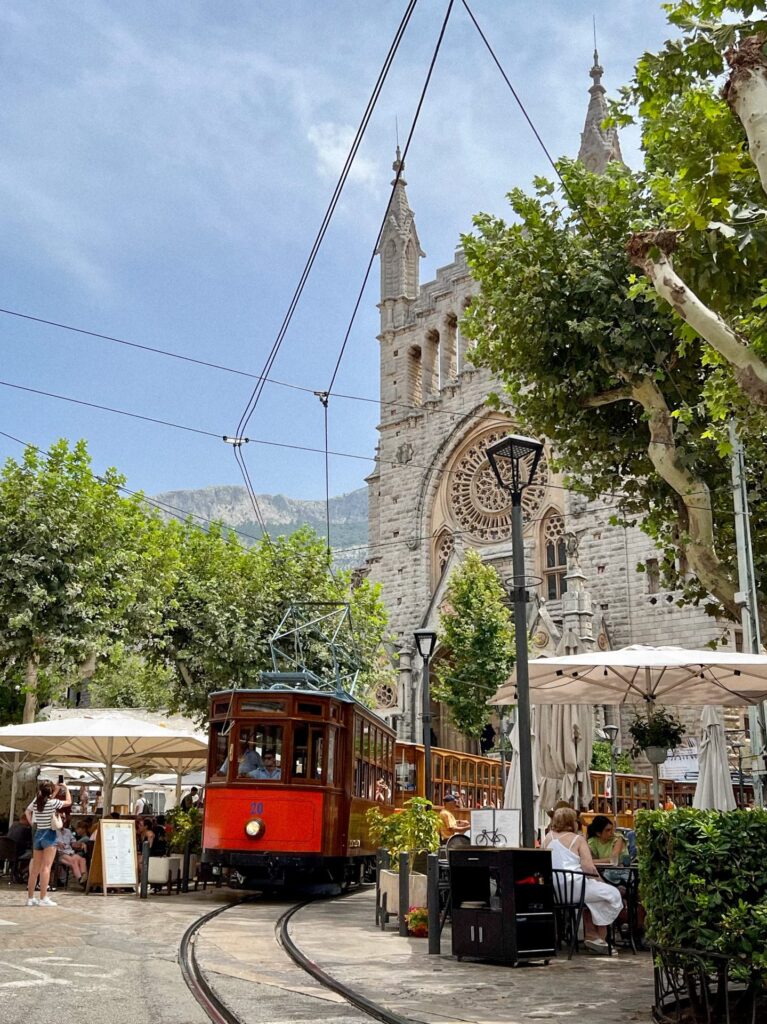
Hop on the vintage wooden train from Palma to Sóller and you’re in for one of the most charming journeys on the island. This 1912 narrow-gauge railway winds 27 kilometres through the Serra de Tramuntana, passing through 13 tunnels and over viaducts with views that’ll have you glued to the window. The train’s original purpose was transporting oranges to market, earning it the nickname “Orange Express.” Now it’s pure pleasure.
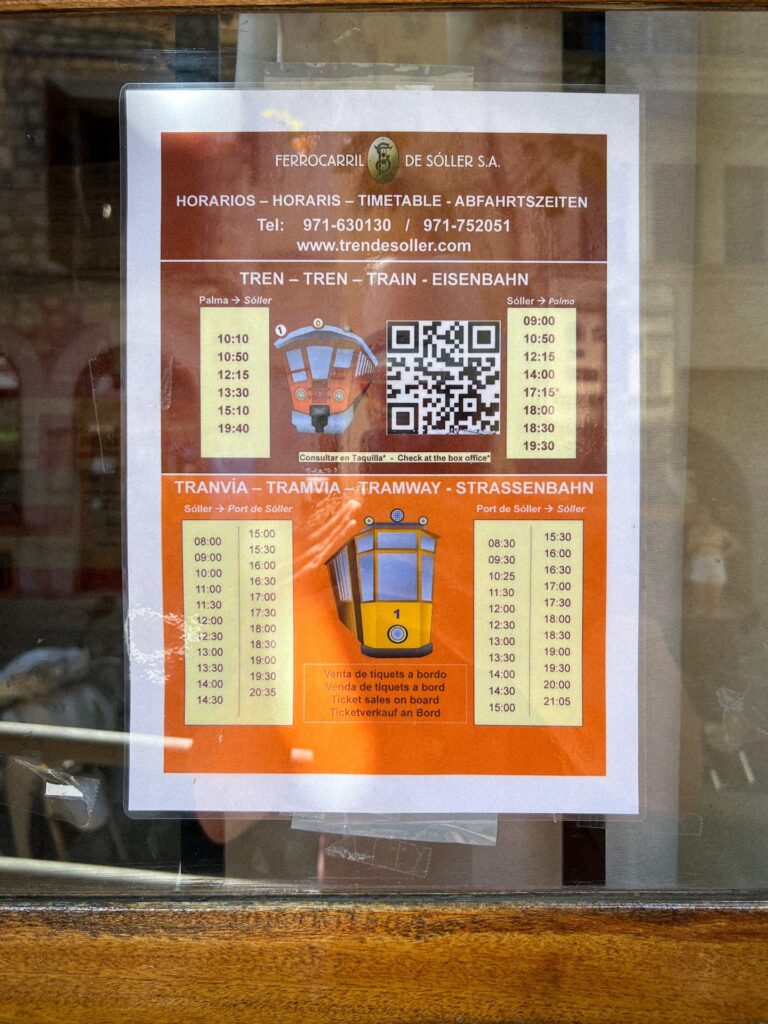
There are no toilets on board and no assigned seats, so arrive early and aim for the right-hand side heading to Sóller for the best mountain views. A return ticket runs around 30 €, or 40 € combined with the tram onwards to Port de Sóller. Trains run six times daily with extra services in summer. In peak season, book ahead as this genuinely sells out.
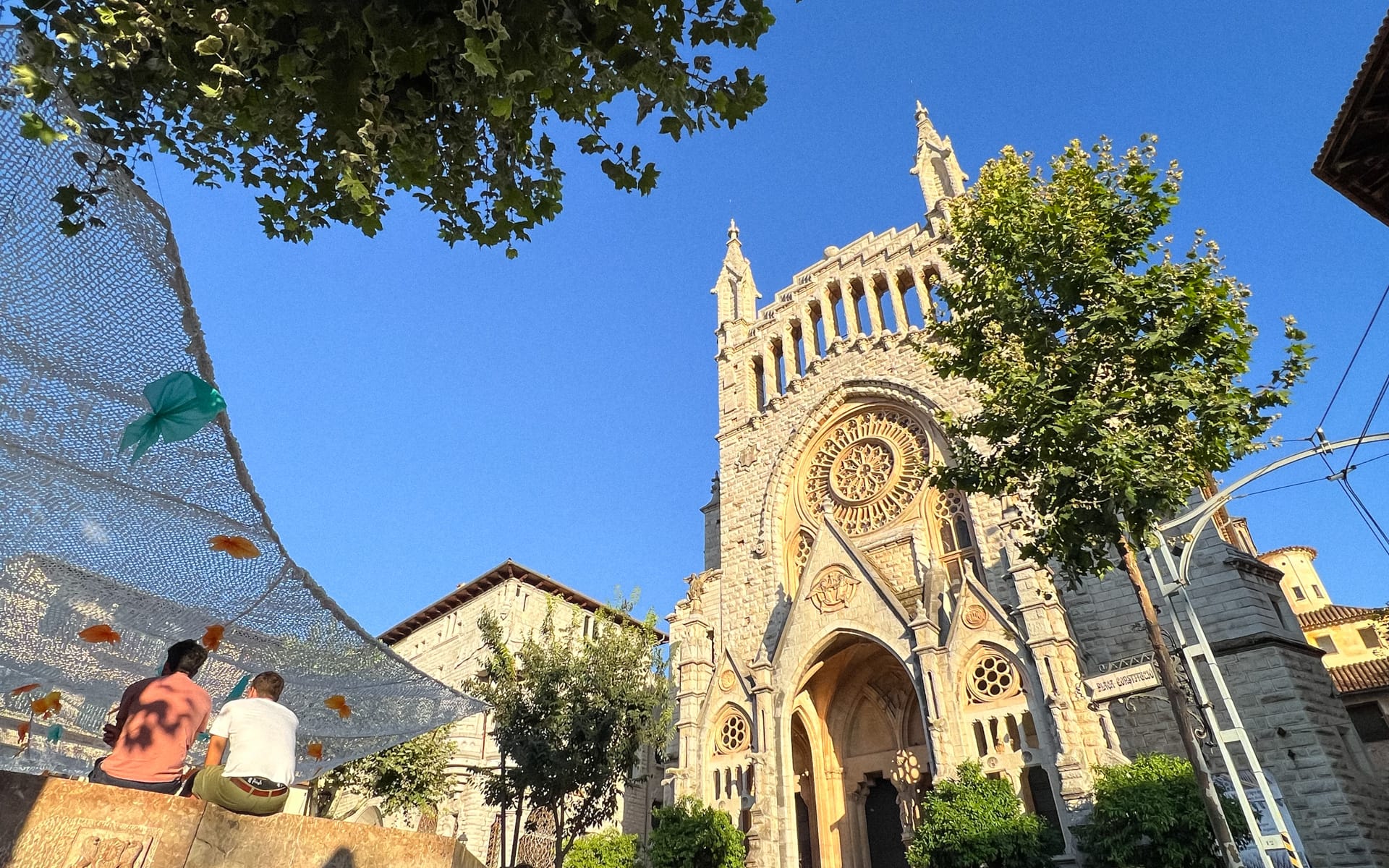
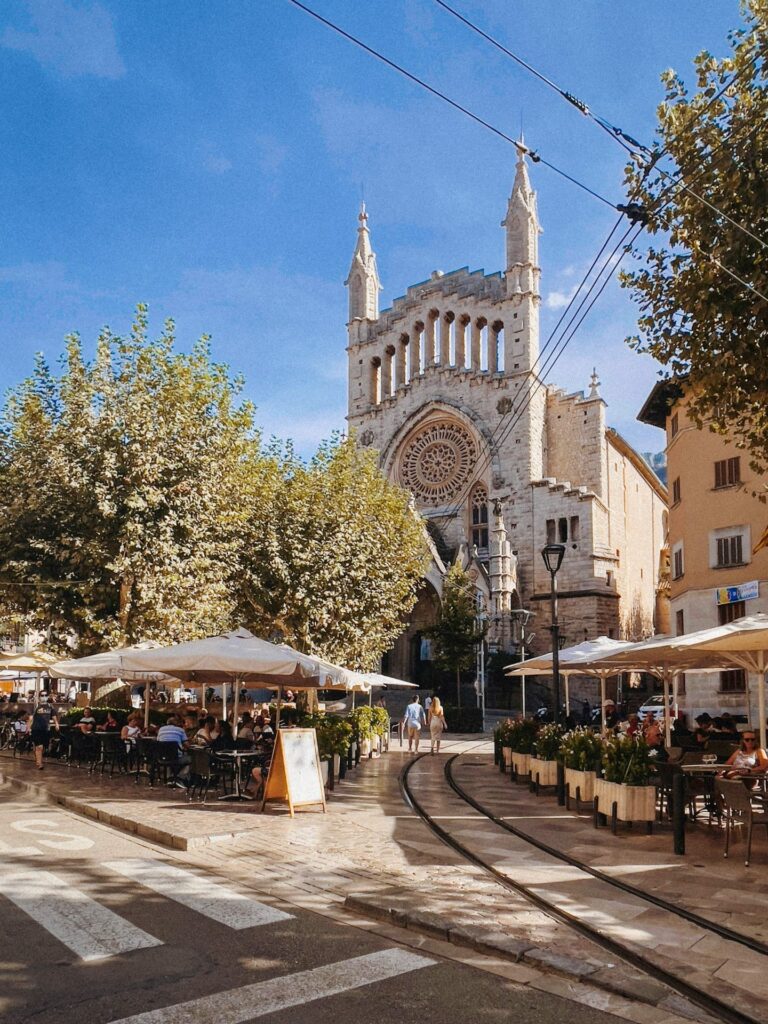
In Sóller, the Plaça de la Constitució buzzes with cafés beneath the shadow of the grand Sant Bartomeu church. The town’s Art Nouveau architecture reflects serious wealth from its 19th-century citrus trade. Many of Sóller’s residents emigrated to France in search of opportunity, returning with French influences you can still spot in the façades and ironwork today.
From Sóller, the vintage tram (dating from 1913) runs almost hourly down to Port de Sóller, taking about 20 minutes for the five-kilometre journey. The horseshoe bay at the port is ideal for an afternoon on the beach or a coastal hike with views. If you’ve eaten your way through our food guide, this is the perfect spot to pair a sunset stroll with a plate of paella overlooking the water.
3. Alcúdia: Northern Fortress of Fun
Head north to Alcúdia and you’ll quickly feel the pull of its medieval walls. You can walk the entire 1.5-kilometre perimeter on foot, and the two main gates are worth seeking out individually. The Porta de Mallorca to the east has a distinctive trio of decorative arches topping its defensive towers, while the Xara Gate (Porta de Sant Sebastià) to the northwest frames particularly good photos when the palm trees catch the light. Built in the late 13th century to protect against pirate raids, at six metres high with towers at regular intervals, they clearly did the job well.
Just outside the walls lies one of Mallorca’s most significant historical sites: the Roman ruins of Pollentia. Founded in 123 BC by the Roman consul Quintus Caecilius Metellus, this was once the capital of the Balearic Islands. The 12-hectare site includes the residential area of La Portella (with ancient streets and homes still visible), the Forum with its Capitol Temple, and Spain’s smallest surviving Roman theatre, which still hosts cultural events. The Monographic Museum of Pollentia nearby displays finds from the site including a bronze girl’s head and golden coins that point to a wealthy, refined settlement.
Good to know: The afternoon sun warms the stones beautifully. Entry to the walls is free. The Roman site and museum require a combined ticket, and guided tours are available if you’d like the full historical context.
4. Pollença and Port de Pollença: Steps to Serenity
Ready for a workout with a reward? Pollença’s famous Calvari steps lead to an 18th-century chapel with far-reaching views across the town and beyond to the Bay of Pollença and the Serra de Tramuntana. The route is flanked by cypress trees and 14 crosses, each three metres high, representing the Stations of the Cross. Some pilgrims complete the climb on their knees. Most of us opt for trainers.
The exact step count is debated by locals, but 365 is the number most widely cited, one for each day of the year. At the top, the simple Església del Calvari is a genuinely peaceful spot and there’s a small café where you can reward yourself while taking in the panorama. Tackle it at dawn for near-solitude, or aim for just before sunset for beautiful light and a good excuse to settle into one of the bars around Plaça Major afterwards.
Back in town, cross the Pont Romà for a history nudge. Locals call it Roman, though records only confirm its existence from the 14th century. Its double-arched stone design spanning the Sant Jordi river certainly looks ancient enough.
Port de Pollença’s promenade makes an excellent follow-up: easy, scenic, and perfect for yacht-spotting over a cold drink by the water.
Good to know: The Sunday market in Pollença is worth timing your visit around for a proper dose of local atmosphere. If you’re stopping for a meal in Port de Pollença, Stay Restaurant is open year-round and consistently delivers.
5. Fornalutx: Spain’s Prettiest Village Perch
Nestled in the mountains above Sóller, Fornalutx is all stone alleys, blooming bougainvillea, and orange-scented air. The village has been named Spain’s most beautiful village on more than one occasion, first receiving national recognition in 1983 from the Premio Nacional de Pueblos Embellecidos y Mantenidos de España and earning further accolades since. When you arrive, you’ll understand the fuss within seconds.
Wander cobbled streets lined with honey-coloured stone houses and traditional red roof tiles, and don’t miss the Carrer Metge Mayol stairway, decorated with plants and ceramic figures. It’s the best photo spot in the village and a genuinely charming slice of everyday Mallorcan life.
The Gothic church (dating from 1639) has a distinctive sundial above its wooden entrance, while the 17th-century defence tower stands in the town hall building. History runs deep here: Fornalutx dates back over 1,000 years as an Arab farmstead, and the old furnace from those iron-working days is still remembered on the village’s coat of arms.
Sit in the Plaça d’España, pick up fresh pastries from the Panaderia de Fornalutx bakery just off the square, and breathe in the citrus grove air. Honestly, the wandering is the whole point.
Good to know: Spring (April to June) brings lush green landscapes and blossoms. Autumn is equally lovely when the oranges ripen. Parking in the village is very limited, so arrive early or take the bus from Sóller. The 40-minute walk from Sóller through citrus orchards is genuinely lovely if you’re feeling energetic.
6. Artà: Folklore, Fortress Flair and a Great Aperitivo
Artà has that authentic buzz that so many Mallorcan towns aim for but few fully deliver. The 180 steps up to the Santuari de Sant Salvador are the obvious starting point: the 14th-century complex sits dramatically above the village with thick stone walls topped by turrets, and the neoclassical church from 1832 offers a peaceful interior amid the historic stonework. The views across the Serra de Llevant from up here are genuinely worth the effort.
If your timing is right, catch one of Artà’s summer festivals. The Santa Margalida Fiestas in July and the Sant Agustí celebrations in August bring traditional dances, live music, and genuine local energy. The town transforms in the best possible way.
Once you’ve worked up an appetite, two spots in Artà deserve a mention. Ses Cosines is a relaxed Mediterranean restaurant and bar with a charming courtyard, excellent tapas, and a standout selection of Mallorcan gins and tonics. This is where we had the watermelon gazpacho with feta that we still think about. If you’re after something more aperitivo in spirit, head to Vermuteria by Baudot 1926. Owners Carmelo and Ida have created a genuinely special spot: over 50 varieties of vermouth served with refined Mallorcan-style tapas including anchovies, sobrassada, and beef tartare. It fills up fast once it opens in the late afternoon, so arrive early or you may find yourself waiting for a table.
Good to know: Evenings catch the best light on the sanctuary, especially during festival periods. The sanctuary itself is free to enter.
7. Llucmajor: Market Morning Magic
Llucmajor doesn’t shout for attention, and that’s precisely its appeal. The largest municipality on the island by area, it’s best known to visitors for its weekly market, which transforms the town square into a genuine local hub. You’ll find fresh produce, leather goods, herbs, and local cheeses alongside the relaxed back-and-forth of a market that isn’t performing for tourists. It runs on Wednesdays and Fridays and pairs naturally with the drive between Palma and the south of the island.
Bring a reusable bag and some cash, chat with the stallholders (many speak English), and sample before you buy. The town centre has a pleasant historic core worth a short wander, with a notable church and traditional squares that reward anyone willing to step away from the market stalls.
Good to know: Arrive before 9am for the best selection and before the heat builds. Wednesdays tend to draw a bigger crowd than Fridays.
8. Manacor: Church, Pearls and Tennis History
Manacor’s Nostra Senyora dels Dolors church towers over the town with neo-Gothic grace. Dating to the 13th century (though substantially rebuilt in the 19th), it remains one of the most important historic buildings in this part of the island, and the small museum of sacred art inside is worth a look.
The town is also famous for its cultured pearls, a tradition that’s put Manacor firmly on the map for jewellery lovers. You’ll find shops throughout the centre demonstrating the pearl-making process, and if you’ve got someone at home who’d appreciate a genuinely Mallorcan gift, this is a worthwhile stop.
The unexpected highlight, though, is the Rafa Nadal Museum Xperience at the Rafa Nadal Academy. As Manacor’s most famous son, Nadal’s career is celebrated through an interactive exhibition that goes beyond trophies to explore what drives sporting excellence. It’s more engaging than it sounds, whether you follow tennis or not, and it covers a strand of modern Mallorcan identity that most top 10 guides overlook entirely. Book tickets online during peak season; the museum generally opens from 10am.
For lunch or dinner in Manacor, Factoria Gastrobar on Plaça Weyler is the pick. Ranked among the town’s top restaurants on TripAdvisor, it offers a short, thoughtfully put-together menu covering Mediterranean, Indian and Asian flavours, good local wines, and a relaxed atmosphere that feels like it genuinely belongs to the town.
9. Mirador de El Colomer: Cliff-Edge Wonder
Drive the road from Port de Pollença toward Cap de Formentor and prepare for one of Mallorca’s most dramatic coastal views. Sitting at 232 metres above the sea, paved paths lead across the clifftop platform to the main lookout, where the El Colomer islet juts from impossibly blue water below, the Formentor peninsula stretches northeast, and the Albercutx watchtower is visible to the left. Below the platform, the cliff drops almost vertically for 200 metres to the sea.
The viewpoint was built in 1961, and at the entrance a stone monument honours the engineer who masterminded the winding road to Formentor beach in 1925. That road itself, with its hairpin bends and mountain views, is half the adventure of getting here.
If you have energy after the main viewpoint, a 2-kilometre walk uphill from the car park leads to the Talaia d’Albercutx watchtower for even broader panoramas.
Good to know: The car park fills quickly. Arrive before 10am or after 4pm to avoid the worst of it. During July to September, private car access beyond this point toward the lighthouse is restricted, but the mirador itself is always reachable. Bring water, wear sturdy shoes, and hold onto your hat as it can be genuinely windy up here.
10. Northern Beaches: Five Beaches, Five Moods
Round off with a beach crawl through the north’s varied coastline. Each spot has its own personality, so pick based on your mood and energy levels.
Cala Mesquida is backed by protected dunes and pine forests, offering a large natural beach with proper wave action when the Mediterranean feels feisty. Red flag days are not uncommon, which makes it popular with surfers (especially out of season).
La Font de la Cala offers a more sheltered alternative. Calmer water and an intimate bay feel make it the better choice for snorkelling or a relaxed swim when Mesquida is too rough.
Platja de Cala Gat is small and scenic but genuinely busy in season. We stopped here mainly for photos, and the crystal-clear water and rocky surrounds delivered on that front. Arrive early if you want a patch of sand.
Cala Son Moll is another lovely cove with gentler conditions and a good balance of facilities and natural beauty, well suited to families.
Ca’n Pastilla sits close to Palma rather than the north, so it’s worth knowing that before you route your day around it. That said, if you’re heading back toward the city or want easy beach access with full services, a promenade, and a resort atmosphere, it does the job well.
Good to know: Mornings bring the calmest seas and the smallest crowds. Each beach faces different wind directions, so if one is too rough another nearby is likely to be calmer. Pack a cool bag for the more remote spots and always check the flag warnings before swimming. For more coastal coverage across the whole island, our beaches guide has you fully covered.
Which Spot Has You Planning Your Route?
Whether it’s Palma’s cultural depth, Fornalutx’s flower-draped charm, or those vertigo-inducing clifftop views at El Colomer, Mallorca packs extraordinary variety into one island. From Roman ruins to a modern tennis museum, medieval walls to vintage mountain trains, golden beaches to stone village squares: it more than earns its reputation.
These spots form the backbone of our three-week route, alongside the culinary adventures in our food guide and the off-the-beaten-path discoveries in our hidden gems guide. Together they make a proper Mallorcan experience rather than a checklist of landmarks.
The magic is as much in the connections between places as in the places themselves: catching the sunset at El Colomer then dining in Pollença, climbing Bellver’s tower then browsing Palma’s markets, tackling the Calvari steps then rewarding yourself at a square-side café. That’s the Mallorca we fell for.
Which stop is calling your name? Let us know in the comments below, and if this guide helped with your planning, we’d love to hear how the trip went.
Looking for more Mallorca inspiration?
- Top food experiences in Mallorca for the island’s tastiest bites
- Hidden gems in Mallorca for off-the-beaten-path magic
- Best beaches in Mallorca for more coastal perfection