
If you’re planning a trip to southern Spain, Granada is one of those cities that completely lives up to the hype. You’ve got the Alhambra watching over the city from above, the Albaicín’s tangle of old streets across the valley, and a historic centre where a cathedral, royal tombs and a former silk bazaar all sit within a short walk of each other.
What makes Granada feel different is the layering. You’re not just ticking off monuments here. In one day, you can walk through a preserved Moorish merchant inn, browse lanes that echo the old bazaar, step into grand Christian monuments built after the conquest of 1492, and then finish with one of the most famous views in Spain.
We visited a mix of Granada’s headline sights and smaller historic stops, and honestly, it makes a brilliant city break if you love places where history and atmosphere are just as important as the big-name landmarks.
What we visited in Granada
Our route in Granada included:
- Corral del Carbón
- Alcaicería
- Granada Cathedral
- Royal Chapel of Granada
- Lunch at Restaurante Tetería Alhambra
- The Alhambra
- Mirador de San Nicolás
That already gives you a really strong first-time Granada itinerary. But there are also a few worthwhile extras nearby that are easy to add if you have more time, which we’ll get to later.
1. Start at Corral del Carbón
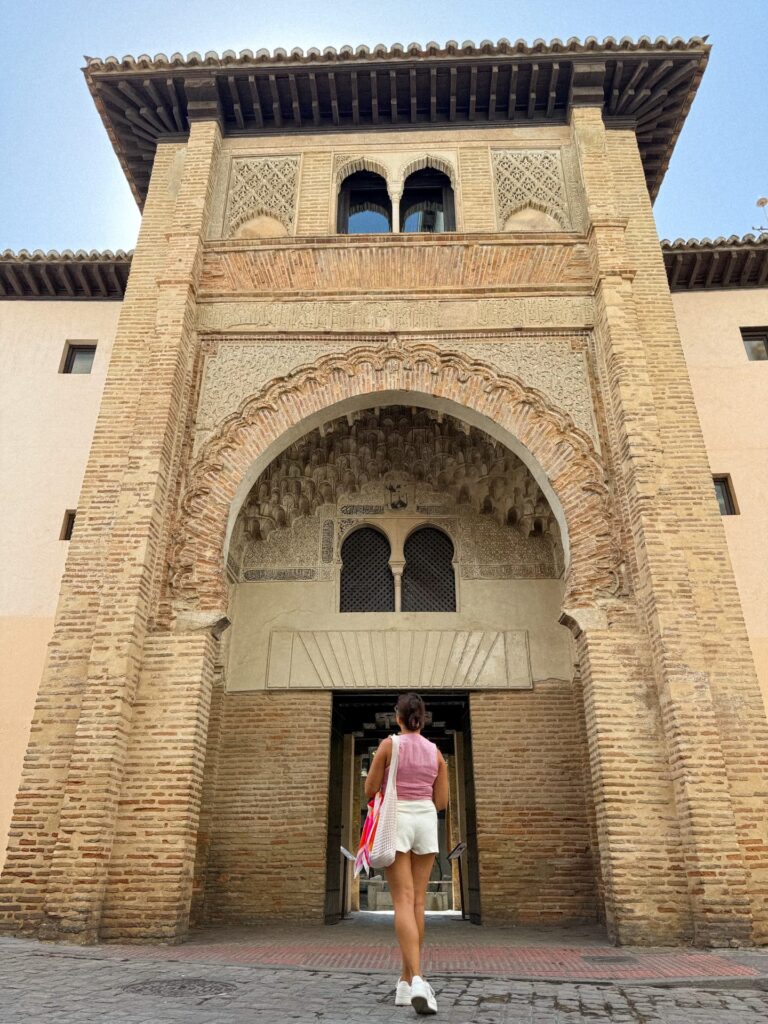
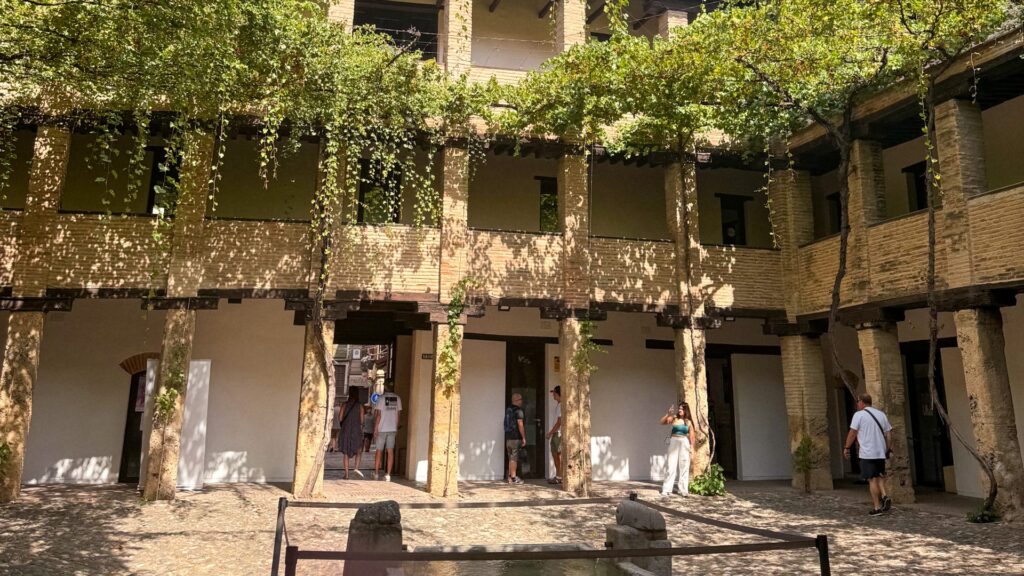
Corral del Carbón is one of those places that’s easy to miss if you’re rushing through the centre, but it’s absolutely worth stopping for. This 14th-century building is the best-preserved Nasrid funduq in the Iberian Peninsula, which basically means it once worked as a merchant inn and warehouse for traders arriving in the city.
The entrance is the real showstopper. Before you even get into the courtyard, you’ve got this beautifully detailed horseshoe-arch gateway with carved decoration that immediately gives you a sense of Granada’s Islamic architectural heritage. Then you step inside and the space becomes much quieter and more functional, with the central courtyard surrounded by galleries.
One of the reasons this stop is so interesting is that it shows a more everyday side of medieval Granada. The Alhambra is obviously the city’s masterpiece, but Corral del Carbón gives you a glimpse of the commercial life that supported the city below.
Why it’s worth visiting:
- one of the clearest surviving Nasrid monuments in the city centre
- quick and easy to visit
- a great contrast with the monumental feel of the Alhambra later in the day
2. Wander through the Alcaicería
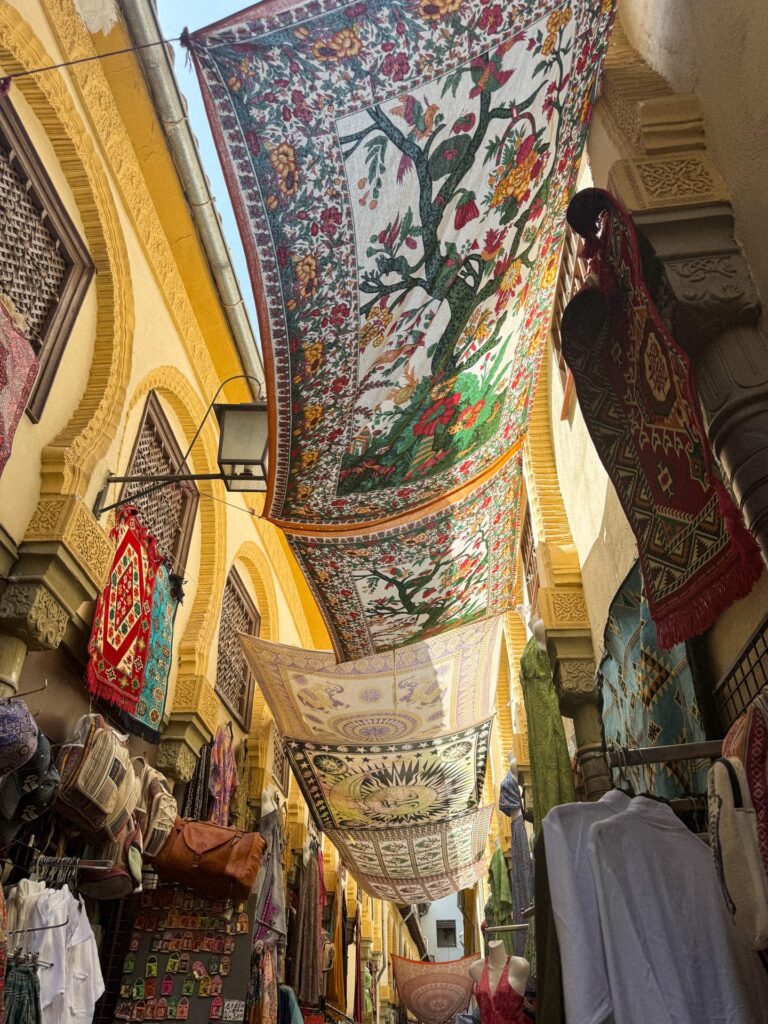
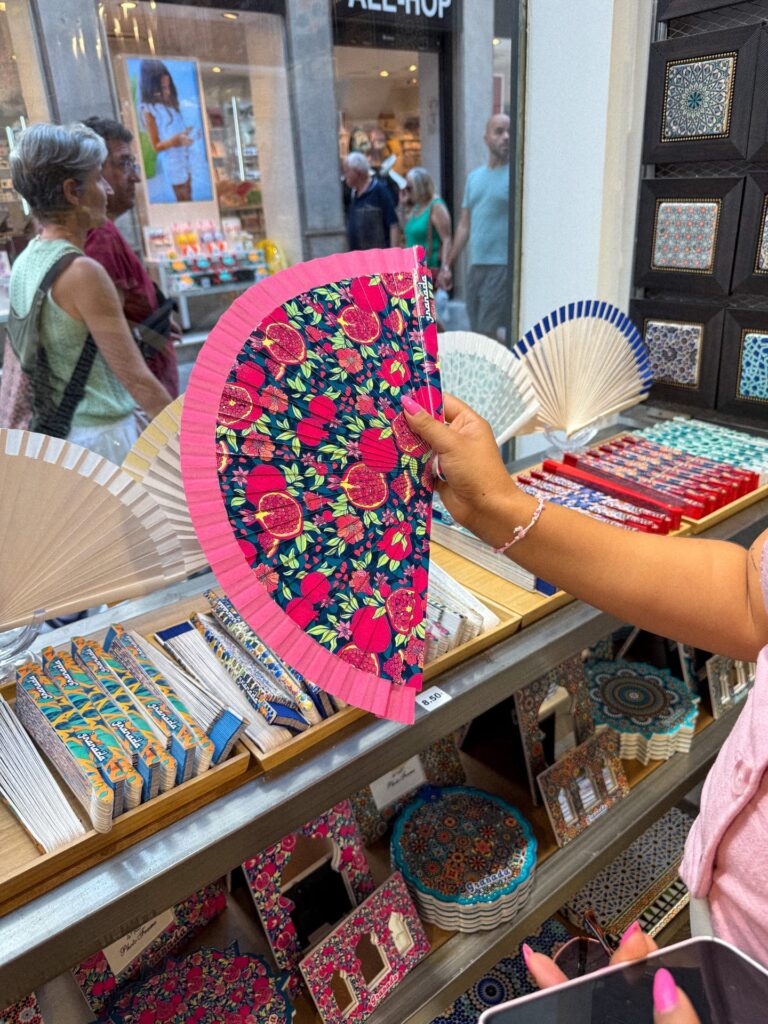
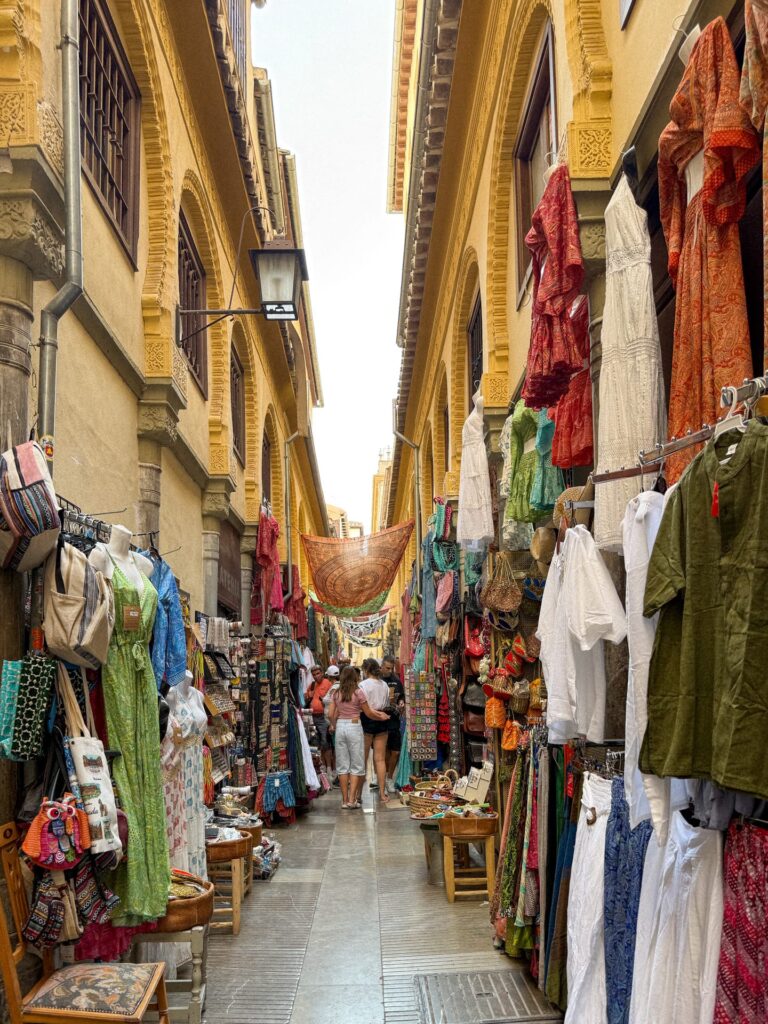
Just a few minutes away, the Alcaicería is Granada’s old bazaar area. Historically, this was the city’s silk market, and although what you see today is a later reconstruction rather than the full original market, it still gives you that maze-like, souk-style feel that makes this part of Granada so fun to explore.
It’s touristy, yes, but it’s also atmospheric. The narrow passages, hanging lamps, ceramics, textiles and little shopfronts make it an easy place to slow down and take in the details. If you’re shooting photos or video, this section works well for colour, movement and texture.
The key bit of context here is that the original market was much larger and burned in the 19th century, so the Alcaicería you see now is more of a revival in neo-Moorish style than a fully preserved medieval bazaar. Still, it helps connect the dots between Granada’s trading history and the city centre you walk through today.
3. See Granada Cathedral and visit the Royal Chapel
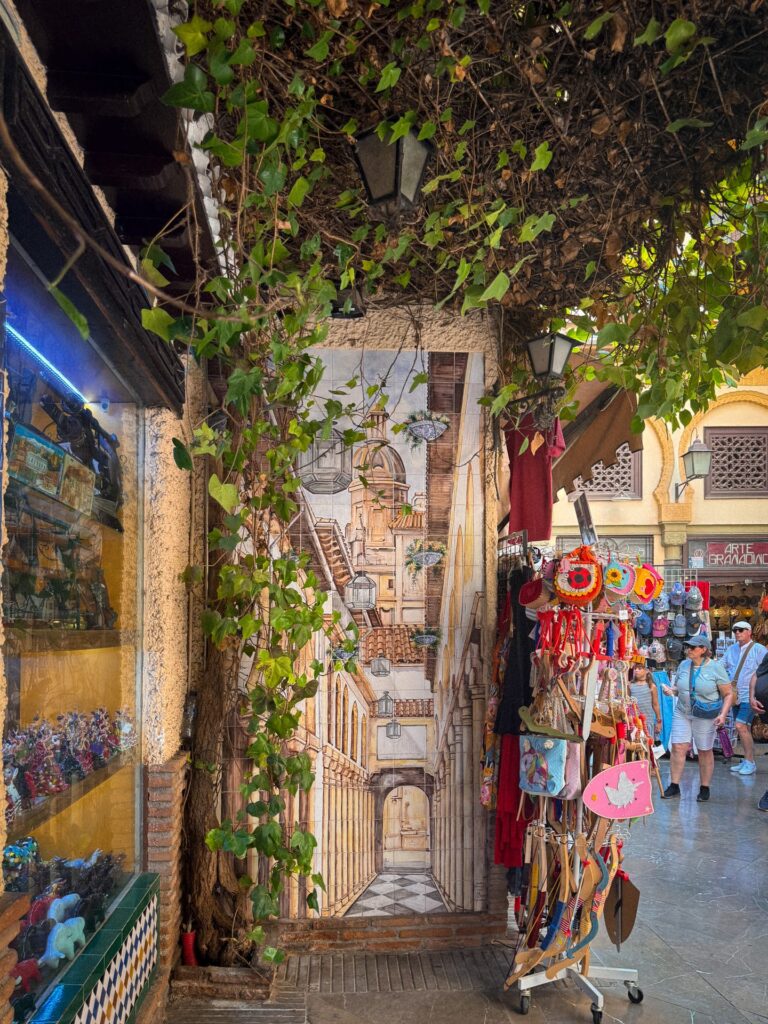
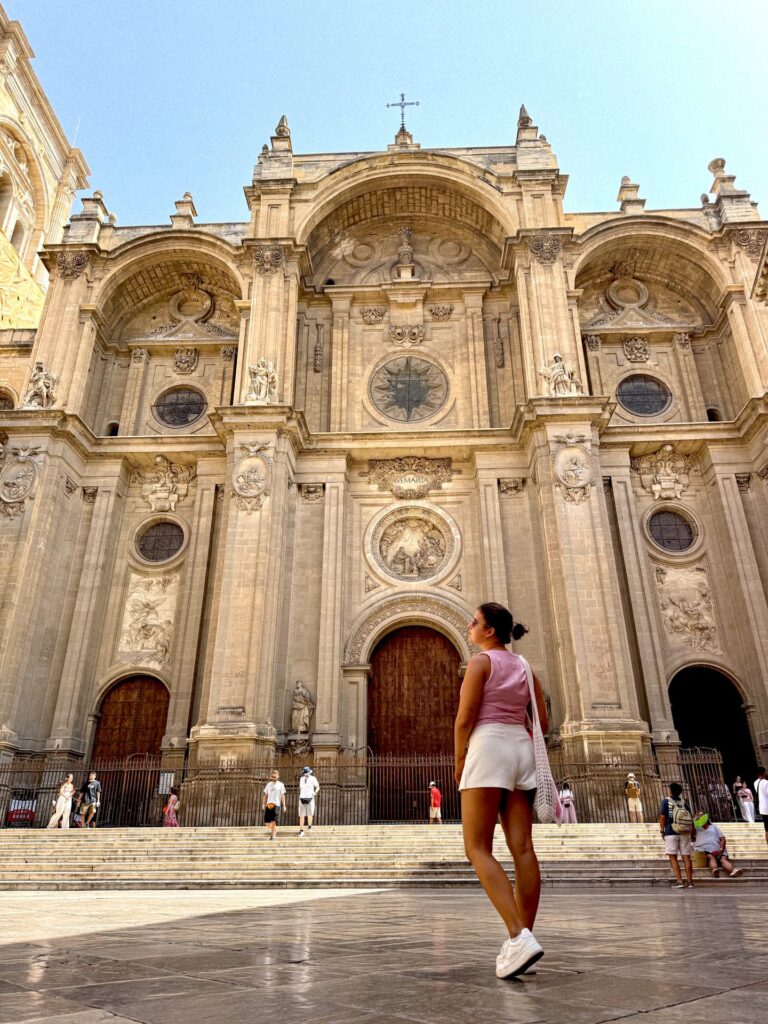
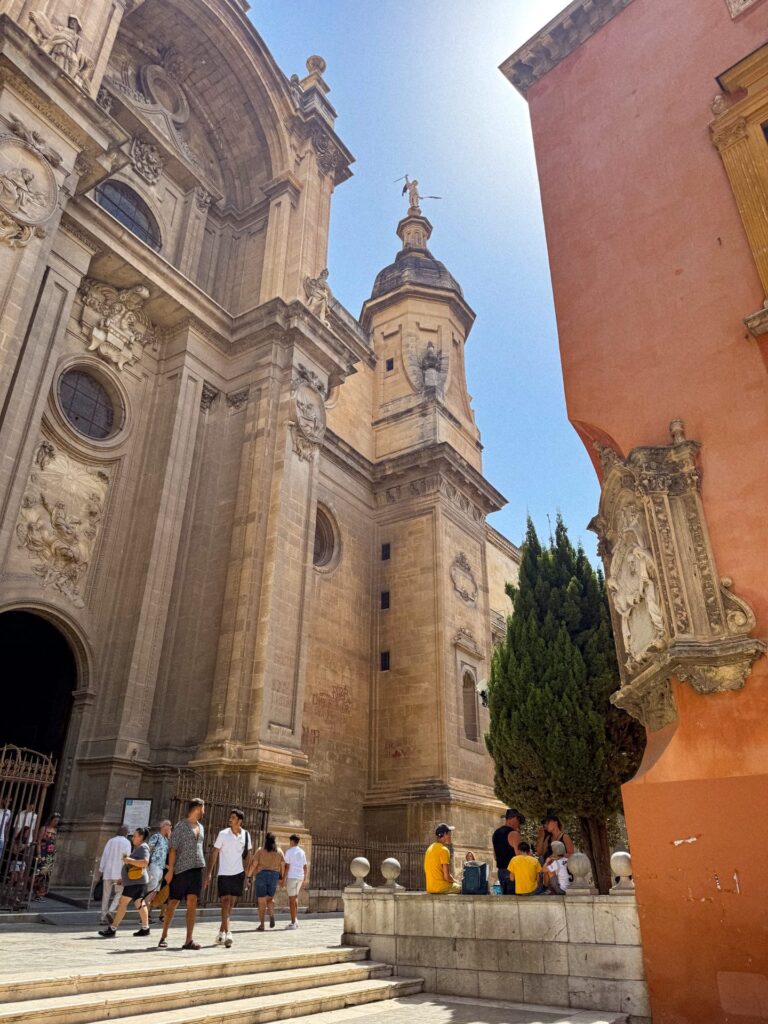
Granada Cathedral and the Royal Chapel are two of the most important historical sights in the city, and they sit right at the heart of Granada’s Christian chapter after 1492.
The cathedral was built on the site of the city’s former main mosque, and even from the outside it feels huge and imposing. It was designed as a statement piece, and you can feel that even before stepping inside.
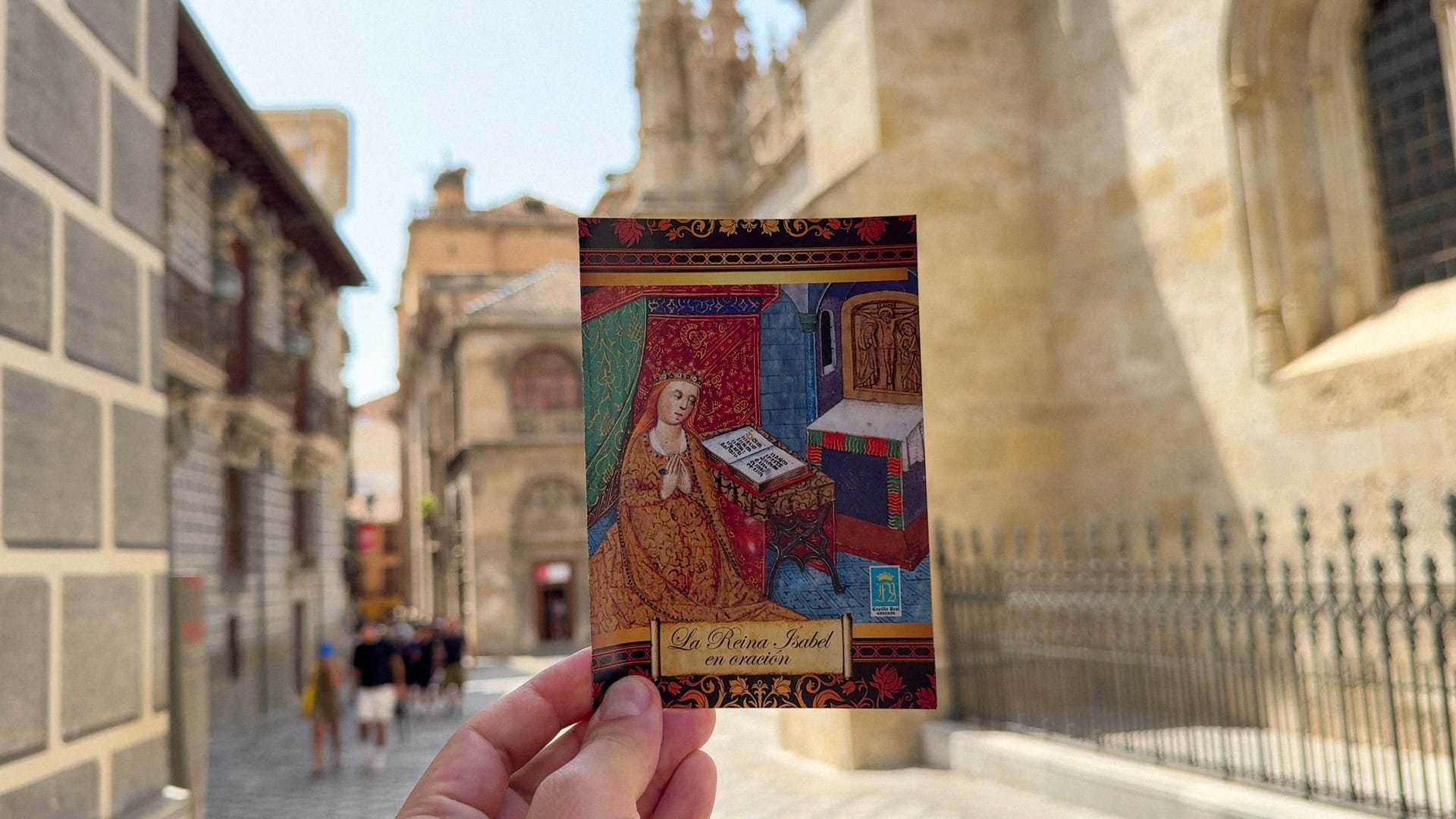
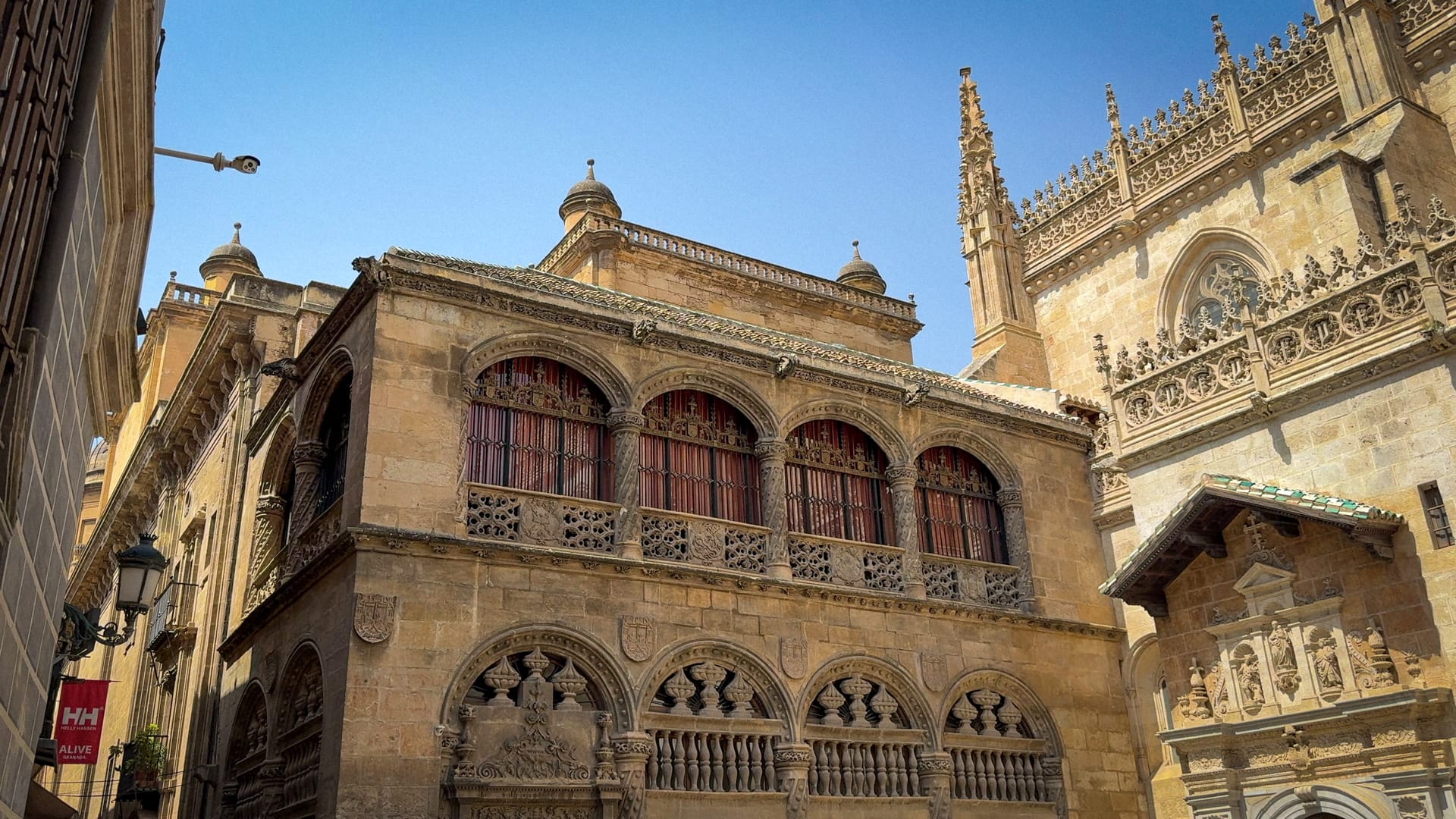
Right next door, the Royal Chapel is where the Catholic Monarchs, Isabella I of Castile and Ferdinand II of Aragon, are buried, along with Joanna and Philip. If you’re even slightly interested in Spanish history, this is one of the key places to visit in Granada.
The chapel has a different atmosphere from the cathedral. It feels more intimate, more symbolic and more directly tied to the events that changed the city forever.
One useful thing to know before you visit: photography and video are not allowed inside the Royal Chapel, so if you’re planning content around your trip, don’t expect to come away with interior shots. We didn’t have any photo or video material from inside for that reason.
Good to know:
- these two sights are right beside each other, so they’re easy to combine
- even if you only see the cathedral from outside, the Royal Chapel is very much worth going into
- you can’t take photos or video inside the Royal Chapel
4. Break for lunch in the historic centre
We stopped for lunch at Restaurante Tetería Alhambra, a Moroccan spot in central Granada. It fits the city well, especially after spending the morning surrounded by Moorish history and architecture.
Granada is one of those Spanish cities where food is part of the rhythm of sightseeing, so building in a proper lunch stop is a good idea rather than trying to cram everything back-to-back. If you’re planning your own route, the central area around the cathedral and lower Albaicín gives you plenty of options before heading uphill later in the day.
5. Spend the afternoon at the Alhambra
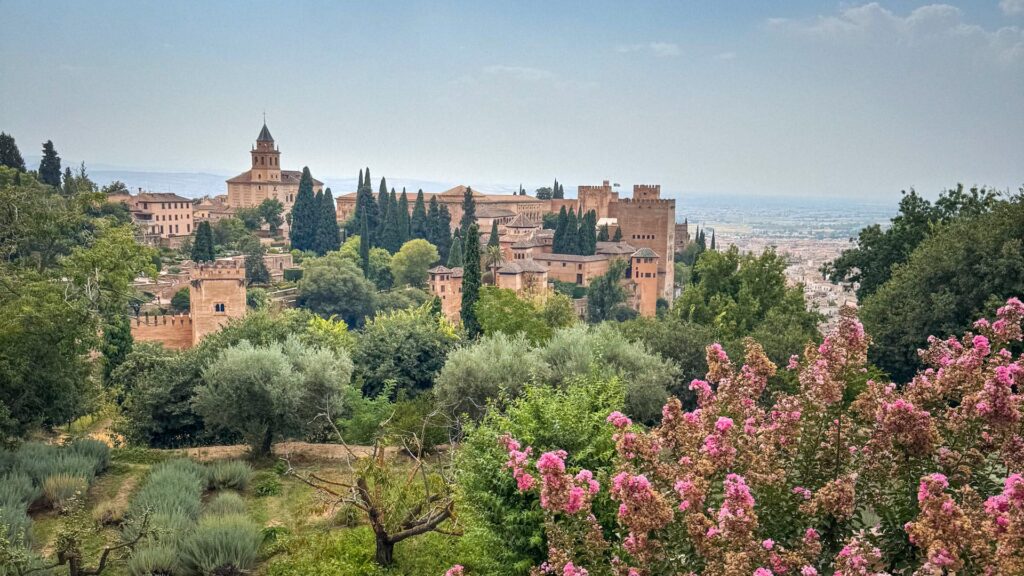
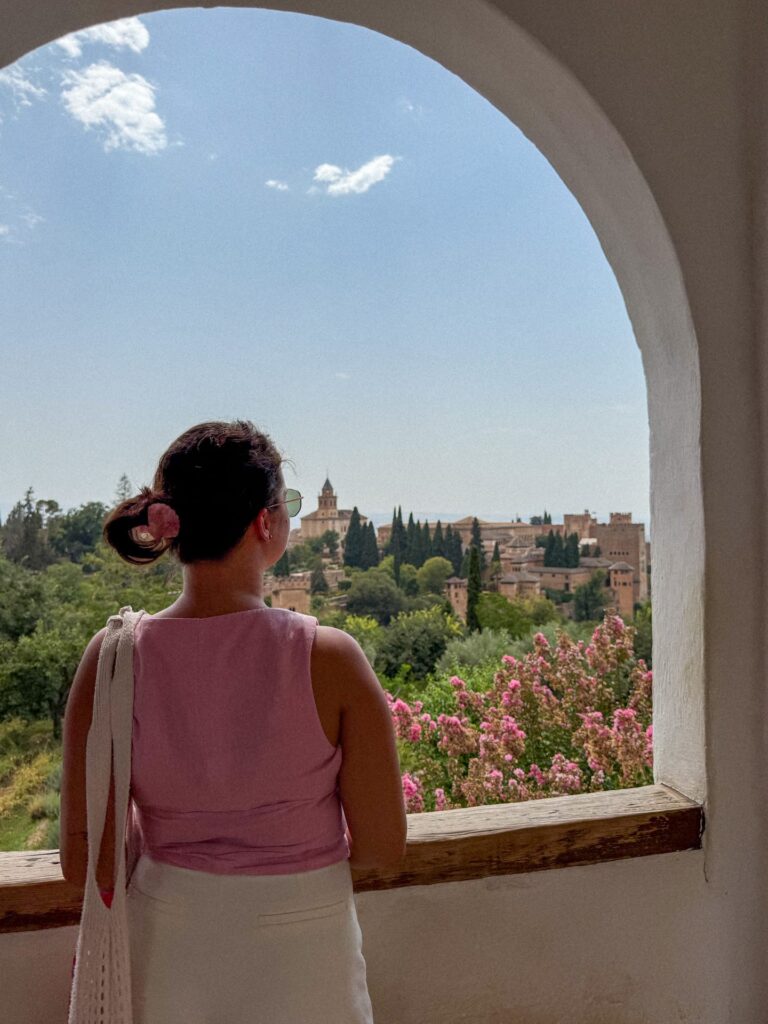
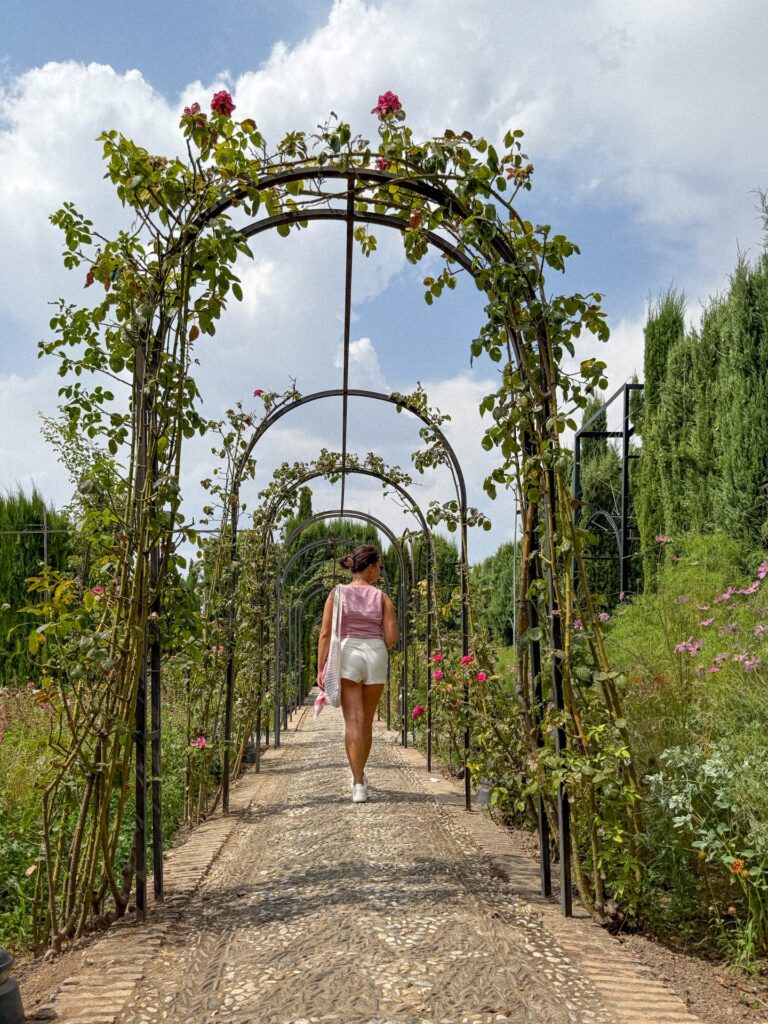
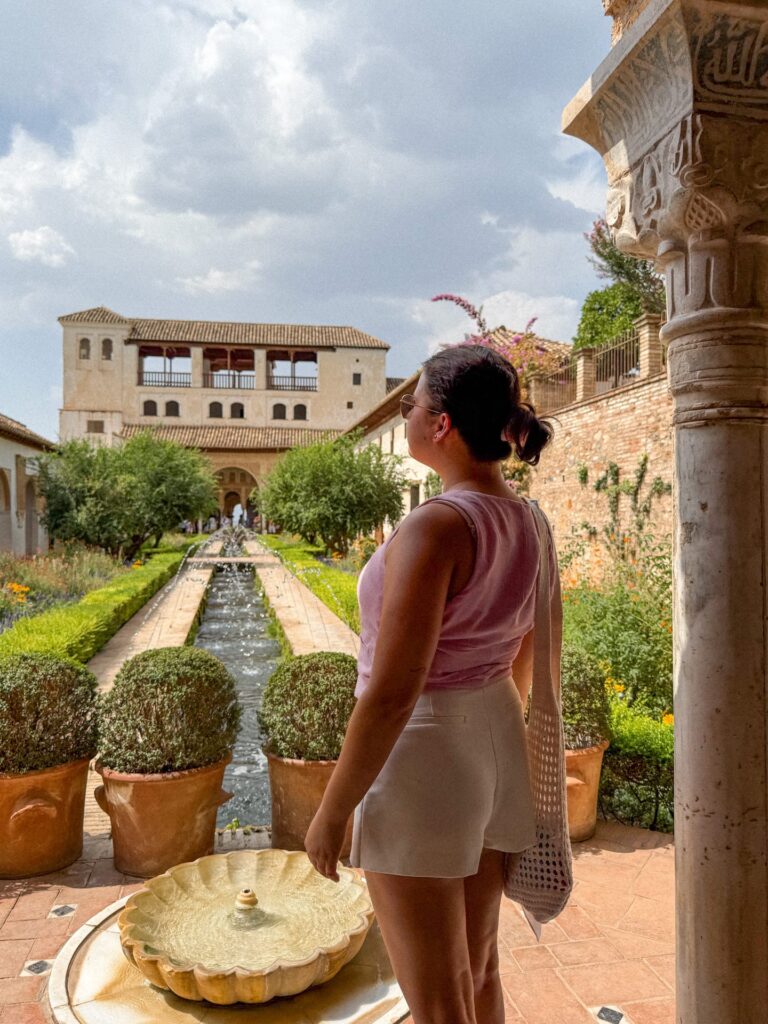
Then comes the big one. The Alhambra is Granada’s headline sight for good reason, and it really isn’t just one monument. It’s a whole palatine city: fortress, palaces, gardens, courtyards, towers and viewpoints all layered across the hill above Granada.
The complex began in the 13th century under Muhammad I, founder of the Nasrid dynasty, and it was expanded by later rulers, especially in the 14th century. What you see today includes the Nasrid Palaces, the Alcazaba fortress, the Generalife and later Christian additions such as the Palace of Charles V.
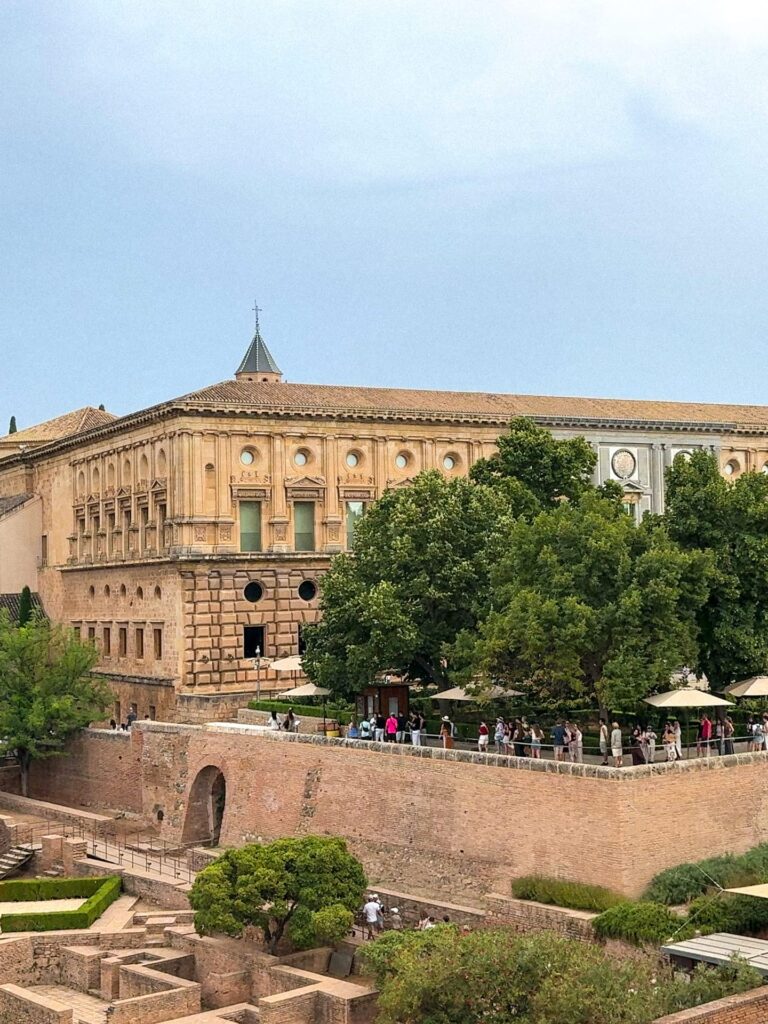
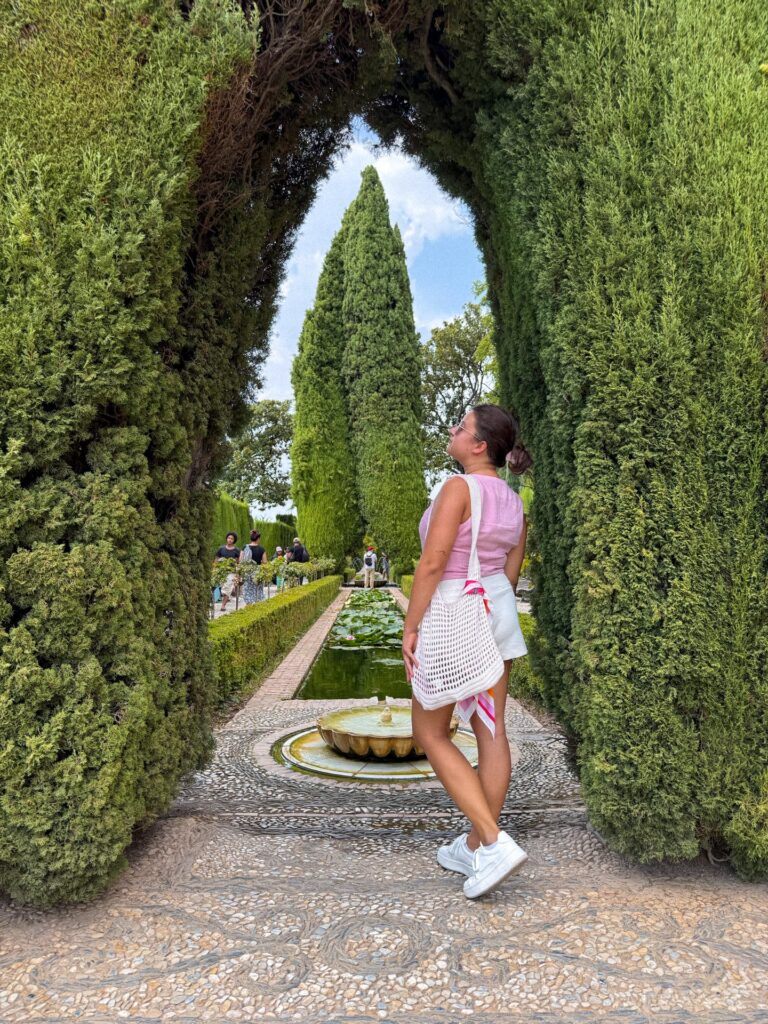
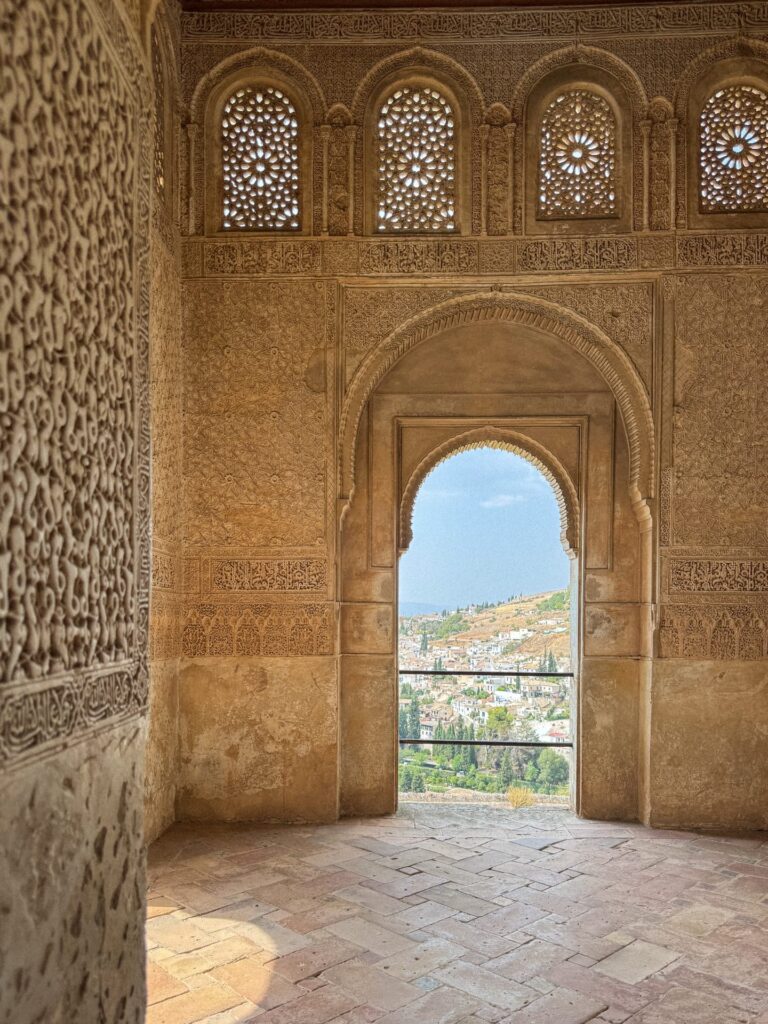
A lot of descriptions call it a palace, but that actually undersells it. The Alhambra once functioned as a self-contained royal city, which helps explain why a visit here can easily take several hours.
Inside, it’s the contrast that stays with you. There’s the intricate carved stucco and geometric decoration of the Nasrid spaces, then the open views from the Alcazaba, then the calmer garden atmosphere around the Generalife. You go from intimate detail to huge panoramas very quickly.
It’s one of those places that somehow feels both detailed and vast at the same time.
One of the interesting facts about the Alhambra is that its name comes from the Arabic al-Ḥamrā’, meaning “the red one” or “the red fortress”, a reference to the reddish walls. And yes, it really does glow beautifully in the right light.
Alhambra tips before you go
If the Alhambra is on your plan, book it well in advance. This is not the sight in Granada to leave until the last minute.
It’s also important to know that the Nasrid Palaces operate with a timed entry slot. According to the official Alhambra visitor guidance, if you miss that specific entry time, you may lose access to that section of the complex. So plan the rest of your day around your ticket, not the other way round.
As a rough guide, the official FAQ says a general visit takes about three hours, but honestly, if you like taking your time, photos or video, it can easily take longer.
6. End at Mirador de San Nicolás
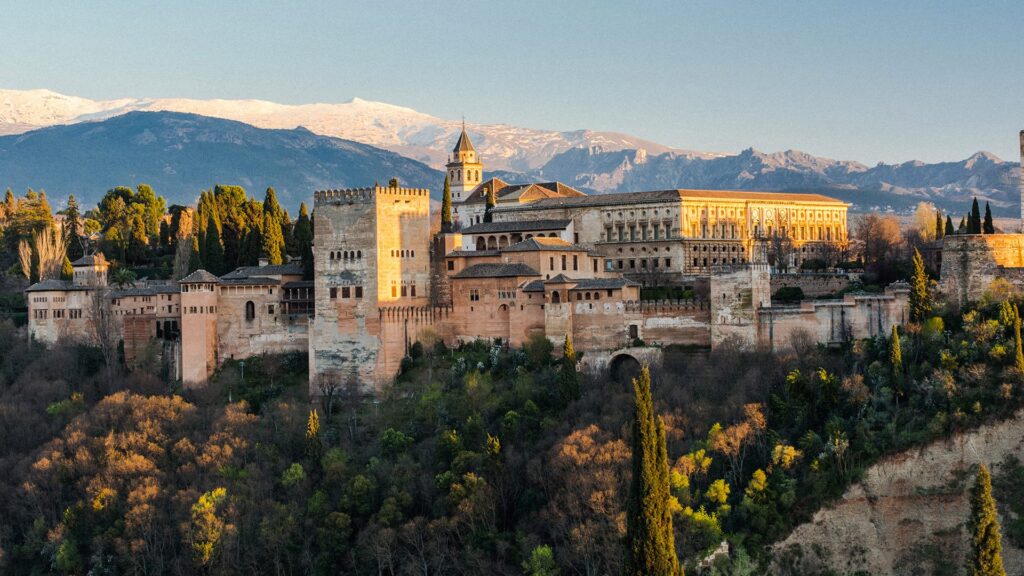
If there’s one classic Granada finish, it’s this. Mirador de San Nicolás gives you that postcard view back across to the Alhambra, with the Sierra Nevada behind it.
Yes, it’s popular. Yes, there will probably be other people there. But it’s still worth it.
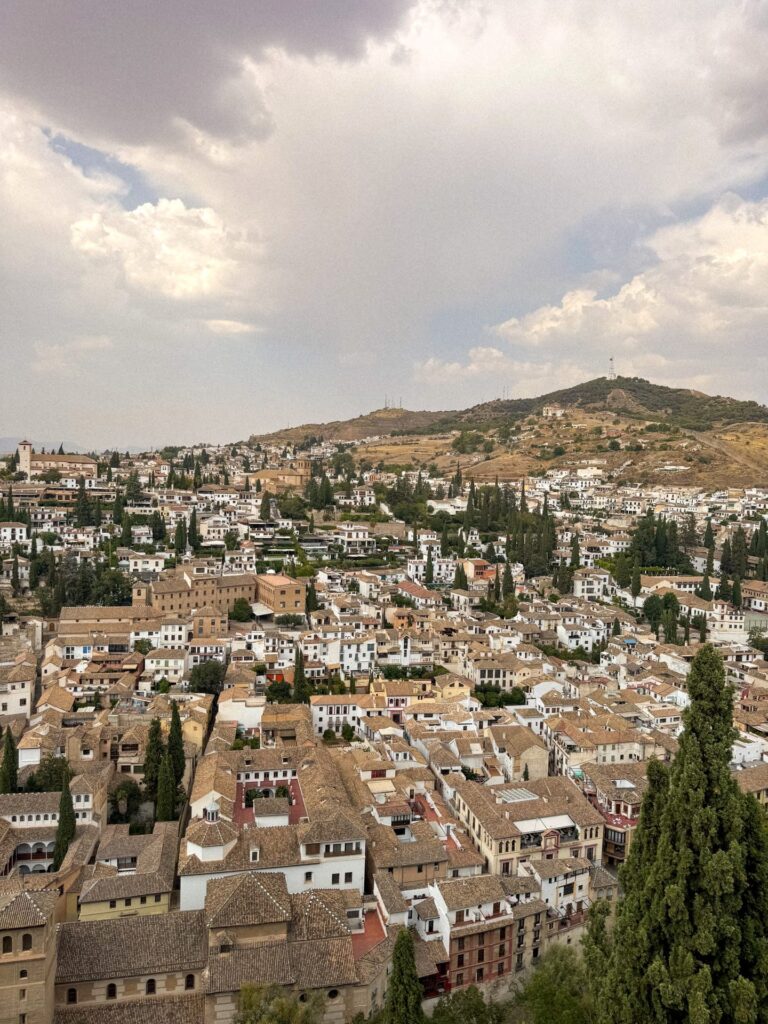
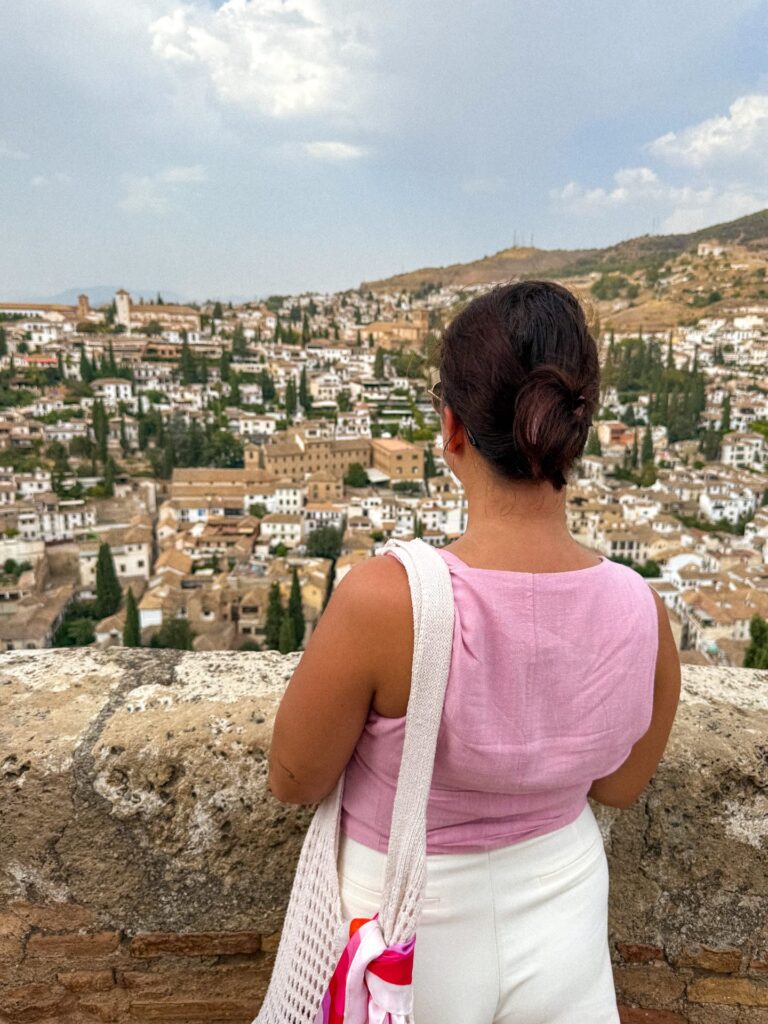
Part of what makes this stop work so well is the setting in the Albaicín, Granada’s old Arab quarter. The viewpoint isn’t just about the photo. Getting there means walking into one of the most atmospheric parts of the city, where narrow lanes, whitewashed buildings and hillside views make Granada feel completely different from the flatter centre below.
The Albaicín itself was later added to Granada’s UNESCO World Heritage listing as an extension of the Alhambra and Generalife site, largely because it preserves the medieval urban fabric of the old Islamic city. So even if Mirador de San Nicolás is the obvious draw, the surrounding neighbourhood is part of the experience.
This is also a good place to slow down. The energy changes in the evening, and whether you get musicians, a sunset glow, or just a clear view across the valley, it’s one of those places where Granada really clicks.
Extra places worth adding if you have more time
Our itinerary already covered the essentials well, but there are a few nearby spots that are especially worth considering if you want to turn this into a fuller Granada guide.
El Bañuelo
If you like the Islamic-history side of Granada, El Bañuelo is a brilliant add-on. It’s a preserved historic hammam in the Albaicín, dating to around the 11th or 12th century, and it’s one of the best surviving Arab bathhouses in Spain.
It gives you a more intimate look at everyday urban life in medieval Granada, and architecturally it’s beautiful in a much quieter way than the Alhambra.
Carrera del Darro and Paseo de los Tristes
Even without a formal museum stop, this stretch is worth walking. It’s one of the prettiest areas in Granada and a natural route between the centre and the Albaicín. If you want more atmosphere, river views and great angles of the Alhambra below the hill, this is an easy addition.
The Albaicín itself
Don’t reduce the Albaicín to just one viewpoint. If you have time, explore it properly. Some of the best moments in Granada come from simply wandering the backstreets, finding smaller squares, and catching partial views of the Alhambra between buildings.
How many days do you need in Granada?
For most first-time visitors, two days in Granada is a really good sweet spot.
One day lets you cover the historic centre, the Royal Chapel, the Alhambra and a sunset viewpoint, but it will feel busy. Two days gives you more breathing room for the Albaicín, longer food stops and one or two extra historic sights.
If you’re trying to decide, this is how we’d split it:
Day 1
- Corral del Carbón
- Alcaicería
- Cathedral and Royal Chapel
- lunch in the centre
- Alhambra
- Mirador de San Nicolás
Day 2
- slower walk through the Albaicín
- El Bañuelo
- Carrera del Darro / Paseo de los Tristes
- extra food stops, viewpoints or museums
Practical tips for visiting Granada
- Book the Alhambra early. This is the one sight in Granada you really shouldn’t leave until the last minute.
- Check your Nasrid Palaces entry time carefully. That timed slot matters.
- Wear proper shoes. Granada looks compact on a map, but the Albaicín involves steep streets, uneven paving and uphill walks.
- Don’t rush the evening. Granada is one of those cities that rewards slowing down late in the day.
- Keep your route flexible around the Alhambra. It’s the anchor point, not the add-on.
Final thoughts
Granada is one of the easiest cities in Spain to recommend because it gives you so much variety in a relatively compact space. You’ve got monumental history, layers of Islamic and Christian heritage, genuinely memorable viewpoints, and a city layout that makes it feel rewarding to explore on foot.
For us, what stood out most was how naturally the day flowed from one chapter of the city’s story to another: a merchant inn, a bazaar, royal tombs, the Alhambra above it all, and then that final view from the Albaicín.
If you’re planning a trip to Andalusia, Granada absolutely deserves a place on your itinerary.
Visited in summer 2025. Practical details can change, it’s always worth checking opening times and current status before your trip.