
Don’t let anyone tell you Genoa is just a stopover. We’ve been back three times and every visit has added another layer. The palaces, the caruggi, the focaccia at nine in the morning with an espresso standing at a bar, the way Porto Antico opens right up after the tangle of the old town. Genoa earns it.
This guide covers 10 of the best things to do in Genoa for a first visit, based on our own itinerary across those trips. We’ve picked the stops we’d tell a friend about — Via Garibaldi, the Caruggi, Piazza De Ferrari, Porto Antico, Spianata Castelletto, Boccadasse and a few more that don’t always make the short lists. If you only have one or two days in Genoa, these are the ones to prioritise.
Is Genoa worth visiting?
Yes! Genoa is absolutely worth visiting, especially if you like historic cities with strong character, great food and a less obvious Italian city-break feel. It’s best known for its maritime history, grand palaces, one of the largest medieval old towns in Europe, pesto Genovese, Ligurian focaccia and views across the Ligurian Sea. It’s not a city that works hard to charm you instantly. That’s part of the appeal.
What are the best things to do in Genoa?
The best things to do in Genoa include walking Via Garibaldi, getting lost in the Caruggi, exploring Piazza De Ferrari, visiting San Lorenzo Cathedral, wandering Porto Antico, going up to Spianata Castelletto and heading to Boccadasse for the afternoon. For a first visit, those are the anchors worth building your route around.
Good to know: many of Genoa’s top sights sit close together, so it’s easy to build a walking route. The city also has a network of historic funiculars and public lifts that are genuinely fun to use and practically useful.
Quick planning tips for Genoa
Best for: first-time visitors, weekend city breaks, food-led travellers, Liguria itineraries.
How much time you need: 1 full day covers the main highlights; 2 days is much more comfortable.
Walking level: moderate; the centre is compact, but expect stairs, slopes and a lot of foot wandering.
Orientation tip: if you want an easy route, start at Piazza De Ferrari, work through the old centre and harbour, then leave Boccadasse or Castelletto for later in the day when the light is better.
Museums on Mondays: if you’re planning to visit the Palazzi dei Rolli museums (Palazzo Rosso, Palazzo Bianco), note that they’re closed on Mondays.
1. Walk Via Garibaldi and the Palazzi dei Rolli
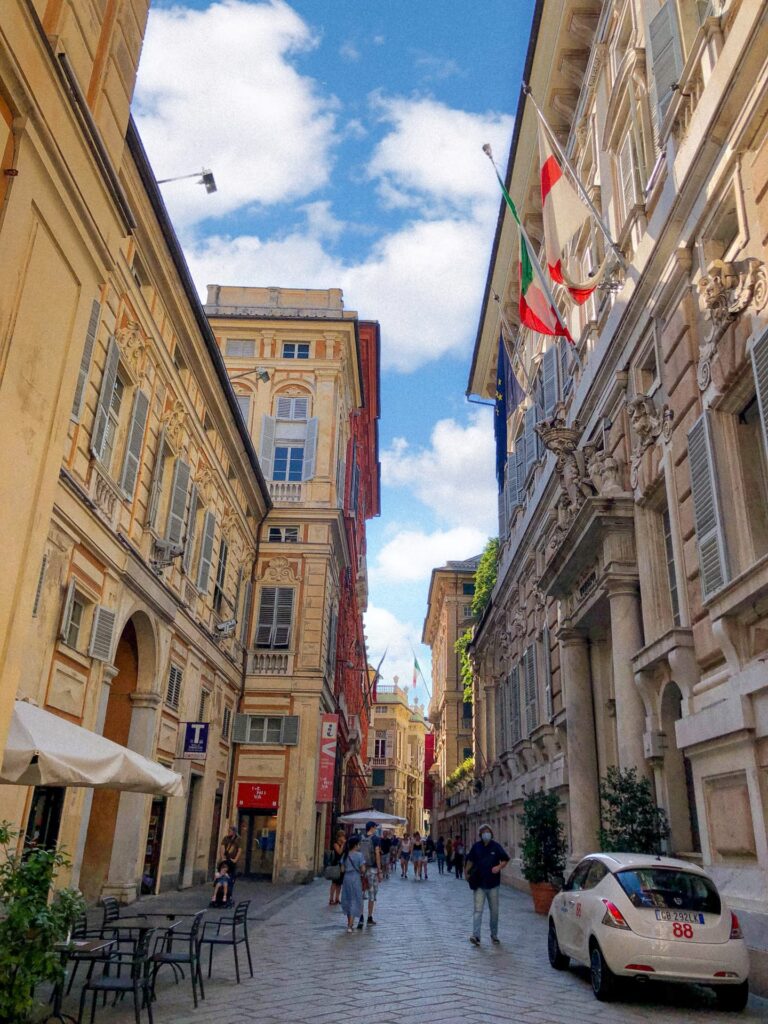
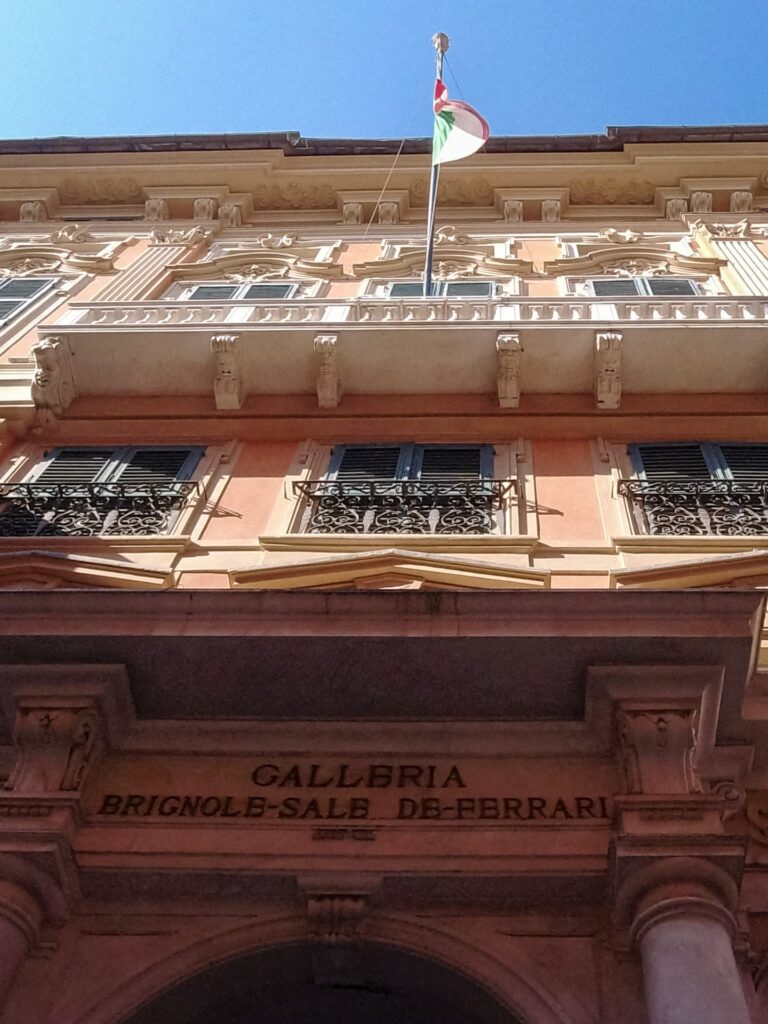
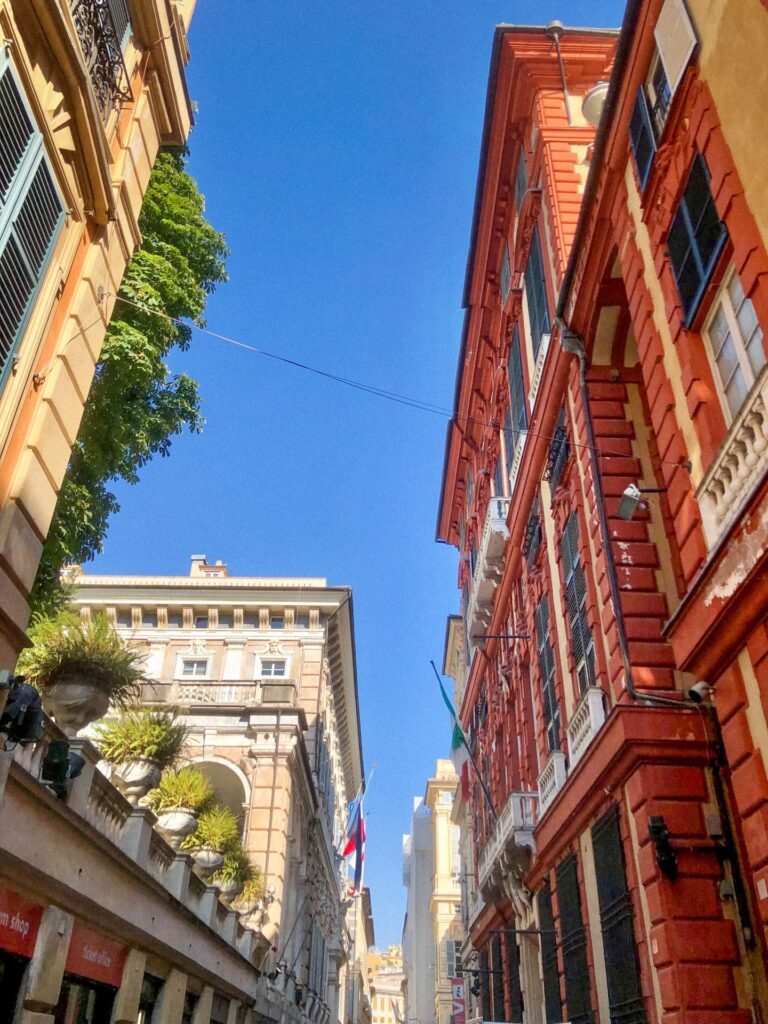
If you want one street that immediately shows Genoa at its most elegant, start here. Via Garibaldi, originally called Strada Nuova when it was built in the 16th century, is part of the UNESCO-listed Palazzi dei Rolli, a collection of grand Renaissance and Baroque palaces that once served as the official residences for hosting visiting dignitaries and foreign heads of state. Even walking the street without going inside gives you that immediate “okay, this city was seriously powerful” feeling.
The palaces lining Via Garibaldi include Palazzo Rosso, Palazzo Bianco and Palazzo Doria Tursi. They form the Musei di Strada Nuova, genuinely impressive art collections inside genuinely impressive rooms. If you’re interested in European masters and Flemish paintings, these are worth the entry fee. If museums aren’t your priority on this trip, the architecture alone justifies the walk. The Palazzo Rosso in particular is extraordinary.
Why it’s worth it: it’s central, free to walk, and one of the fastest ways to understand Genoa’s history as one of the great powers of the Mediterranean.
Practical tip: the Musei di Strada Nuova are closed on Mondays. If that’s your only day, enjoy the street and save the interiors for another trip.
2. Get lost in the Caruggi, Genoa’s medieval lanes
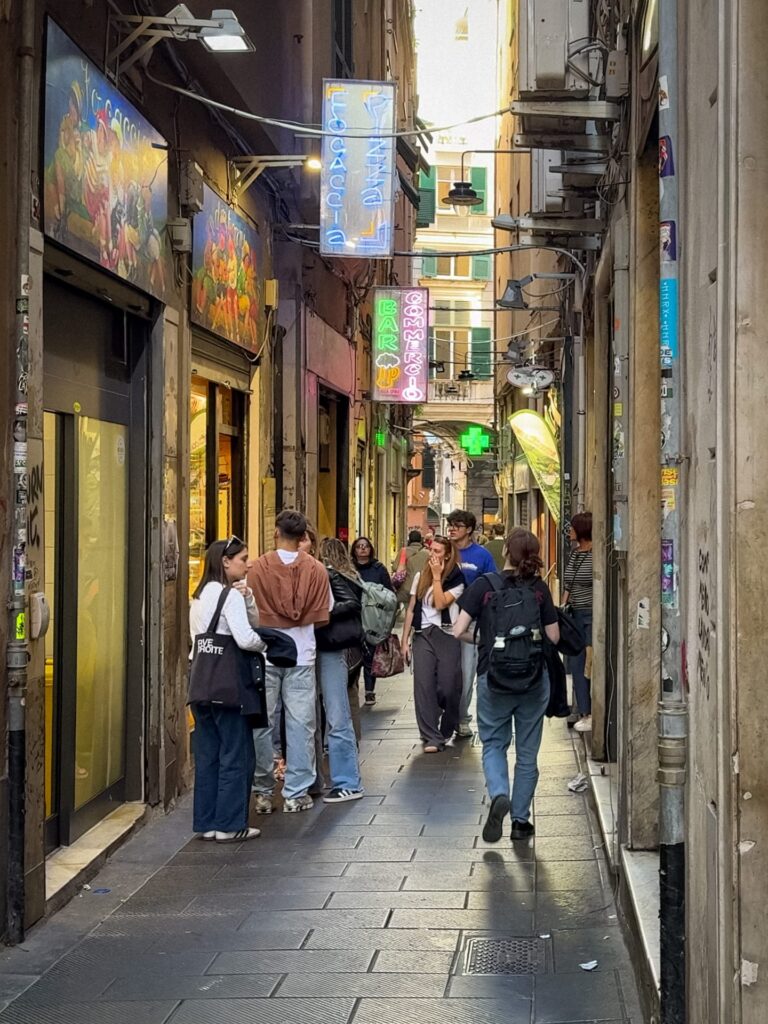
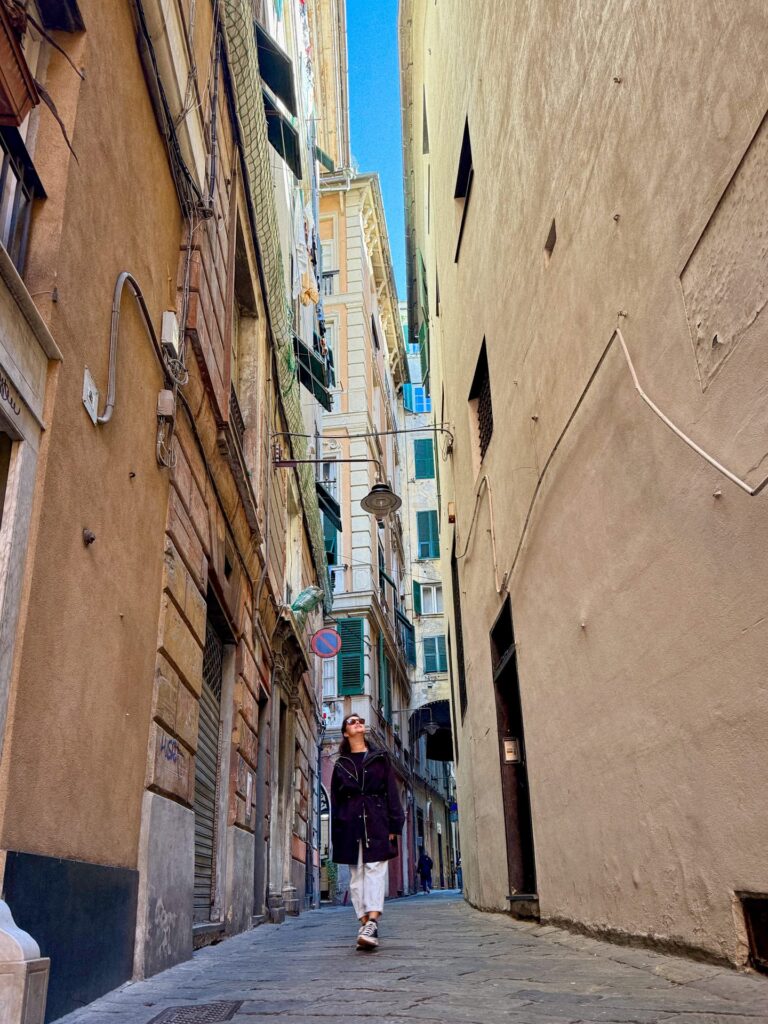
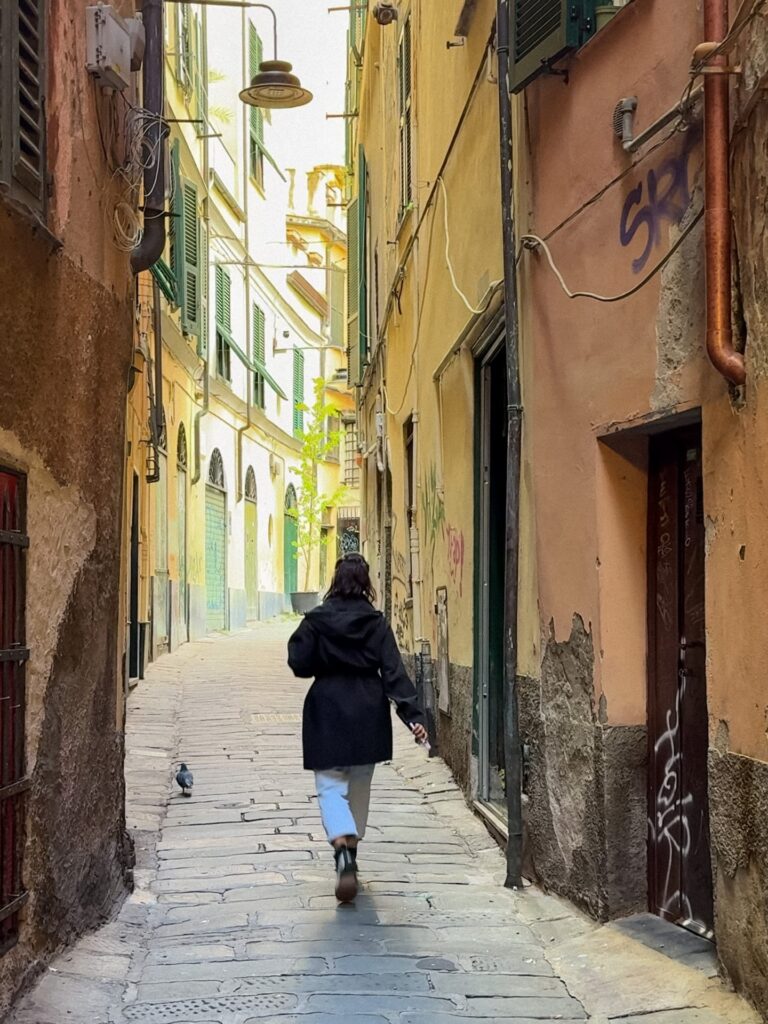
No list of the best things to do in Genoa is complete without the Caruggi. These are the narrow medieval alleyways that form the beating heart of the old city, some barely wide enough for two people to pass, and they are unlike anything else in Italy. Genoa’s historic centre is one of the largest surviving medieval urban districts in Europe, and the Caruggi are where that fact stops being abstract.
Dark, atmospheric and occasionally chaotic, the lanes reward wandering. Washing lines overhead, the smell of focaccia drifting from a bakery you can barely see the entrance to, a small church tucked behind a doorway, a focacceria doing a roaring trade at 8am. This is the part of Genoa that feels genuinely lived in, not polished for tourism.
Pick a rough direction, anything between Piazza De Ferrari and Porto Antico works well, and let the lanes lead you. You’ll get turned around. That’s the point.
What to look for: small focaccerie, local bars, painted building facades, sudden views of church towers above the rooflines, and the contrast when a narrow lane opens into a small piazza.
Good to know: the Caruggi have a reputation that’s slightly overstated. During the day, they’re perfectly fine to explore. Keep your belongings close and stay aware of your surroundings, as you would in any dense urban area. In the evenings, stick to busier routes.
3. Start at Piazza De Ferrari, the city’s natural meeting point
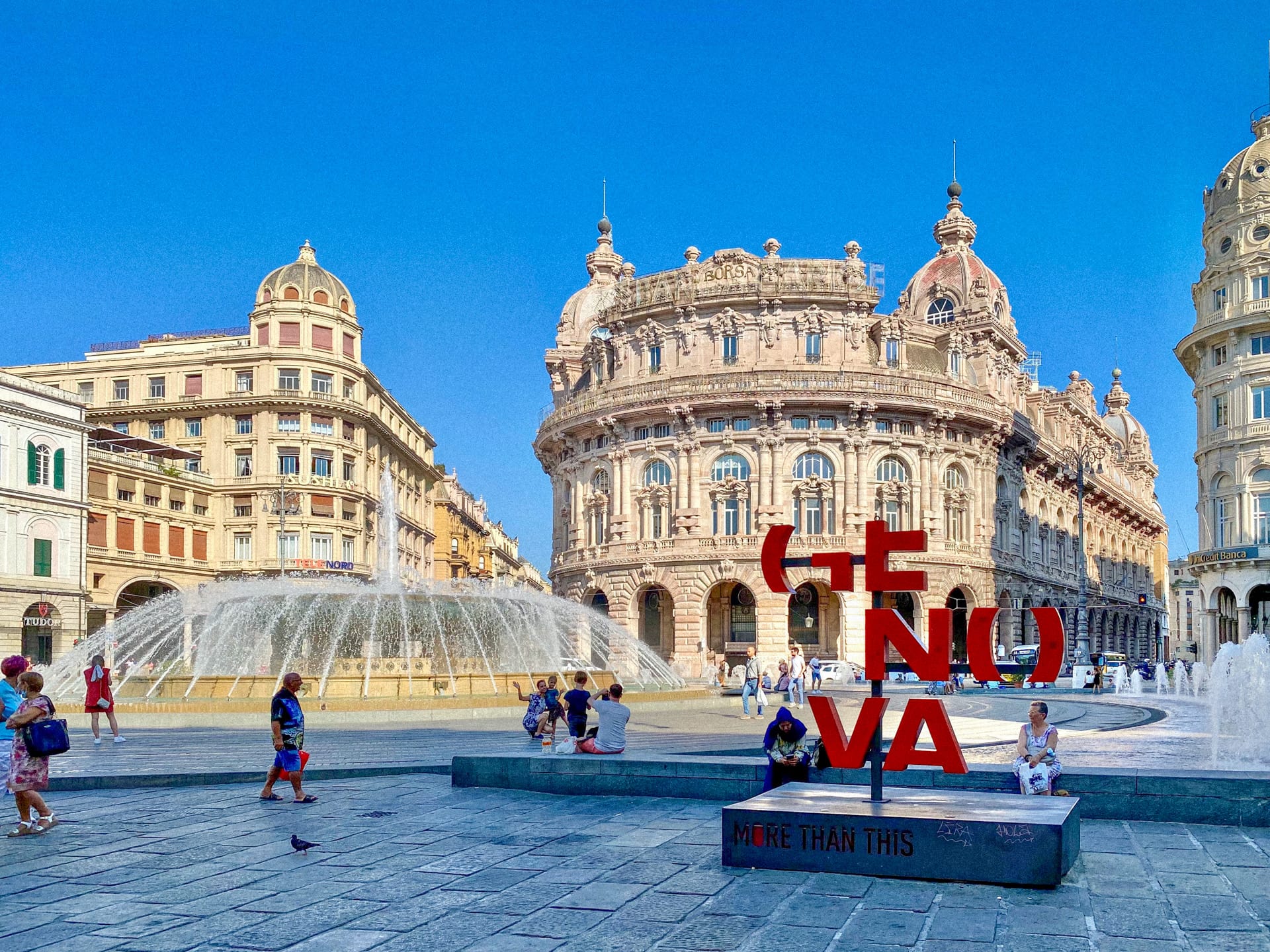
Piazza De Ferrari is where most Genoa itineraries begin, and for good reason. This is the city’s central square, where the historic centre meets the wider modern streets beyond, and the large bronze fountain in the middle gives it instant character. The surrounding buildings, including the neoclassical facade of the Teatro Carlo Felice and the imposing Palazzo della Regione, make it feel grand without being overwhelming.
It’s also one of the most useful orientation points in the city. From here, you can walk easily to Via Garibaldi, San Lorenzo Cathedral, Porta Soprana, the Caruggi and, eventually, Porto Antico. If you’re arriving in Genoa without much of a plan, this is the right place to start.
Best for: getting your bearings and linking the rest of your route together.
Looking for things to do in Genoa?
4. See Porta Soprana, Columbus’s House and the Cloister of Sant’Andrea
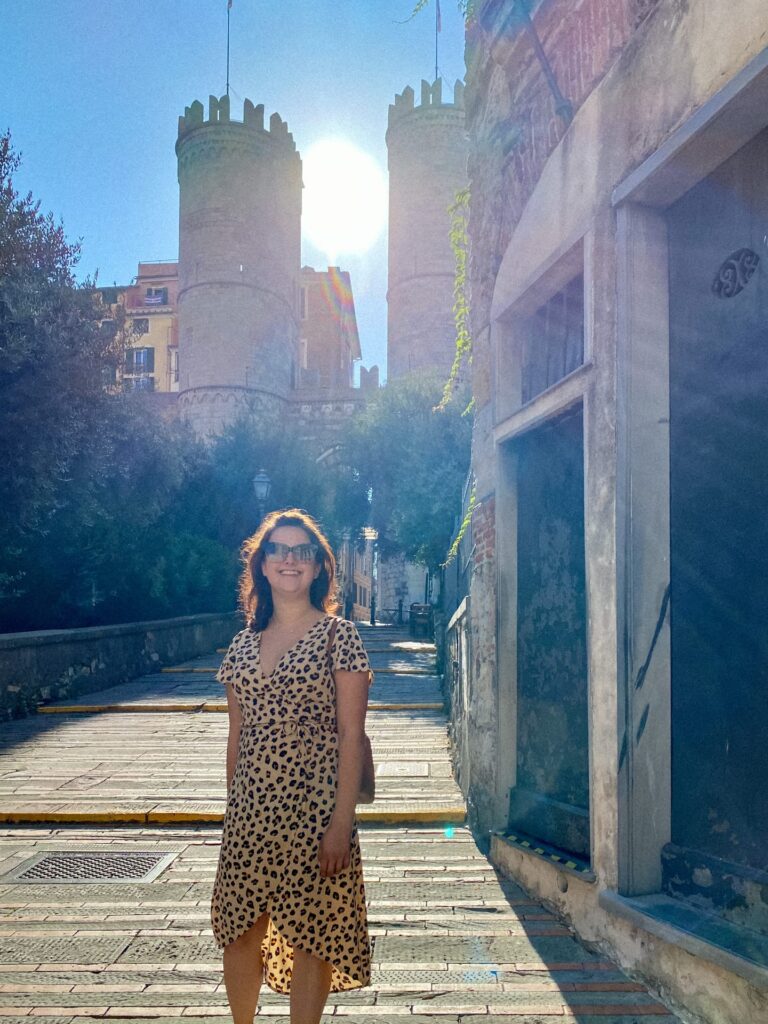
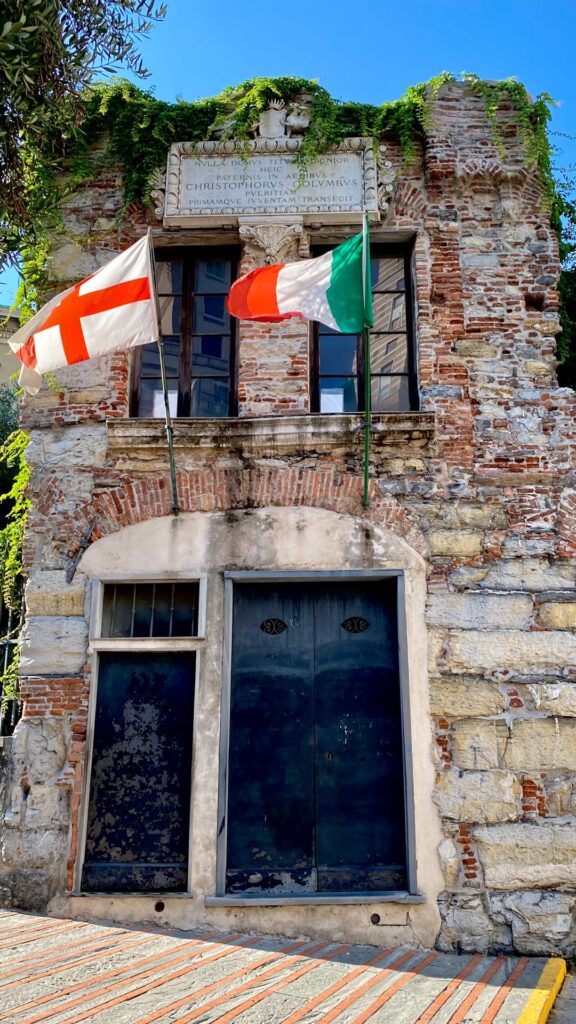
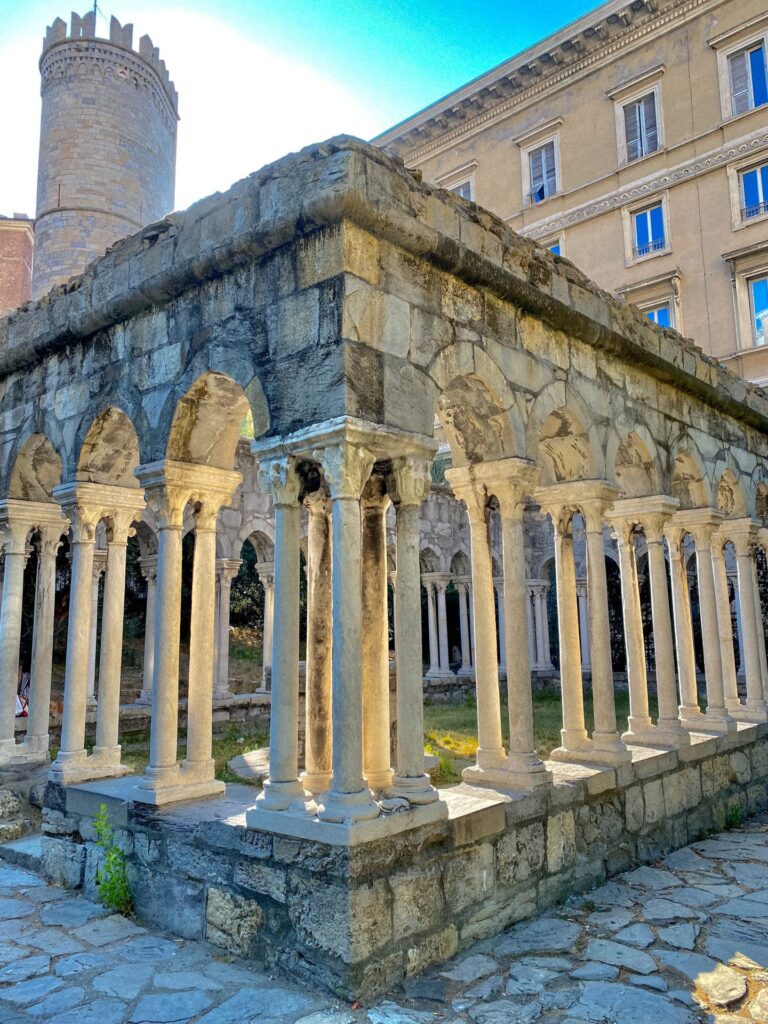
A short walk from Piazza De Ferrari brings you to one of the most atmospheric corners of central Genoa. Porta Soprana, with its twin cylindrical towers, was one of the main gateways into the medieval city when it was built in the 12th century. Standing in front of it, the city’s age stops feeling like a history lesson and starts feeling real.
Right nearby, you can also visit the reconstructed house traditionally associated with Christopher Columbus, Genoa’s most famous (and still hotly debated) historical figure, and the remains of the Cloister of Sant’Andrea, a remnant of a 12th-century Benedictine monastery. None of these stops takes very long individually, which is exactly why they work so well together. In under an hour, you’ve covered medieval city walls, a Columbus connection and a quiet detail that a lot of visitors rush straight past.
Tip: treat this as a natural cluster stop on your first-day walk through the centre, not a standalone mission. It fits easily between Piazza De Ferrari and San Lorenzo Cathedral.
5. Step inside Cattedrale di San Lorenzo
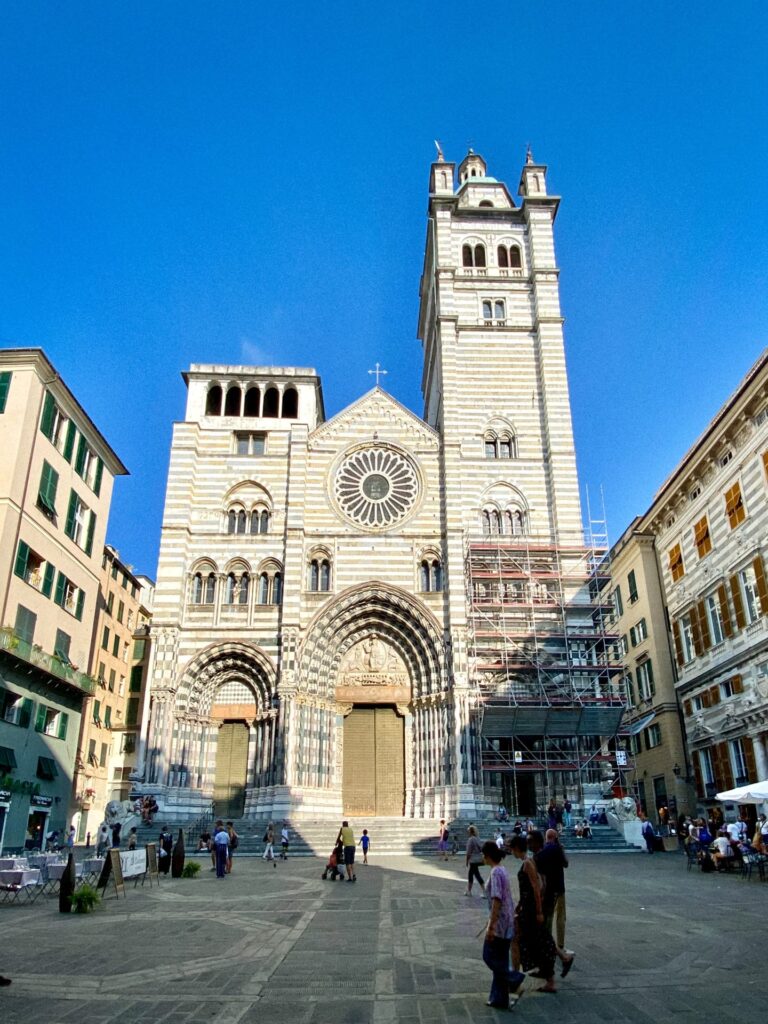
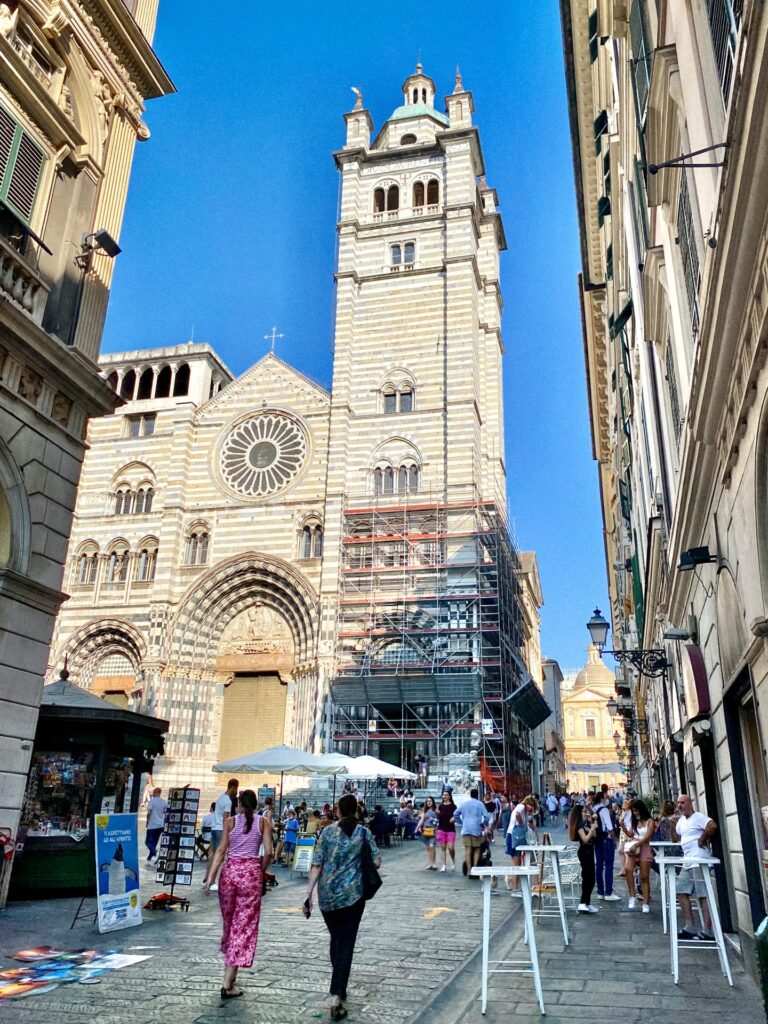
San Lorenzo Cathedral earns its place on any Genoa itinerary. The black-and-white striped marble facade, a striking mix of Romanesque and Gothic elements, built and extended between the 12th and 16th centuries is the kind of building you end up circling slowly because there’s always another detail to take in.
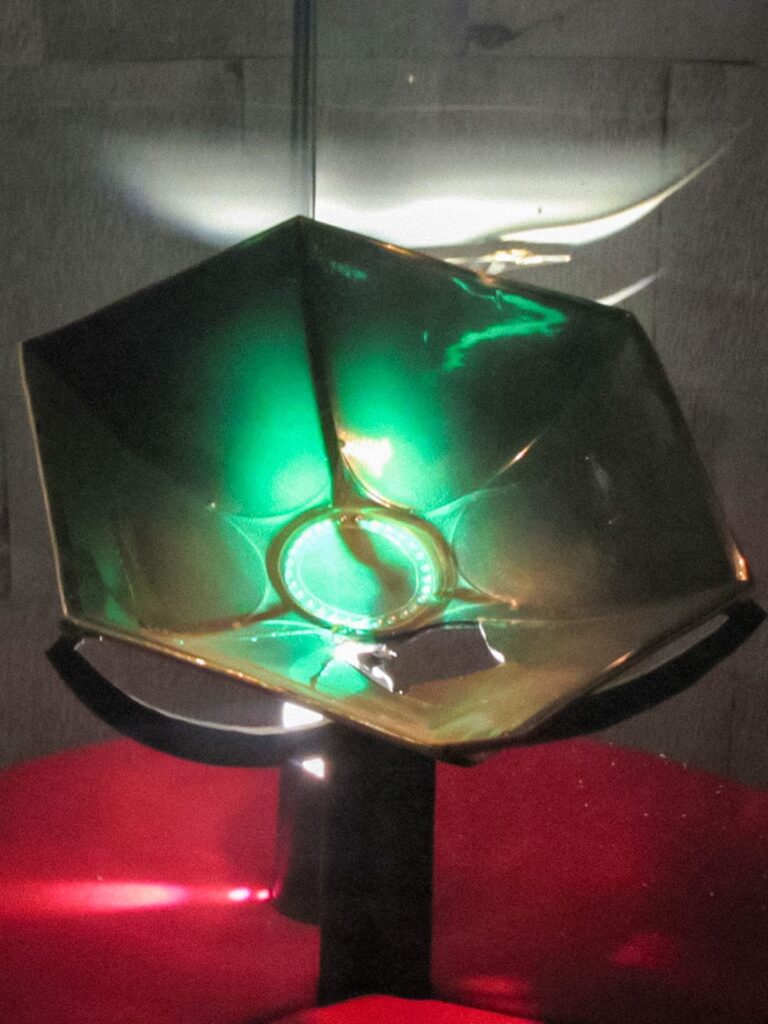
Inside, the cathedral is equally layered. The Museo del Tesoro di San Lorenzo housed in an underground treasury contains the Sacro Catino, a green glass basin that was long believed to be the Holy Grail. Whether or not that’s your historical lane, the object itself is extraordinary and the story around it is very Genoa: ambitious, maritime, slightly impossible to verify.
The cathedral sits right in the heart of the old city and connects naturally with the Caruggi on either side.
Why go: central, free to enter the main cathedral (the museum charges separately), and one of the clearest symbols of the city’s medieval identity.
6. Walk Via XX Settembre and explore Mercato Orientale
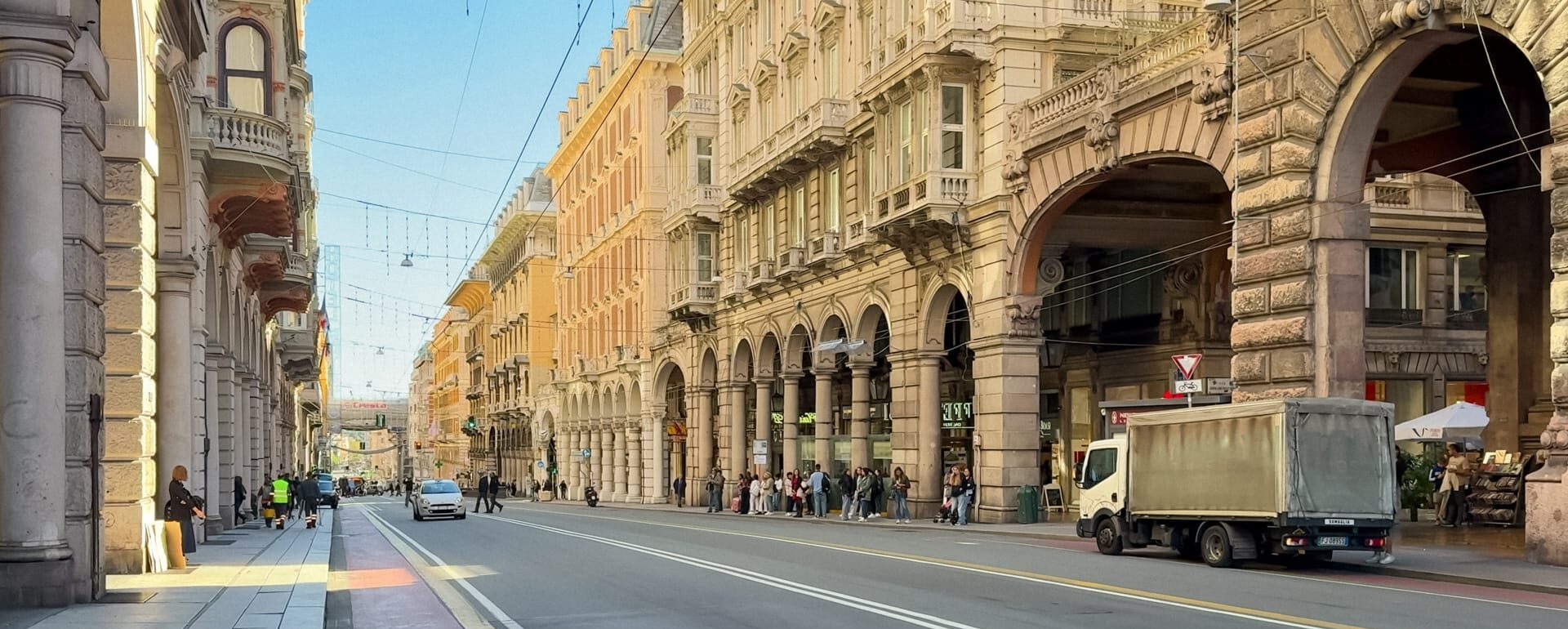
Via Garibaldi shows Genoa at its aristocratic best. Via XX Settembre shows a more everyday side of the city, Genoa’s main shopping street, running under covered arcades through a part of the city that feels genuinely lived in rather than monument-heavy.
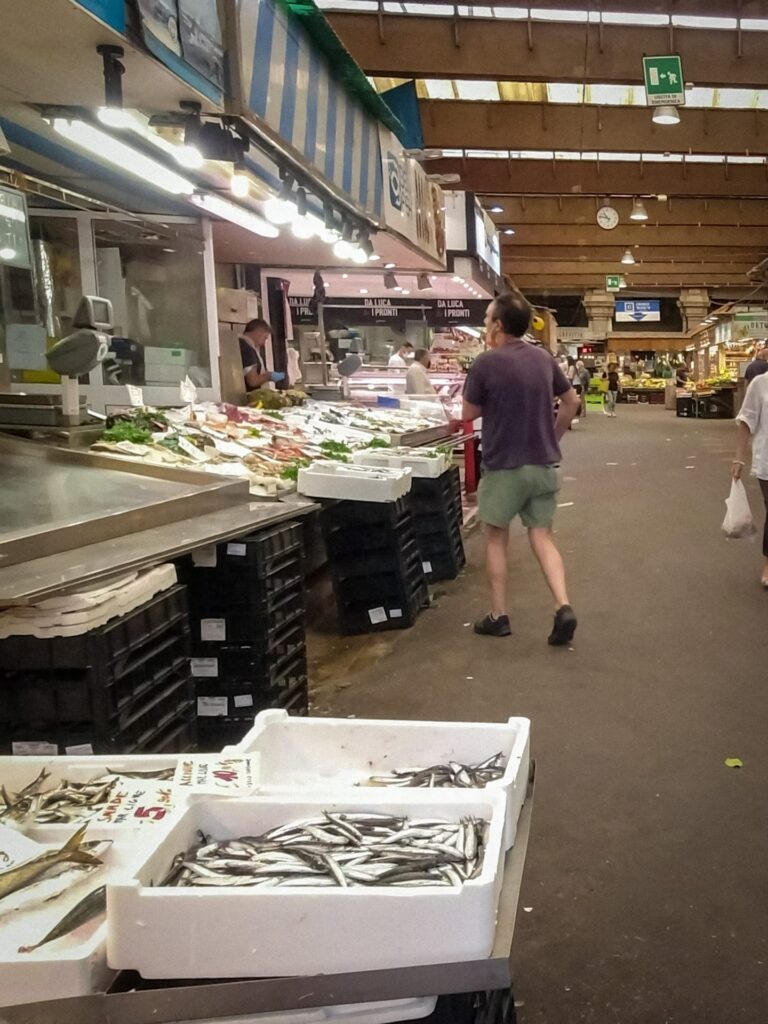
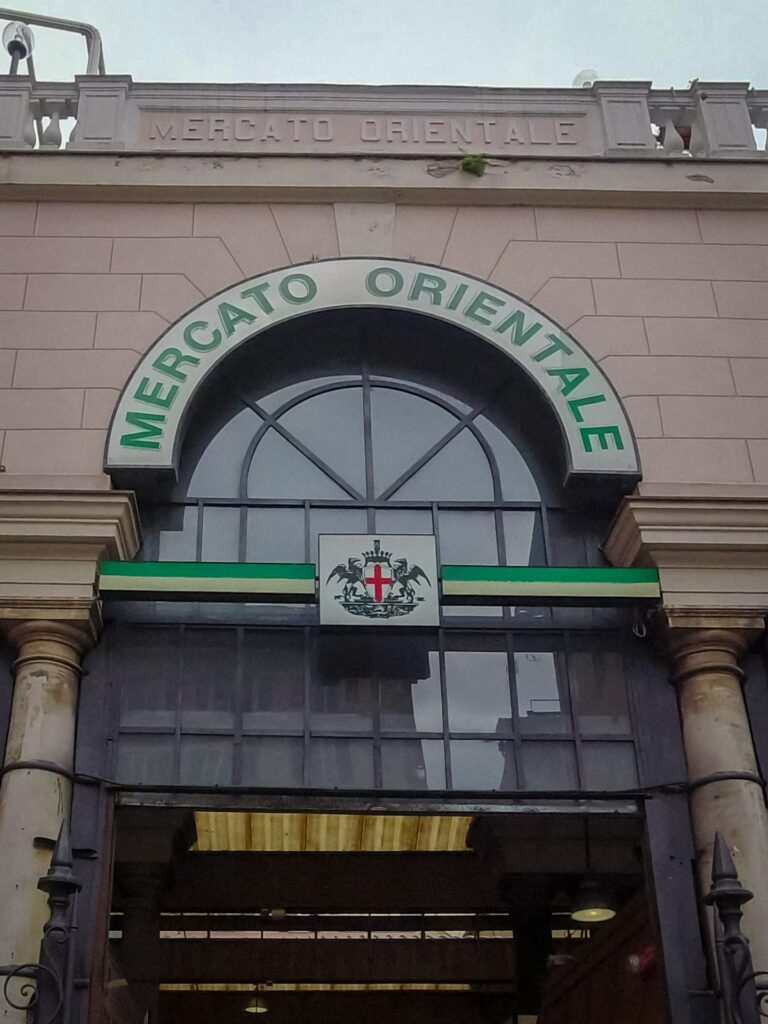
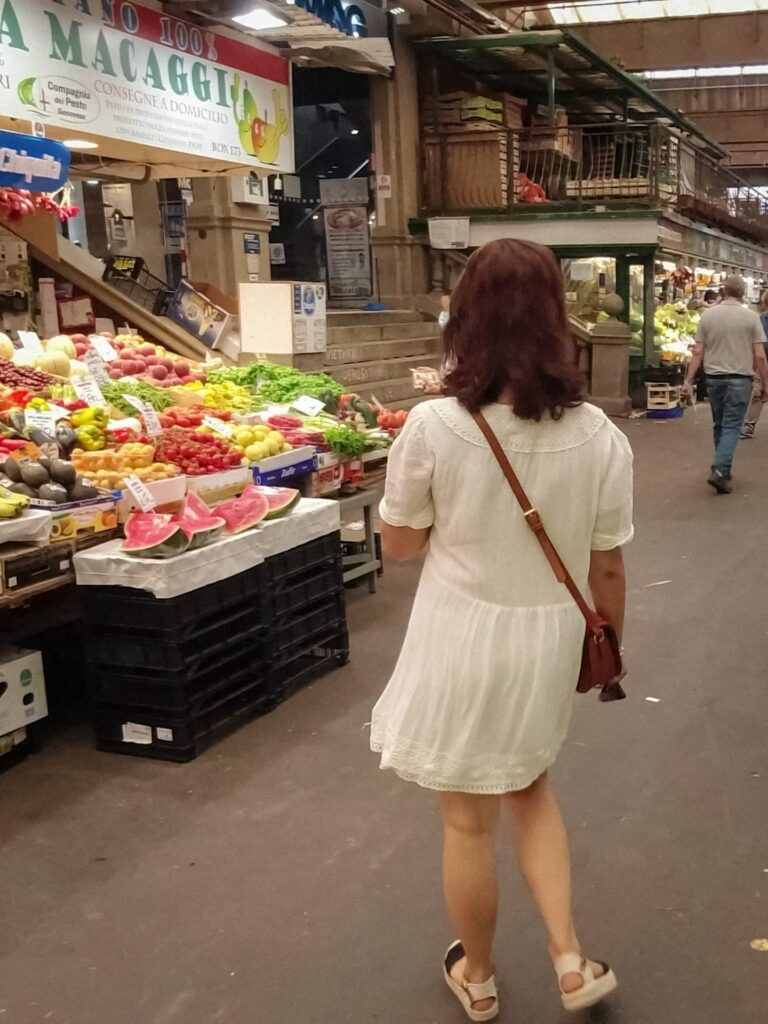
The real draw, though, is Mercato Orientale. Genoa’s historic indoor market, housed in the cloister of a former 16th-century Augustinian monastery, is one of the best places in the city to see what people are actually eating. Ligurian produce, fresh pasta, focaccia, pesto ingredients, local cheeses, olives. The atmosphere is more neighbourhood than tourist attraction, which is exactly the point.
Note on current status: Mercato Orientale has undergone renovation and some structural changes in recent years. Worth checking current opening times and whether the full market is operating before you visit.
Food note: this is a good place to find fresh trofie pasta and proper pesto Genovese ingredients in a market setting. It’s a different experience from ordering it in a restaurant, and worth doing if you have time.
7. Explore Porto Antico, Genoa’s old harbour
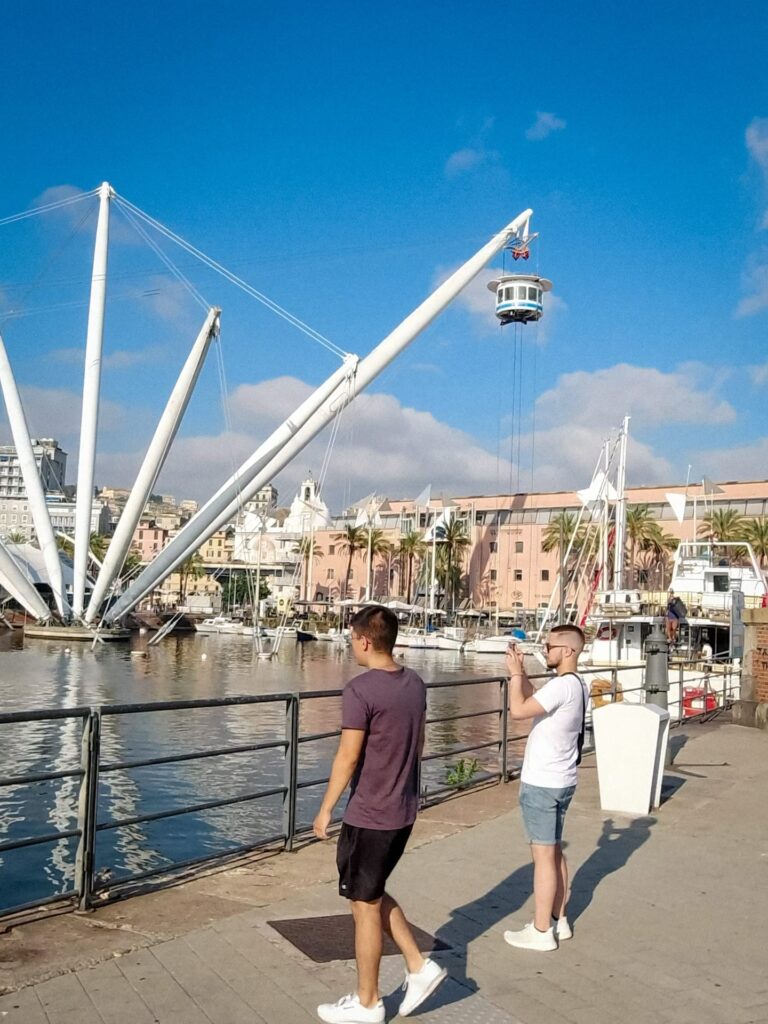
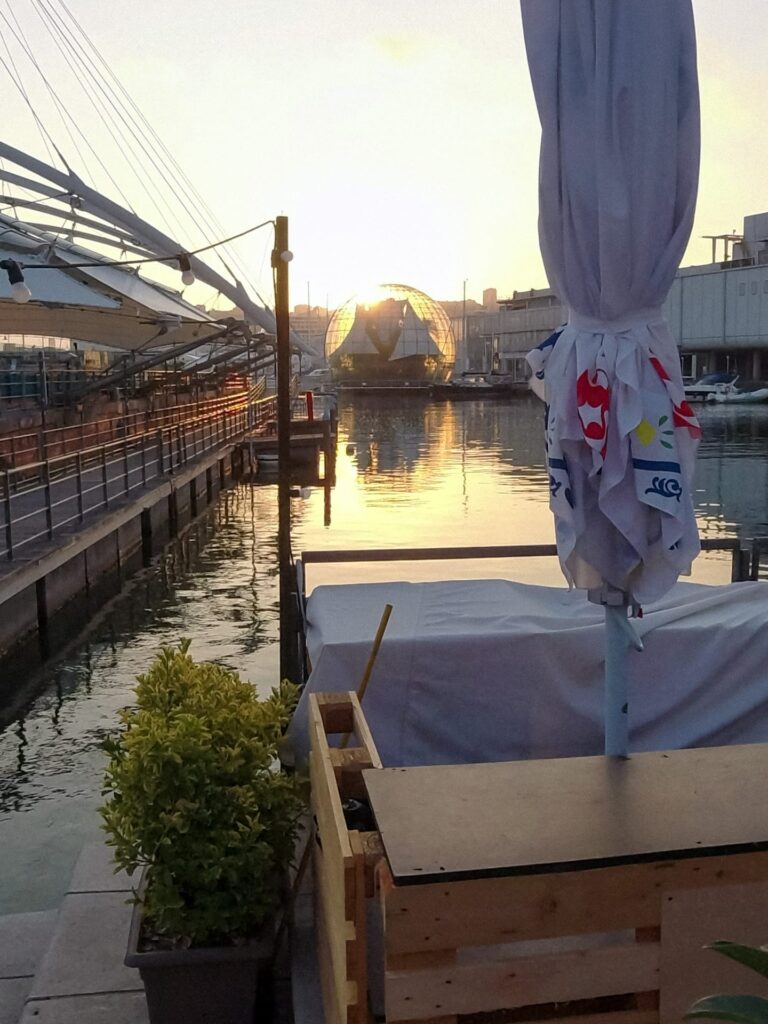
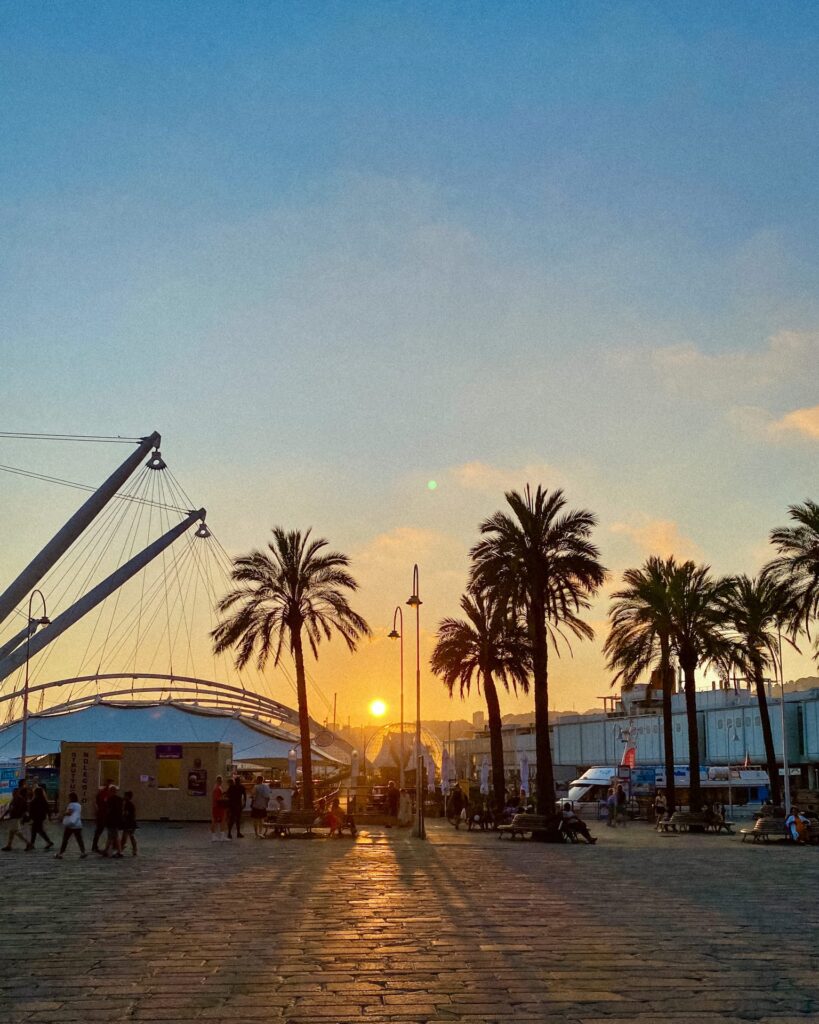
Genoa is a port city first, and Porto Antico is where that fact becomes tangible. The harbour area was redesigned for the 1992 Expo Colombiana — the world exposition marking 500 years since Columbus’s voyage, and the project, led by architect Renzo Piano (a Genoa native), turned a working industrial dock into one of the most pleasant waterfront spaces in northern Italy. It still feels connected to the city’s maritime identity rather than detached from it.
After the dense, narrow lanes of the Caruggi, Porto Antico feels spacious and calm. Wide promenades, open views towards the sea, the kind of breathing room the old centre doesn’t offer.
Around the harbour, look out for the panoramic lift Bigo, that gives a bird’s-eye view over the port, and the Biosfera, a large glass sphere containing a tropical greenhouse. Both are worth a stop if you’re in the area.
Good for: a relaxed stroll, sunset views, and combining sightseeing with a drink or food stop by the water.
8. Visit the Acquario di Genova
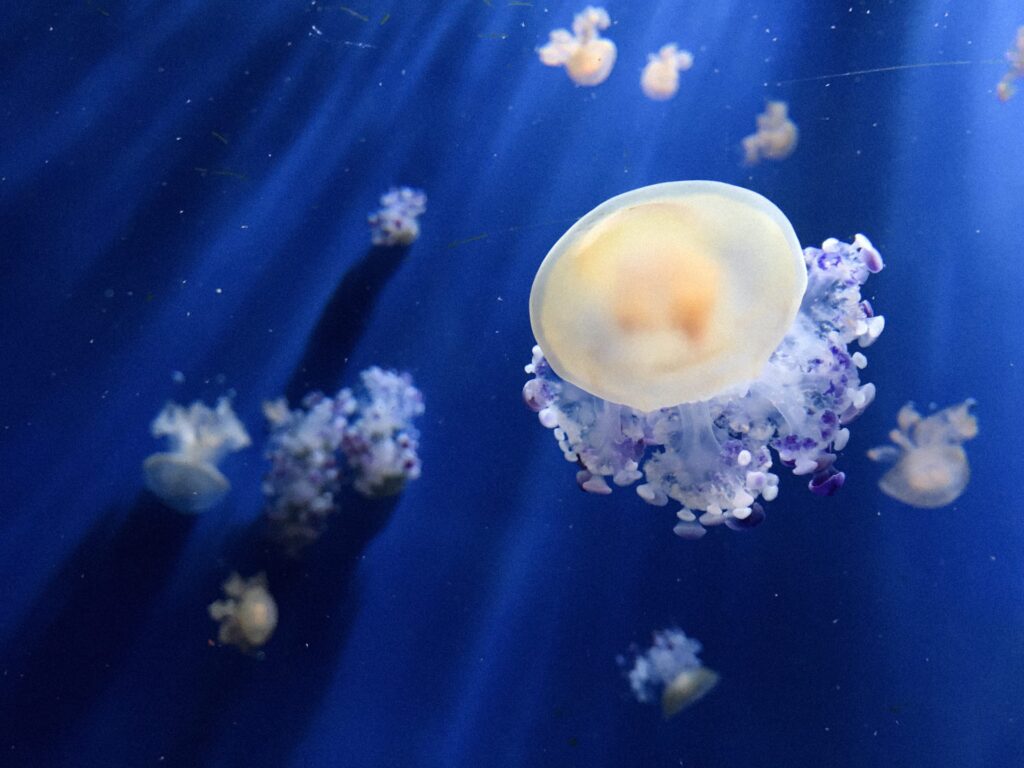
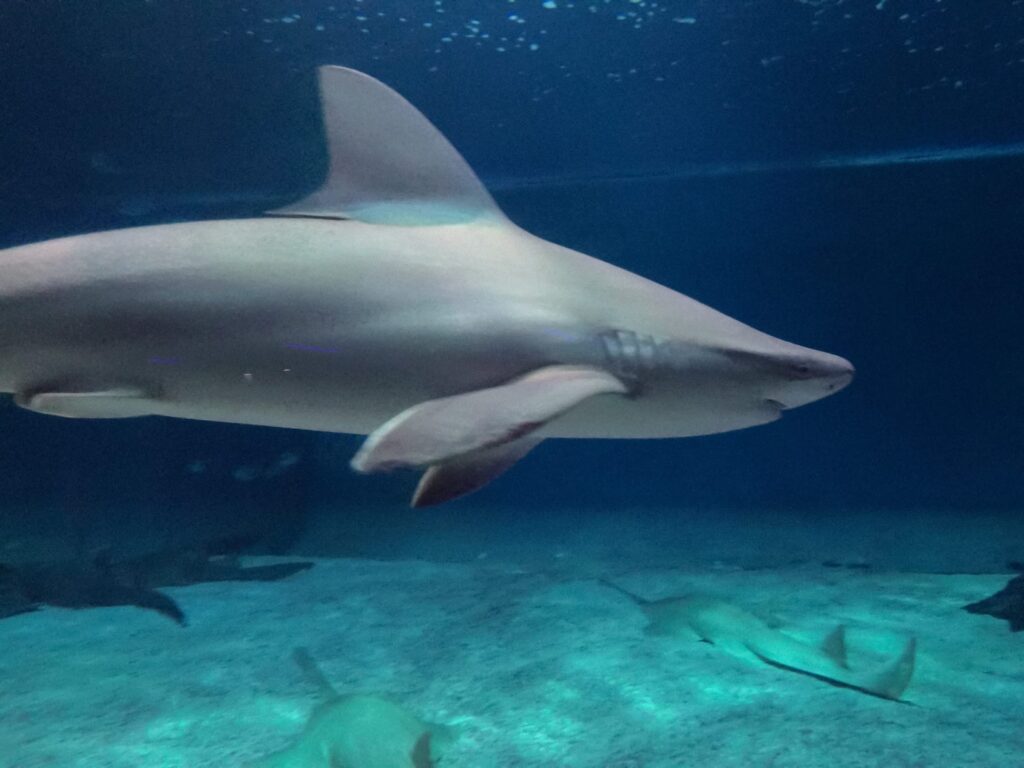
If you’re choosing one major ticketed attraction in Genoa, the Aquarium of Genoa is the obvious contender. With over 70 tanks and more than 600 species on display, it’s one of the largest aquariums in Europe and a genuinely impressive visit, especially if you’re travelling with children, visiting in unpredictable weather, or want a more structured stop between walking-heavy sightseeing.
Because it sits right in Porto Antico, it’s easy to fold into a harbour visit rather than treating it as a separate mission. If your Genoa trip is short and atmosphere matters more to you than attractions, you can skip it without missing the essence of the city. But if you want something iconic and easy to fit in, it earns its place.
Practical tip: weekends and school holidays get busy. Booking ahead online is the sensible move and usually saves time at the door.
9. Go up to Spianata Castelletto for the classic Genoa view
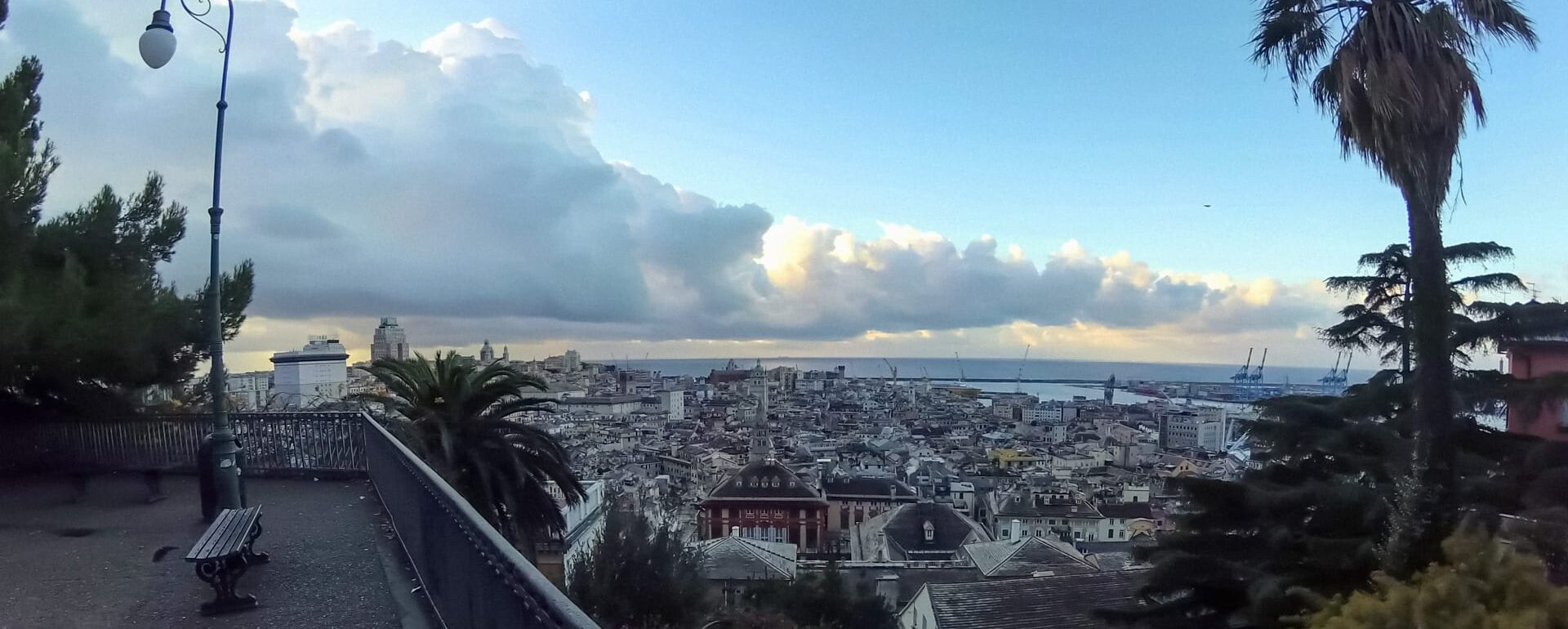
For the best view in Genoa, head up to Spianata Castelletto. From the terrace, you get that classic perspective: tightly packed terracotta rooftops, church domes rising above the old town, the port stretching out towards the sea and, on a clear day, the mountains framing the whole picture. It’s the view that makes the city’s geography finally click into place.
Part of the appeal is the journey. The Ascensore Castello Mackenzie, a historic public lift from Piazza Portello takes you up in less than a minute and costs very little to ride. It turns what could have been just another viewpoint into a small experience of its own.
Best moment to go: late afternoon or early evening, when the light softens and the rooftops glow.
Practical tip: Piazza Portello is about a 15-minute walk from Piazza De Ferrari, slightly uphill. Factor that in if you’re covering a lot of ground on foot.
10. Walk Corso Italia to Boccadasse
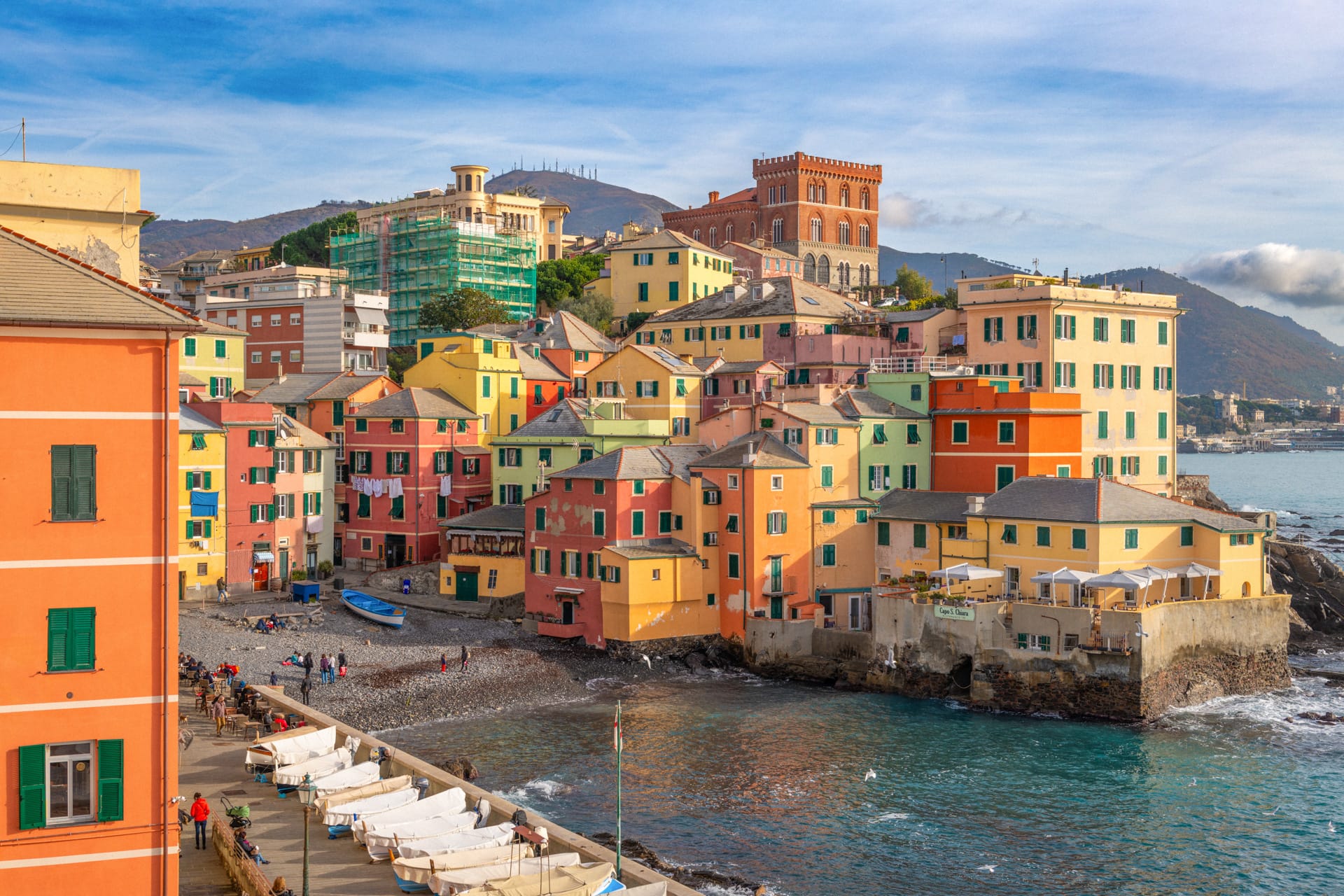
If the historic centre starts to feel dense, Boccadasse is the perfect reset. This old fishing village at the eastern end of the seafront is technically still part of Genoa, but feels like its own place. It’s small, colourful and genuinely lovely to wander through. Almost like a little taste of the famous Cinque Terre magic.
The nicest way to arrive is along Corso Italia, Genoa’s seaside promenade, and let Boccadasse feel like the natural reward at the end. The colourful houses stacked around the small harbour, the boats pulled up on the pebble beach, the gelato from one of the small shops near the water. Postcard-perfect, but not in an artificial way.
It works especially well later in the day, when the light is softer and you want a drink, a gelato or simply a quieter view than the city centre offers.
Why it works: it gives your Genoa itinerary contrast. The centre is all layers, alleys and monuments; Boccadasse gives you colour, coast and breathing room.
Practical tip: Boccadasse is about 3km from the city centre. You can walk the whole way along Corso Italia (roughly 40 minutes, flat and scenic), take a taxi, or hop on one of the local buses depending on how much energy you have left in the day.
Food in Genoa: what to eat and where to find it
You cannot visit Genoa without eating properly, and “properly” here has a specific meaning. This is the home of pesto Genovese and Ligurian focaccia, and both are genuinely different from what you’ll find almost anywhere else. Don’t leave without trying them in a setting that feels right.
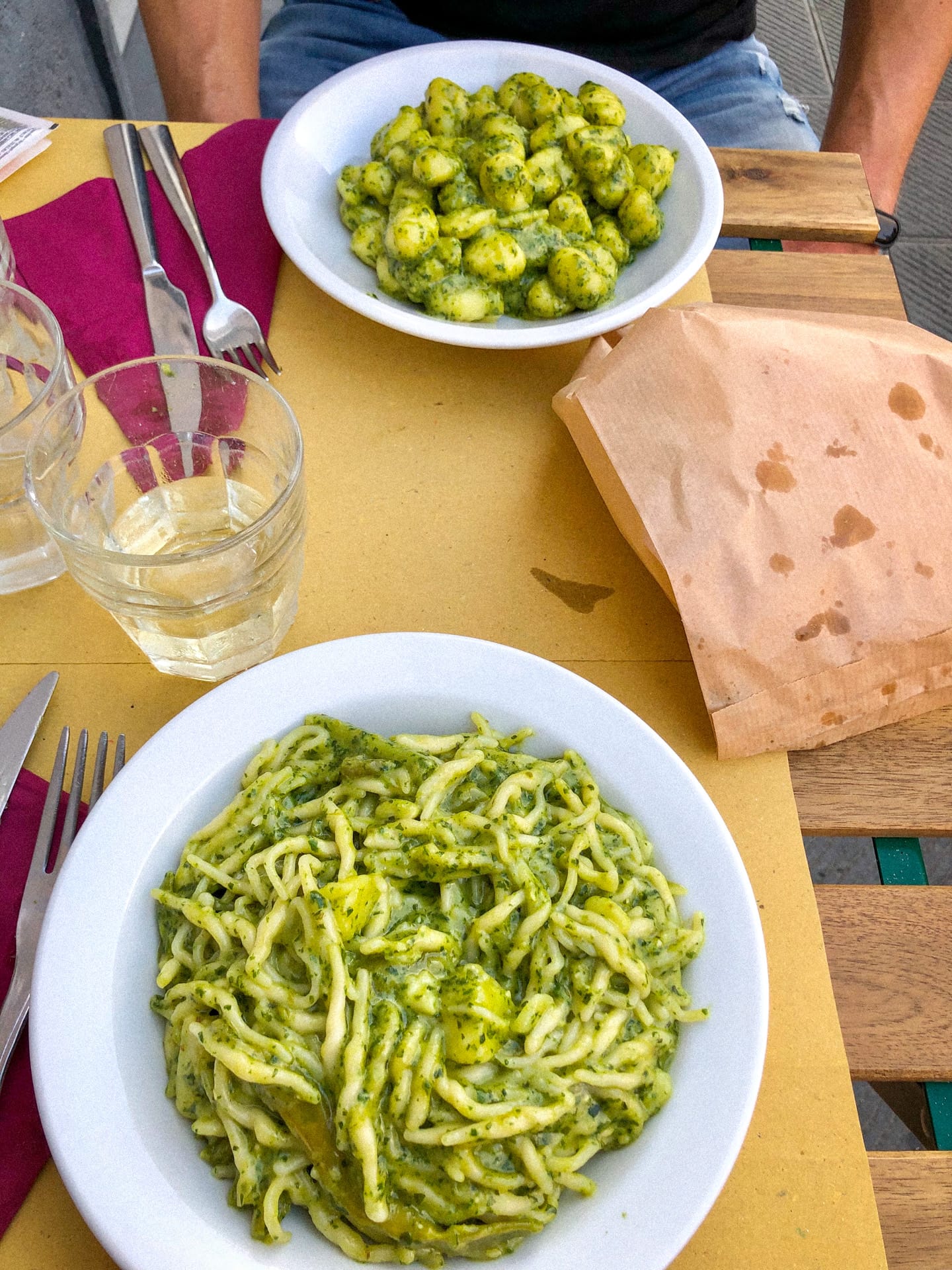
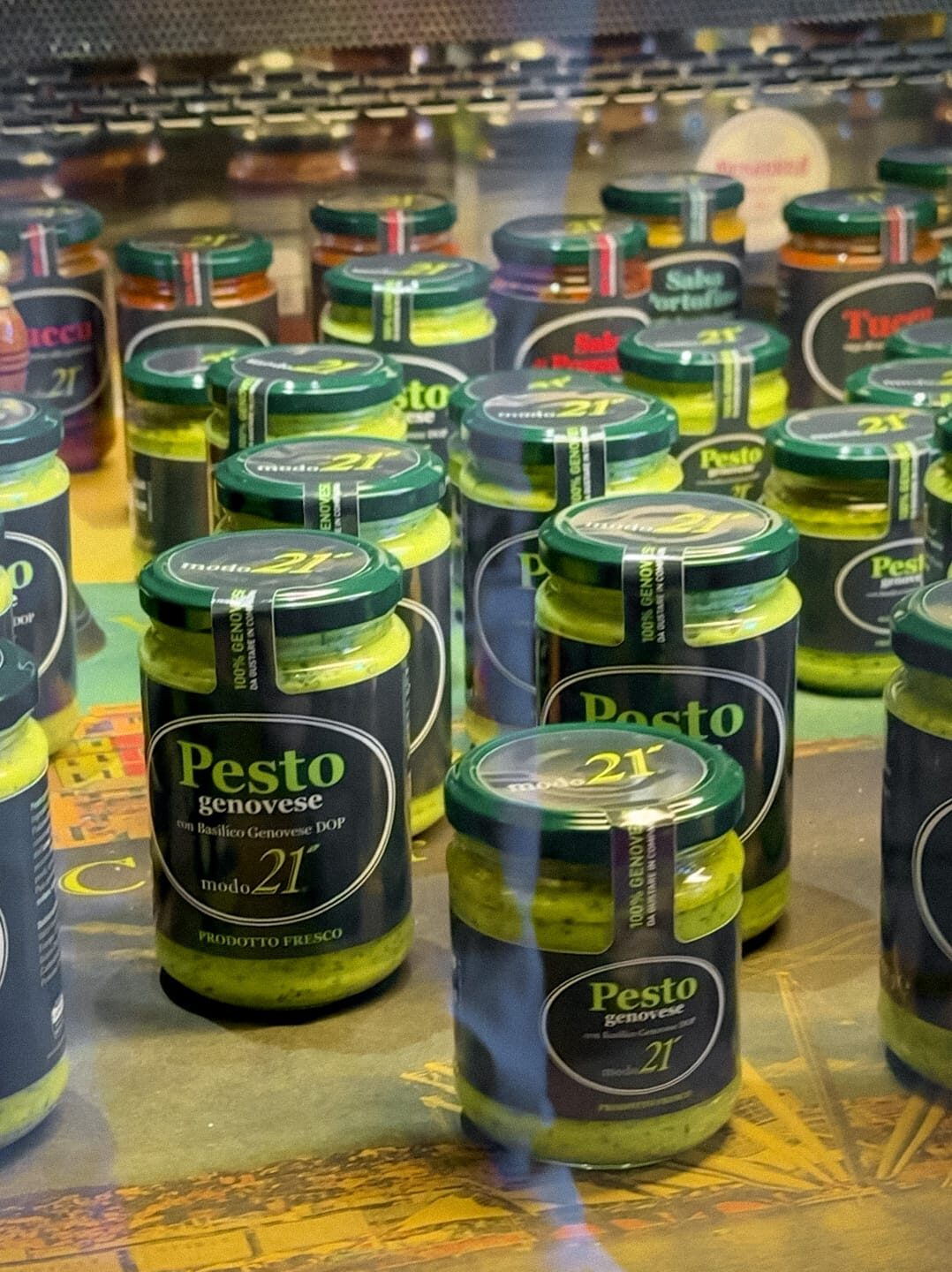
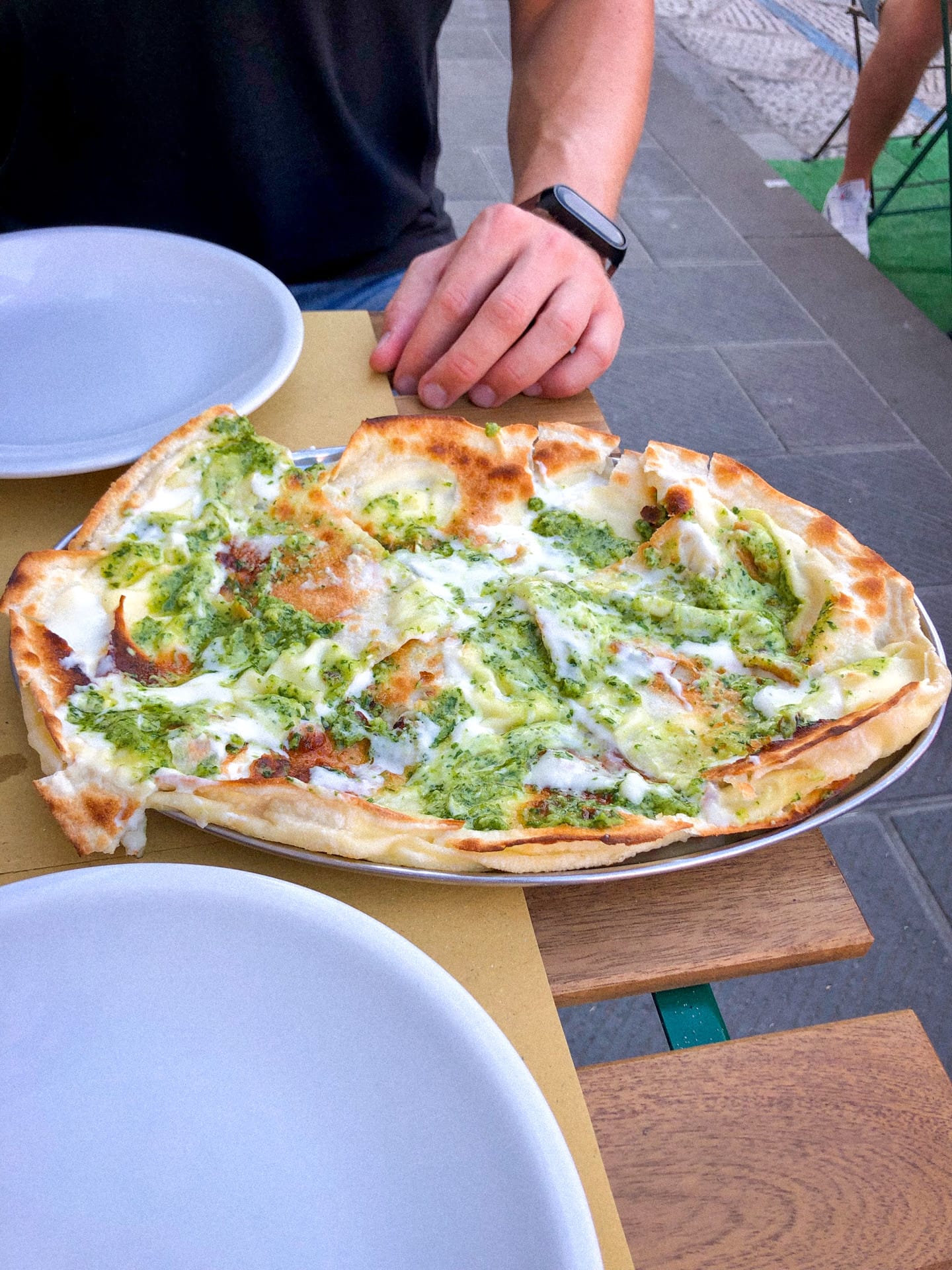
Pesto Genovese is the one Genoa is famous for, and the real version, made with PDO Genoese basil, pine nuts, Parmigiano Reggiano, Pecorino Sardo, garlic and Ligurian olive oil, traditionally ground in a marble mortar, tastes noticeably different from what you get outside the region. Served with trofie (the short, twisted Ligurian pasta) or trenette (similar to linguine), a good bowl of pesto pasta is one of the most satisfying things you can eat in Genoa. The difference between a genuinely good bowl and a mediocre one is real. Worth asking locals or doing a quick search before sitting down somewhere.
Cavour Modo 21 near Porto Antico with their World champion Pesto Genovese has been on our radar across visits and we finally managed a table on our last visit after missing out previously. The trattoria opens at noon for lunch and 7 p.m. for dinner. You can queue at opening, though lines can get long, or reserve a table via WhatsApp only. Worth noting that restaurant names and openings shift over time, so a quick check before you go is always sensible.
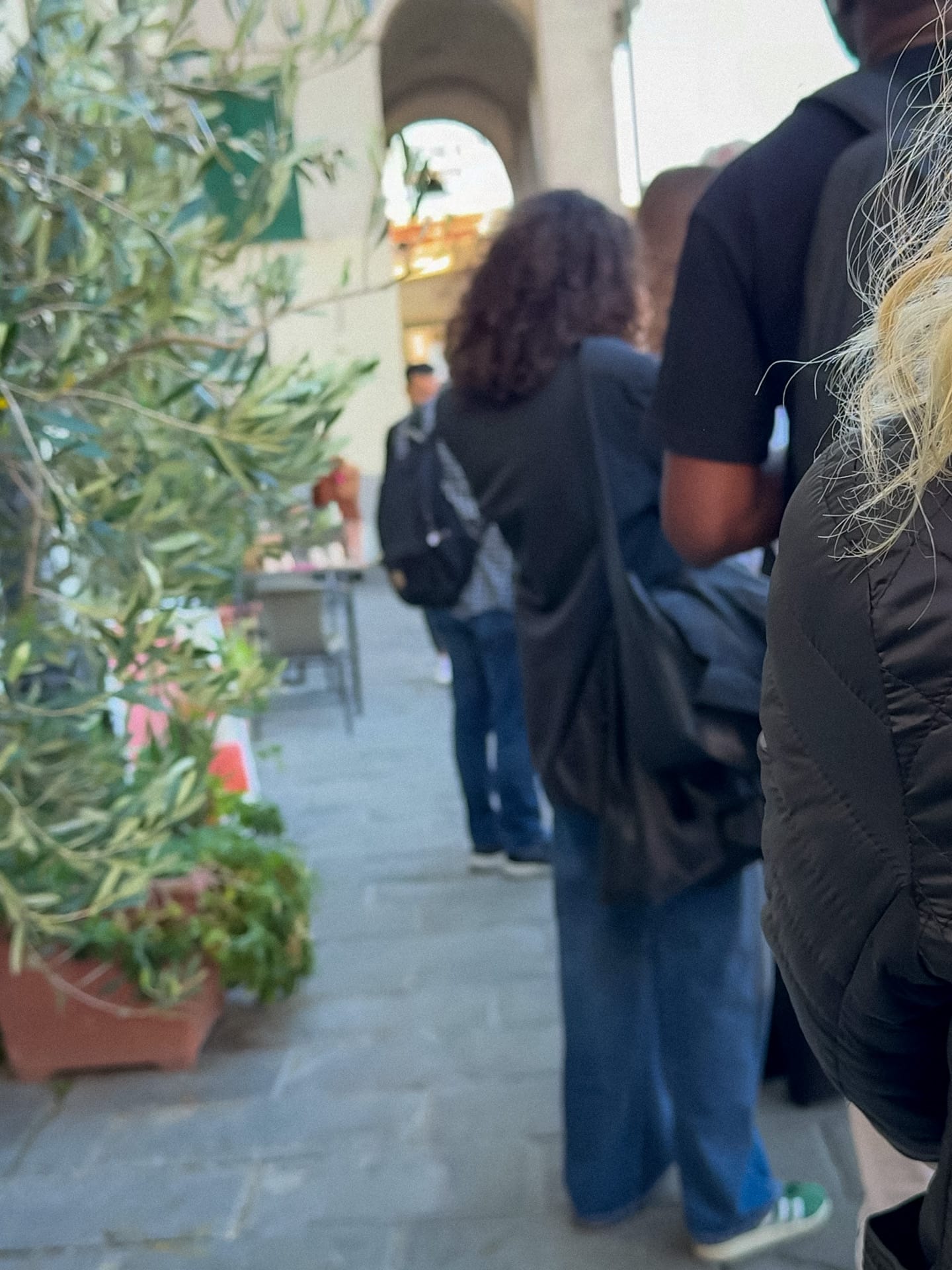
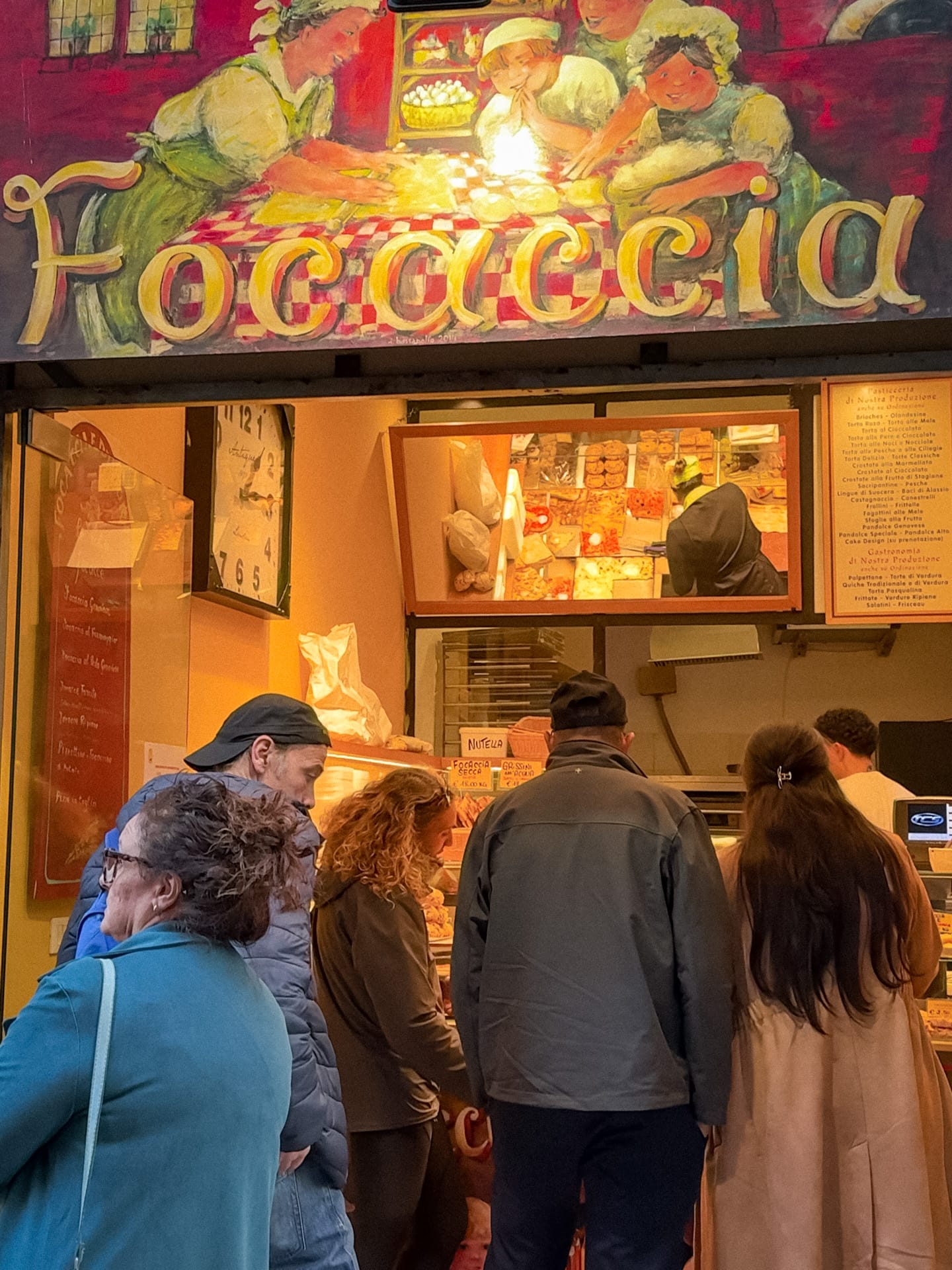
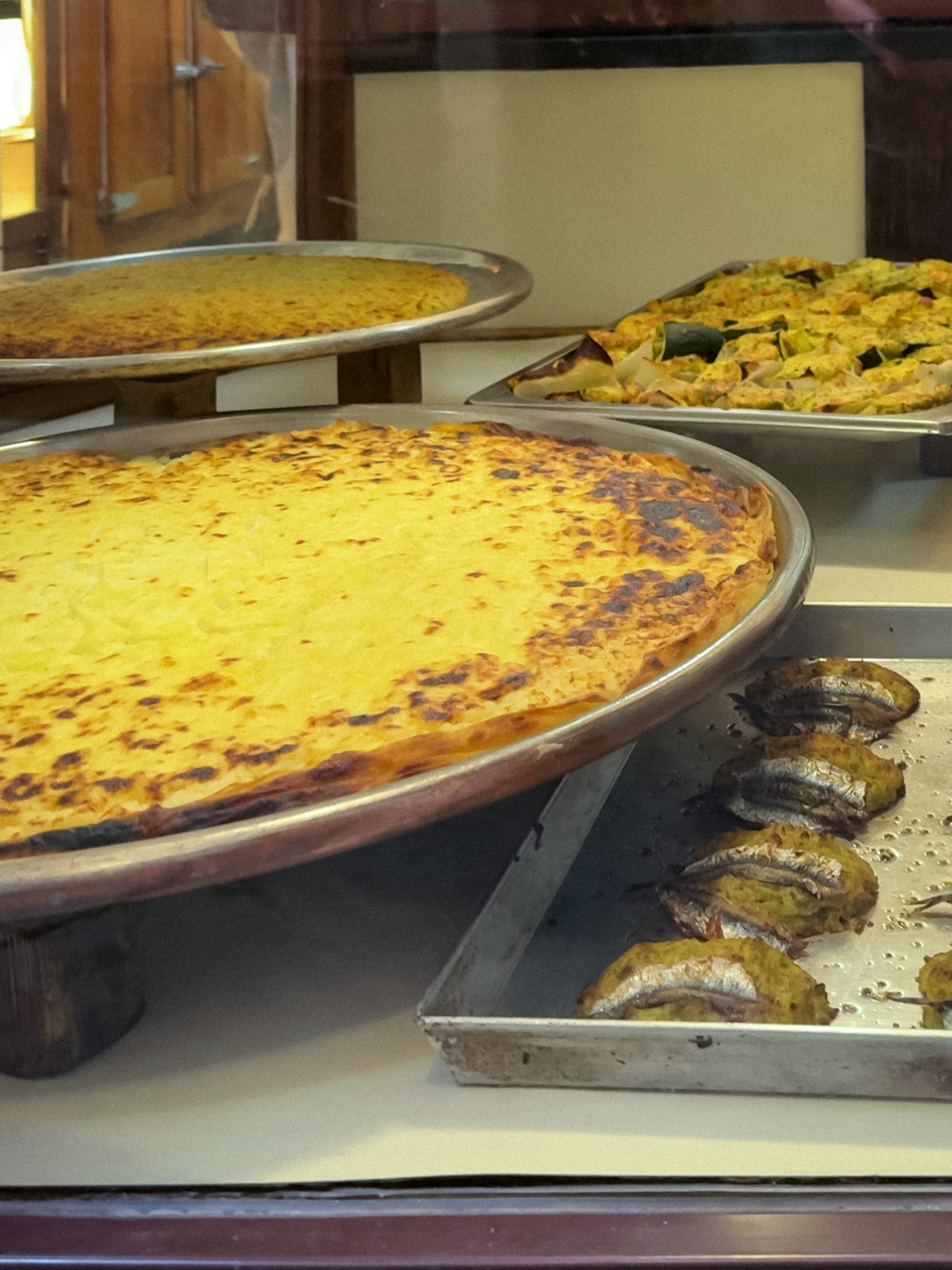
Focaccia is the other essential. Ligurian focaccia is different from most other Italian versions. It’s soft, dimpled, drenched in olive oil and often eaten for breakfast or mid-morning. Look for it in focaccerie, bakeries and market stalls throughout the city, especially in and around the Caruggi. If you see a queue, join it. A warm piece of plain focaccia eaten from a paper bag somewhere in the old lanes is, honestly, one of the best things about visiting Genoa. Simple, cheap, and completely the point.
Farinata is worth knowing about too: a thin, oven-baked chickpea flatbread, crispy at the edges, soft in the middle is usually sold by the slice at places that also do focaccia. Easy to miss if you don’t know to look for it. Very easy to love once you do.
If you only take one food rule from this guide, make it this: eat focaccia in the morning and pesto pasta for lunch, and eat both somewhere that feels genuinely local. The city reads very differently once food becomes part of the plan.
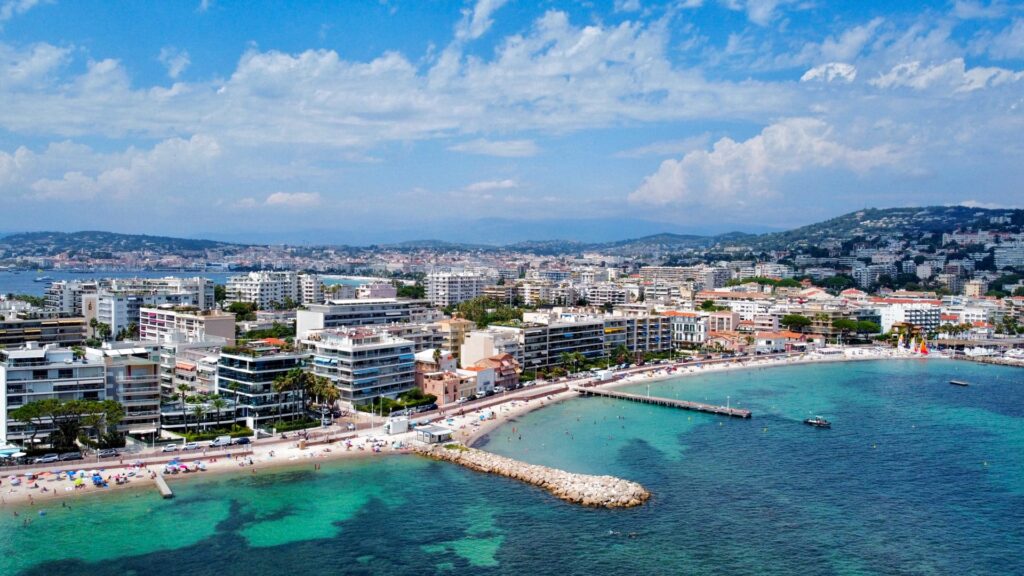
Looking to explore further? Check out our post about a 4-day roadrtip along the Italian and French Riviera.
Genoa to Cannes in 4 Days: The Riviera Road Trip Worth Doing
Final thoughts on visiting Genoa
Genoa is not the kind of Italian city that tries to win you over instantly. It’s grand in places, slightly rough around the edges in others, and far more layered than most first-time visitors expect. That’s exactly what makes it stick.
We came back in 2025 expecting to feel like we’d already seen most of it. We hadn’t. There was a small church we’d walked past twice before and never stepped into, a focacceria in the Caruggi we hadn’t tried, a light on the rooftops at dusk that didn’t feel repeatable. That’s what Genoa does if you give it time.
Mix the landmarks with the food, wander the lanes without over-planning, and let the city show you what it wants to. It won’t disappoint.
How many days do you need in Genoa?
One full day in Genoa is enough to see the main highlights, but two days is the better choice if you want to move at a comfortable pace, include Boccadasse, and spend proper time around Porto Antico without rushing. With two days, you can also build in a longer market stop, a proper sit-down lunch, or a visit to the Palazzi dei Rolli museums.
Genoa also works well as a base for exploring more of Liguria, day trips to Cinque Terre, Portofino and the broader Ligurian coast are all very manageable from here, but it rewards being enjoyed in its own right first.
FAQ: Visiting Genoa for the first time
Is Genoa worth visiting? Yes — especially if you like historic cities with character, a strong food culture and a less obvious Italian city-break feel. Genoa is great for architecture, food, sea views and a layered, more genuine experience than many of Italy’s more visited cities.
How many days do you need in Genoa? One full day covers the main highlights. Two days is much more comfortable and lets you enjoy places like Boccadasse without rushing, explore the Caruggi properly, and fit in a sit-down meal or museum visit.
What are the Caruggi in Genoa? The Caruggi are the narrow medieval alleyways at the heart of Genoa’s old town — one of the largest surviving medieval urban areas in Europe. They’re atmospheric, occasionally labyrinthine and one of the most distinctive things about the city. Exploring them on foot is one of the best things to do in Genoa, and not something you can replicate anywhere else.
What is Genoa best known for? Genoa is known for its maritime history, Christopher Columbus connections, the UNESCO-listed Palazzi dei Rolli, one of Europe’s largest medieval old towns, pesto Genovese and Ligurian focaccia.
What should you not miss in Genoa? For a first trip: Via Garibaldi, the Caruggi, Piazza De Ferrari, San Lorenzo Cathedral, Porto Antico, Spianata Castelletto and Boccadasse. And eat focaccia and pesto — that’s non-negotiable.
Is Genoa safe for tourists? Yes, Genoa is generally safe for tourists. The Caruggi have a reputation that’s somewhat overstated — they’re perfectly fine to explore during the day with normal travel awareness. Keep your belongings close in busier areas, as you would in any major city, and stick to well-lit routes if you’re out in the evening.
Can you do Genoa as a day trip? Yes — especially from Milan (roughly 1.5 hours by train) or as part of a Liguria itinerary. One day is enough to cover the main highlights. Staying overnight opens up more of the city, including Boccadasse at the right hour and a proper evening in the Caruggi.
What should I eat in Genoa? The essentials are pesto Genovese (ideally served with trofie pasta), Ligurian focaccia (eaten warm, ideally in the morning) and farinata (a baked chickpea flatbread worth seeking out). Genoa takes its food seriously, and eating well here is genuinely easy.
Visited in 2018, 2021 and revisited in 2025. Practical details can change, it’s always worth checking opening times and current status before your trip.